P-1745. Neuroparacoccidioidomycosis: A 12-Year Case Series of Paracoccidioidomycosis with Central Nervous System Involvement in an Endemic Region
Pedro A Villalba apestegui, Gustavo-Adolfo Méndez, Carla Niveyro, lucila maria COMPAÑY KEC, Cynthia Tomasino, Ricardo de Jesus Solari Maidana

TL;DR
This study reports on 13 cases of central nervous system involvement in a fungal disease over 12 years, highlighting the need for early diagnosis and collaboration in endemic regions.
Contribution
The paper presents a 12-year case series of NPCM, emphasizing clinical and radiological features to improve early diagnosis and interdisciplinary care.
Findings
NPCM occurred in 15.1% of PCM patients, with most presenting neurological symptoms at diagnosis.
MRI showed characteristic ring-enhancing lesions and restricted diffusion, aiding in NPCM detection.
Collaboration between specialists and neuroradiologists is critical for timely diagnosis and treatment.
Abstract
Paracoccidioidomycosis (PCM) remains a leading systemic mycosis in South America, disproportionately impacting rural and underserved communities. Central nervous system involvement—neuroparacoccidioidomycosis (NPCM)—is often underrecognized, delaying diagnosis and treatment. By sharing our 12-year institutional experience, we aim to raise clinical awareness, foster interdisciplinary collaboration and improve patient outcomes.Contrast-Enhanced Brain MRI in NeuroparacoccidioidomycosisAxial and sagittal post-contrast T1-weighted MRI demonstrates round, peripheral ring-enhancing lesions with central low signal (A–C) and corresponding FLAIR hyperintensity indicating vasogenic edema (D–F). Note solitary lesions in the basal ganglia (A, D) and multiple lesions in the frontal lobe (B, E), all showing restricted diffusion on DWI (not shown). These imaging hallmarks should prompt consideration of…
Genes, proteins, chemicals, diseases, species, mutations and cell lines named across the full text — each resolved to its canonical identifier and authoritative record.
Click any figure to enlarge with its caption.
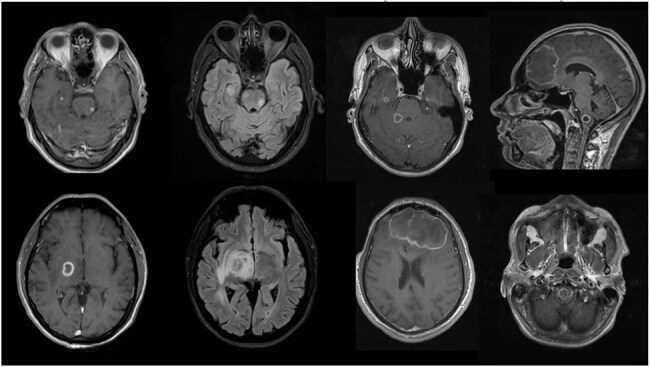 Figure 1
 Figure 2
Peer Reviews
No public reviews on file for this paper yet. If you reviewed it on a platform where reviews are public (OpenReview, ICLR, NeurIPS, ICML), you can paste yours below so the community can read it here.
Videos
No videos yet. Explain this paper in a talk, walkthrough, or lecture? Add one.
Taxonomy
TopicsFungal Infections and Studies · Antifungal resistance and susceptibility · Whipple's Disease and Interleukins