P-1974. Predicting Bacteremia in Emergency Departments: A Suite of Data-Driven Clinical Decision Tools
Nicholas P Marshall, Fatemeh Amrollahi, Fateme Nateghi Haredasht, Stephen Ma, Manoj Maddali, Amy Chang, Stan Deresinski, Niaz Banaei, Mary Kane Goldstein, Steven Asch, Jonathan H Chen

TL;DR
This paper introduces a set of AI tools to help doctors decide when to order blood cultures in emergency departments, aiming to reduce unnecessary tests while ensuring patients who need them get them.
Contribution
The novel contribution is a suite of data-driven clinical decision tools (BactoScore, BactoPlus, BactoPro) that outperform existing criteria for predicting bacteremia.
Findings
BactoScore achieves 95% sensitivity with a 4+ point cutoff, enabling safe reduction of blood culture orders.
BactoPro, combining clinical notes and structured data, achieves the highest accuracy among the models.
All three models outperform SIRS and Shapiro criteria at 90% sensitivity.
Abstract
The global blood culture bottle shortage in 2024 highlighted the critical need to optimize test utilization. While blood cultures are essential for diagnosing bacteremia, fewer than 10% yield true-positive findings. Overuse increases the risk of contamination unnecessary antibiotic exposure and hospitalizations, and strains resources. To address this, we developed a suite of predictive models leveraging structured and unstructured electronic health record (EHR) data to better stratify bacteremia risk and support targeted blood culture ordering.Table 1:BactoScore Scoring System BactoScore Scoring System This table summarizes conditions assigned to each feature in the BactoScore system, derived from the coefficients of the BactoRisk model. This design ensures straightforward application in clinical settings. A cumulative score of 4 or higher indicates a high likelihood of a positive…
Genes, proteins, chemicals, diseases, species, mutations and cell lines named across the full text — each resolved to its canonical identifier and authoritative record.
Click any figure to enlarge with its caption.
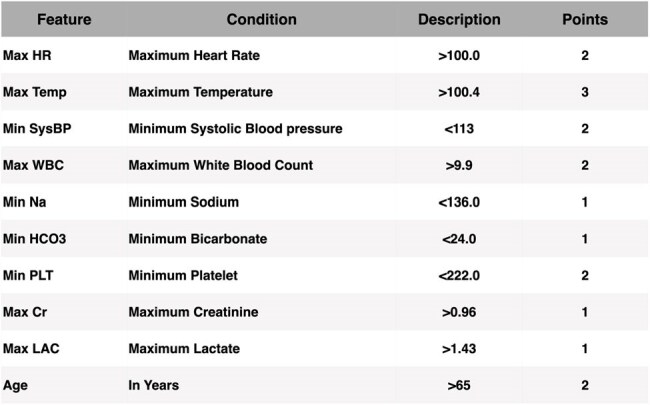 Figure 1
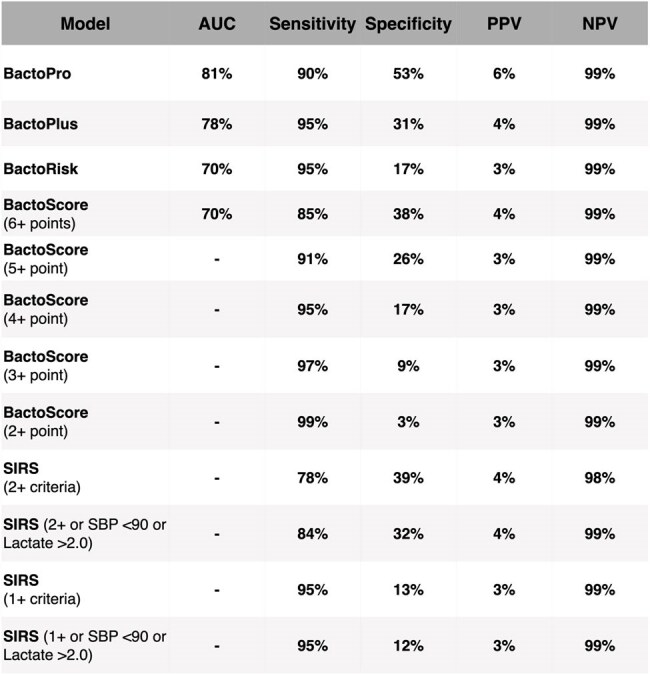 Figure 2
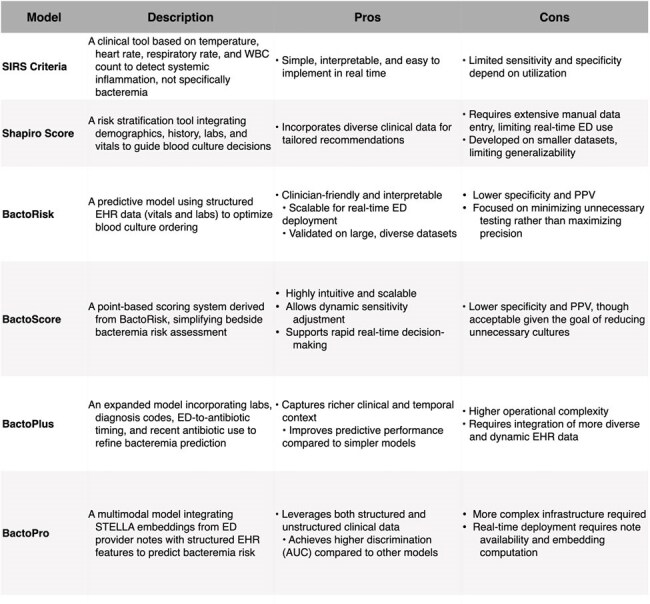 Figure 3
Peer Reviews
No public reviews on file for this paper yet. If you reviewed it on a platform where reviews are public (OpenReview, ICLR, NeurIPS, ICML), you can paste yours below so the community can read it here.
Videos
No videos yet. Explain this paper in a talk, walkthrough, or lecture? Add one.
Taxonomy
TopicsBacterial Identification and Susceptibility Testing · Sepsis Diagnosis and Treatment · Clinical Reasoning and Diagnostic Skills