P-1776. Combatting the brain-eating ameba Balamuthia mandrillaris: from bench to bedside to public health
Natasha Spottiswoode, Kaitlin Marquis, Angela Detweiler, Norma Neff, Samuel Lord, Joseph DeRisi

TL;DR
This paper explores how the drug nitroxoline kills the deadly brain-eating ameba Balamuthia mandrillaris by disrupting its DNA and preventing it from forming protective cysts.
Contribution
The study reveals that nitroxoline induces genomic stress and inhibits encystment in B. mandrillaris, providing a scientific basis for its clinical use.
Findings
Nitroxoline causes DNA damage and upregulates DNA repair genes in B. mandrillaris.
Nitroxoline disrupts encystment by preventing the upregulation of key encystment marker genes.
Cyst morphology is altered in nitroxoline-treated B. mandrillaris, as shown by scanning electron microscopy.
Abstract
B. mandrillaris is a free-living ameba that causes granulomatous amebic encephalitis (GAE), an infectious syndrome with a mortality rate of >90%. Treatment for GAE has been hampered by limited understanding of the molecular mechanisms of the pathogen and a lack of effective therapeutics. Recently, the quinolone nitroxoline (NTX) was identified in a drug screen as effective against B. mandrillaris, and successfully used to treat two US patients.Figure 1.Metal supplementation rescues nitroxoline mediated inhibition in B. mandrillaris.Exogenous metal supplementation rescues nitroxoline mediated inhibition. Exogenous metals were added to nitroxoline or DMSO treated trophozoites and viability was assessed 72 hours later using a luciferase-based viability assay. Relative light units (RLU) are normalized to respective DMSO vehicle controls (n = 3).Figure 2.Nitroxoline induces genomic stress…
Genes, proteins, chemicals, diseases, species, mutations and cell lines named across the full text — each resolved to its canonical identifier and authoritative record.
Click any figure to enlarge with its caption.
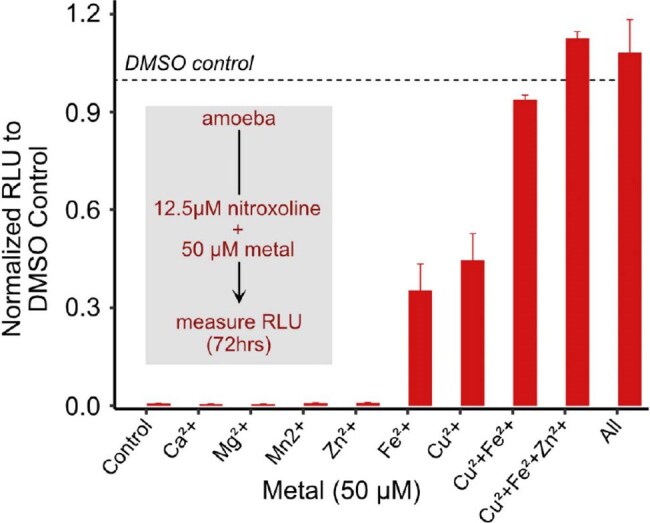 Figure 1
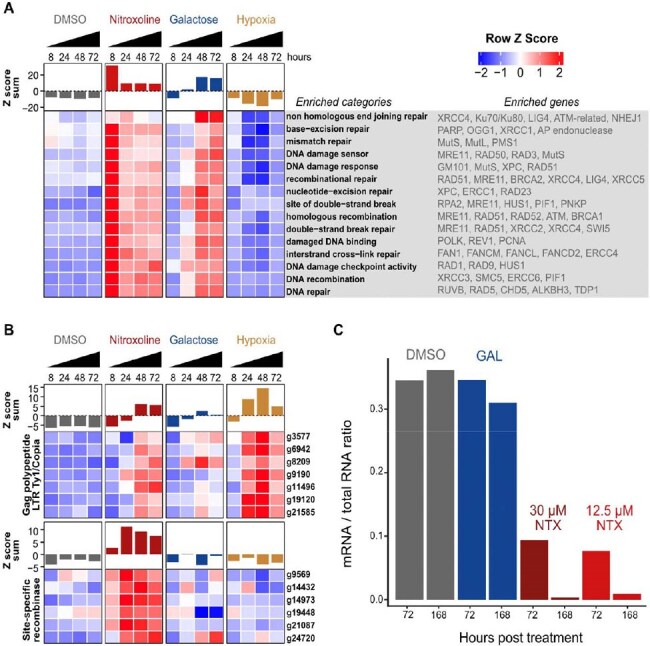 Figure 2
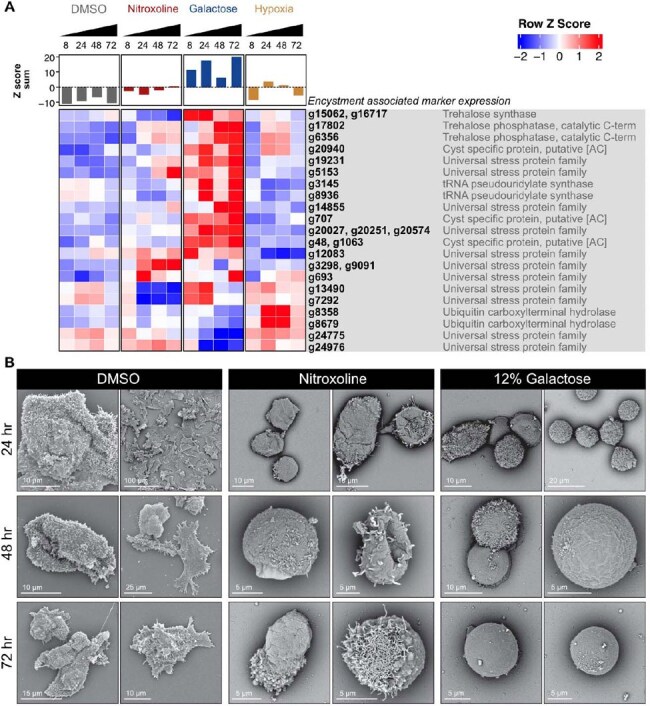 Figure 3
Peer Reviews
No public reviews on file for this paper yet. If you reviewed it on a platform where reviews are public (OpenReview, ICLR, NeurIPS, ICML), you can paste yours below so the community can read it here.
Videos
No videos yet. Explain this paper in a talk, walkthrough, or lecture? Add one.
Taxonomy
TopicsLegionella and Acanthamoeba research · Protist diversity and phylogeny · Amoebic Infections and Treatments