P-2126. De novo belatacept-based immunosuppression is not associated with increased risk for invasive fungal infection in kidney transplant recipients
Emily Eichenberger, Geeta Karadkhele, Christian P Larsen

TL;DR
This study found that using belatacept instead of tacrolimus for immunosuppression in kidney transplant patients does not increase the risk of invasive fungal infections.
Contribution
The study provides the first large-scale evidence that belatacept-based immunosuppression is not associated with higher fungal infection risk in kidney transplant recipients.
Findings
Belatacept and tacrolimus groups had similar rates of invasive fungal infections (4.8% vs 5.8%).
The median time to infection was nearly identical in both groups (370 vs 359 days).
Mortality rates among infected patients were lower in the belatacept group (21% vs 47.1%).
Abstract
Belatacept is a selective co-stimulation blocker associated with improved long-term outcomes in kidney transplant recipients (KTR). The impact of belatacept on risk of invasive fungal infection (IFI) in KTR remains unclear, with existing data limited to small case series and case reports.TableClinical Characteristics of the Study CohortFigureInvasive Fungal Infections in Kidney Transplant Recipients Clinical Characteristics of the Study Cohort Invasive Fungal Infections in Kidney Transplant Recipients We conducted a retrospective propensity-matched study of adult HIV-negative KTR transplanted at our center between 2016-2020 who received de-novo belatacept- or tacrolimus-based immunosuppression. Matching variables included sex, donor type, age at transplant, HLA mismatch, and diabetes as cause of kidney failure. Data was extracted from the clinical data warehouse. IFI was identified…
Genes, proteins, chemicals, diseases, species, mutations and cell lines named across the full text — each resolved to its canonical identifier and authoritative record.
Click any figure to enlarge with its caption.
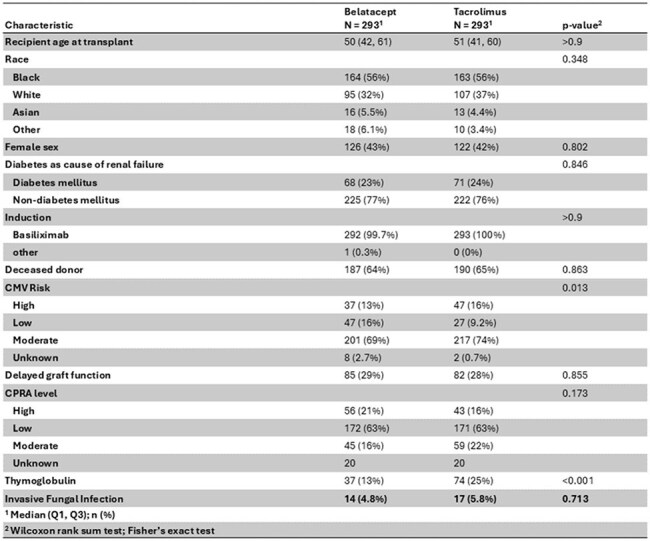 Figure 1
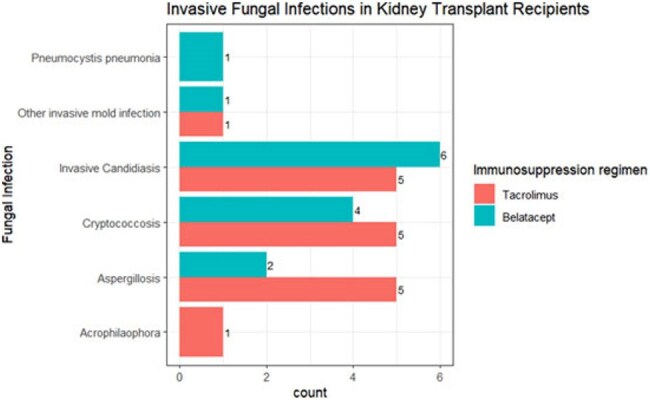 Figure 2
Peer Reviews
No public reviews on file for this paper yet. If you reviewed it on a platform where reviews are public (OpenReview, ICLR, NeurIPS, ICML), you can paste yours below so the community can read it here.
Videos
No videos yet. Explain this paper in a talk, walkthrough, or lecture? Add one.
Taxonomy
TopicsRenal Transplantation Outcomes and Treatments · Antifungal resistance and susceptibility · Pneumocystis jirovecii pneumonia detection and treatment