P-2004. Performance of a Metagenomic Next-Generation Sequencing Assay for Cerebrospinal Fluid Compared to Conventional Testing in Pediatric Patients
Samuel Showalter, Kevin Messacar, Elaine Dowell, Timothy M Blicharz, Steve Miller, Sudeb Dalai, Samuel R Dominguez

TL;DR
This study compares a new metagenomic sequencing test with traditional methods for diagnosing central nervous system infections in children, showing it can detect similar or more organisms with high accuracy.
Contribution
The study evaluates a refined commercial metagenomic next-generation sequencing platform for pediatric CNS infections, demonstrating its diagnostic performance and clinical utility.
Findings
mNGS identified 25 organisms in 53% of samples, with 74.5% laboratory concordance compared to conventional methods.
Clinical concordance after chart review was 83%, with mNGS detecting 14.9% more organisms than conventional testing.
Diagnostic stewardship is emphasized due to mNGS's high sensitivity and unbiased detection.
Abstract
Metagenomic next-generation sequencing (mNGS) enables unbiased detection of RNA and DNA viruses, bacteria, fungi, and parasites from cerebrospinal fluid (CSF). An mNGS assay developed at the University of California, San Francisco (UCSF) demonstrated potential clinical utility for suspected CNS infections. Delve Bio Inc. (Delve), under exclusive license from UCSF, has further refined the assay into a clinical commercial platform with a reduced turnaround time of approximately 2 days. This study evaluates performance of the updated mNGS platform using archived CSF samples from pediatric patients with suspected CNS infections. Frozen residual CSF samples from children hospitalized at CHCO with suspected CNS infection were tested on the Delve Detect mNGS platform. Laboratory concordance, including positive and negative percent agreement (PPA; NPA), was calculated between mNGS and…
Click any figure to enlarge with its caption.
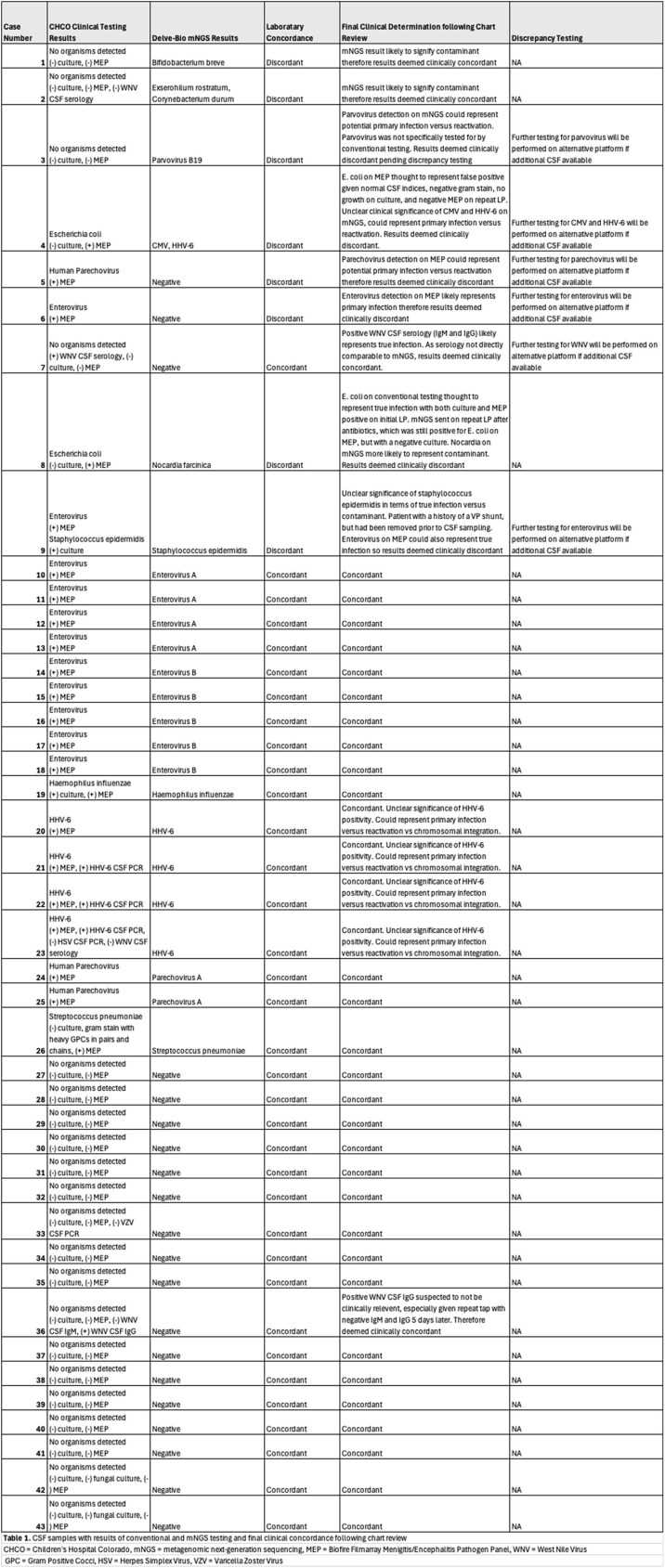 Figure 1
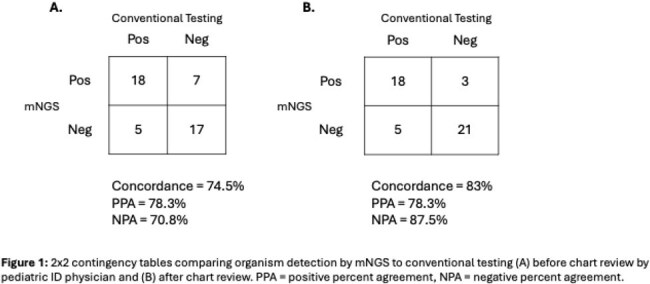 Figure 2
Peer Reviews
No public reviews on file for this paper yet. If you reviewed it on a platform where reviews are public (OpenReview, ICLR, NeurIPS, ICML), you can paste yours below so the community can read it here.
Videos
No videos yet. Explain this paper in a talk, walkthrough, or lecture? Add one.
Taxonomy
TopicsBacterial Infections and Vaccines · Infectious Encephalopathies and Encephalitis · Respiratory viral infections research