P-1878. Discontinuation of Clinical Studies on Infectious Diseases: A Cross-Sectional Analysis
Yousef R Alnomani

TL;DR
This study finds that clinical trials on infectious diseases are often discontinued, with small sample sizes and certain study types being major contributors.
Contribution
The study identifies specific risk factors for discontinuation in infectious disease clinical trials using logistic regression analysis.
Findings
Small sample sizes significantly increase the likelihood of study discontinuation.
Diagnostic studies and those involving radiation or genetics are more likely to be discontinued.
Studies with only female participants show a higher risk of discontinuation.
Abstract
Clinical studies in infectious diseases are vulnerable to discontinuation, representing significant sources of research waste in clinical medicine. This study evaluates the characteristics of clinical studies involving patients with infectious diseases to identify the reasons behind discontinuation to prevent this in the future.Binomial Logistic Regression Analysis Table Binomial Logistic Regression Analysis Table We searched ClinicalTrials.gov for all clinical studies related to infectious diseases registered until April 2025. Studies completed after April 2023 and ongoing studies were excluded, as they may still be undergoing peer review. Data on enrollment, Gender, and intervention type were extracted and analyzed using binomial logistic regression analysis. A total of 15,403 eligible registered clinical studies were included in the analysis. Of these, 13,365 (86.8%) were…
Click any figure to enlarge with its caption.
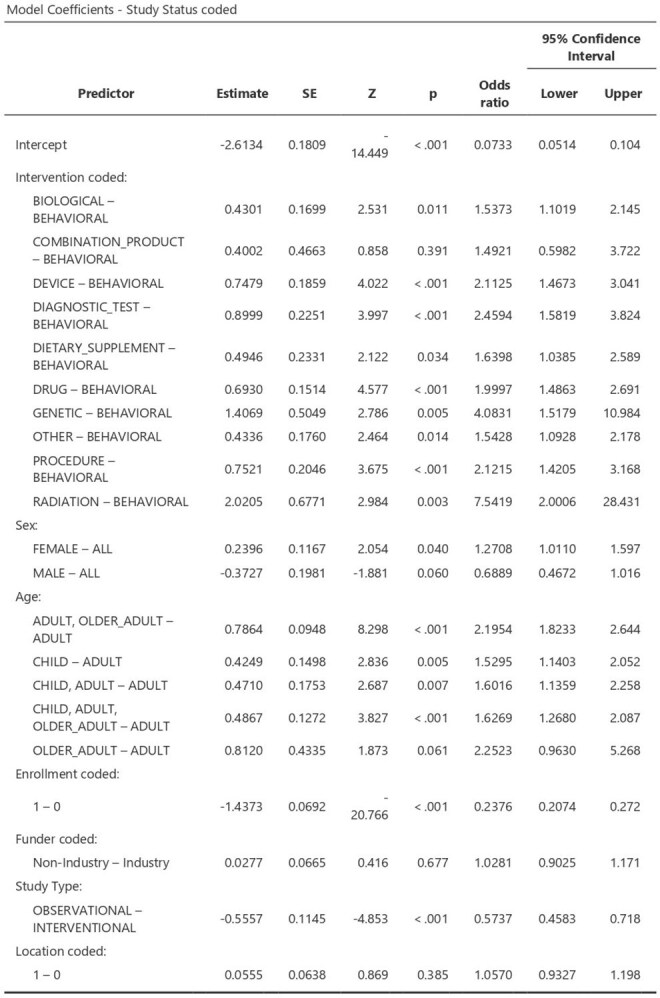 Figure 1
Peer Reviews
No public reviews on file for this paper yet. If you reviewed it on a platform where reviews are public (OpenReview, ICLR, NeurIPS, ICML), you can paste yours below so the community can read it here.
Videos
No videos yet. Explain this paper in a talk, walkthrough, or lecture? Add one.
Taxonomy
TopicsSARS-CoV-2 detection and testing · Health, Environment, Cognitive Aging · Effects of Radiation Exposure