75. Fecal microbiome composition of cancer patients with infectious diarrhea varies by enteropathogen
Adilene Olvera, Cynthia L Chappell, Kristi Hoffman, Kai Jiang, Christine Peterson, Lily Carlin, Matthew C Ross, Richard Gibbs, Donna Muzny, Sara Javornik Cregeen, Harshavardhan Doddapaneni, Joseph Petrosino, Pablo C Okhuysen

TL;DR
Cancer patients with infectious diarrhea have gut microbiome changes that depend on the specific pathogen, not just cancer type or antibiotic use.
Contribution
The study shows that gut microbiome disruption in cancer patients is pathogen-specific, independent of cancer type or recent antibiotic/immunosuppressant exposure.
Findings
Diarrheal stools in cancer patients had lower diversity and higher abundance of Blautia, Enterococcus, Escherichia-Shigella, and Streptococcus.
Microbiome composition varied significantly by enteropathogen, with Clostridioides enriched in CDI and Escherichia-Shigella in DEC.
Microbiome differences were largely independent of cancer type, chemotherapy, or antibiotic use within 90 days.
Abstract
The importance of the gut microbiome in patients with cancer is increasingly recognized. We hypothesized that in cancer patients with infectious diarrhea, fecal microbiome composition is influenced not only by antibiotic or chemotherapy exposure, but also by underlying cancer diagnosis and the specific enteropathogen identified.Figure 1.Fecal microbiome diversity and richness in healthy adults, patients with cancer and no diarrhea, and patients with cancer and infectious diarrheaPanel A. Alpha Diversity. Patients with cancer and infectious diarrhea in orange. Patient with cancer without diarrhea in purple and healthy adults in blue. Panel B. Beta diversity. Panel C Volcano plot with predominant taxa when comparing the three groups of patients.Figure 2.Fecal microbiome diversity and richness in patients with cancer and diarrhea according to underlying malignancyPanel A. Alpha diversity…
Genes, proteins, chemicals, diseases, species, mutations and cell lines named across the full text — each resolved to its canonical identifier and authoritative record.
Click any figure to enlarge with its caption.
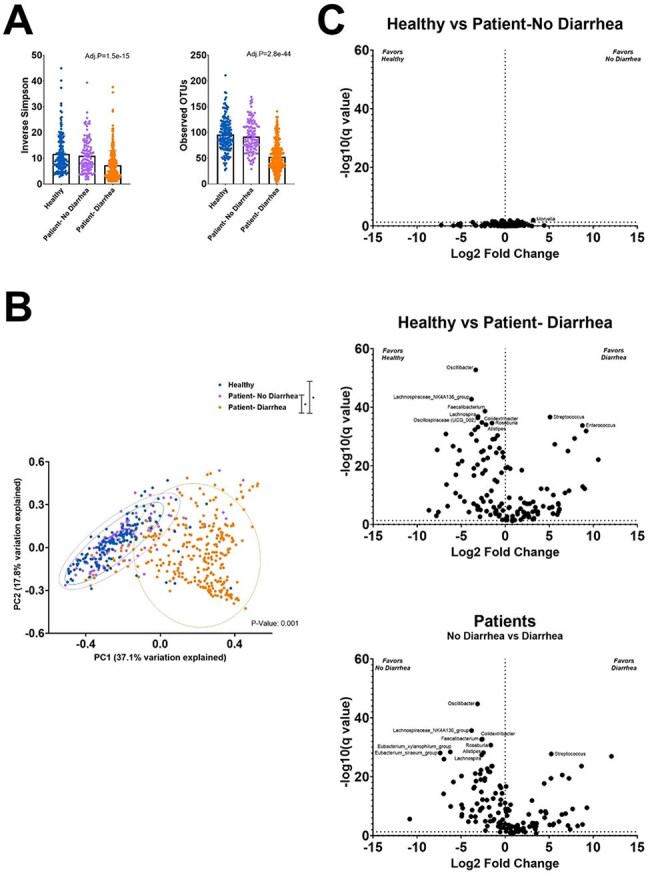 Figure 1
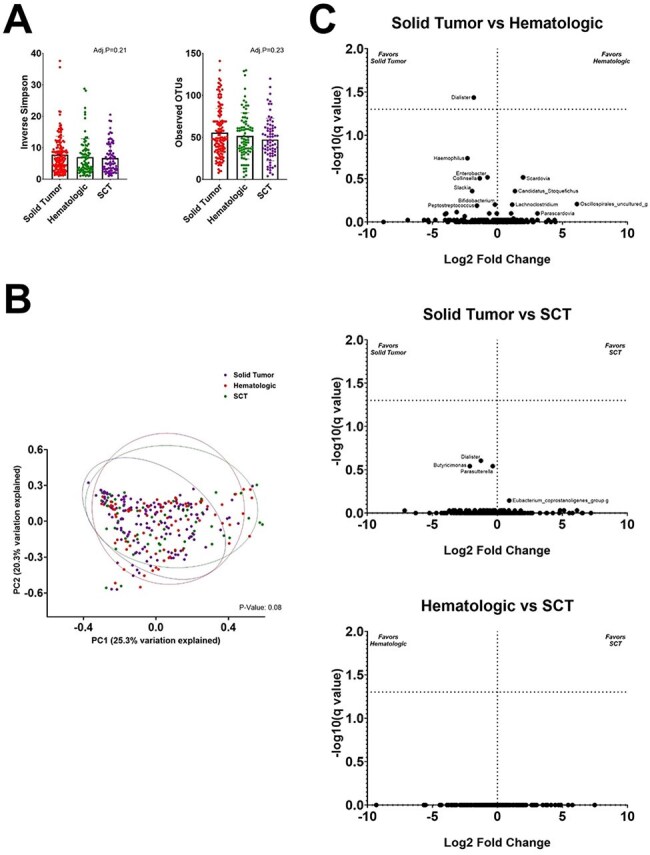 Figure 2
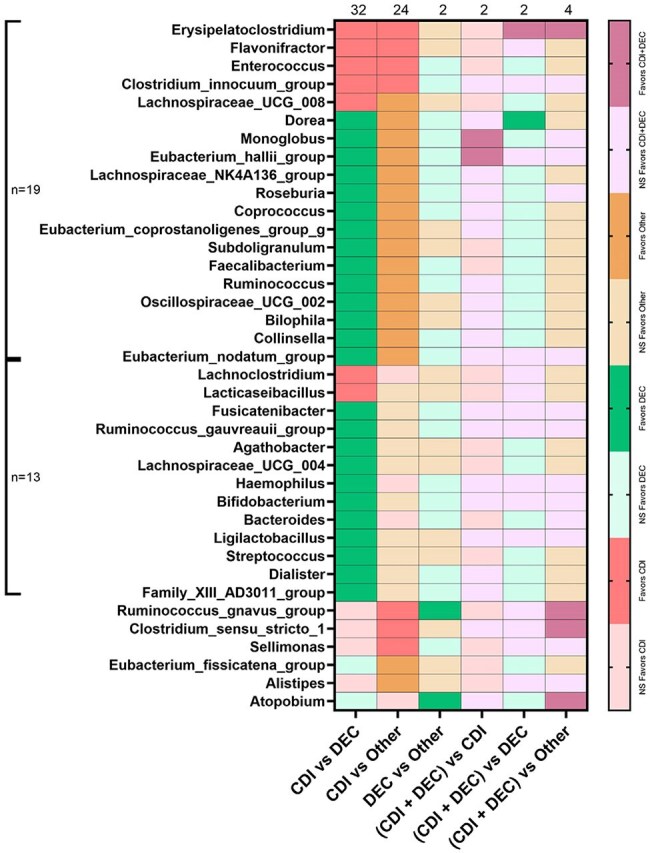 Figure 3
Peer Reviews
No public reviews on file for this paper yet. If you reviewed it on a platform where reviews are public (OpenReview, ICLR, NeurIPS, ICML), you can paste yours below so the community can read it here.
Videos
No videos yet. Explain this paper in a talk, walkthrough, or lecture? Add one.
Taxonomy
TopicsGut microbiota and health · Clostridium difficile and Clostridium perfringens research · Diverticular Disease and Complications