638. Broader Empiric Therapy or Rapid Diagnostics for Hospital-onset Sepsis? A Retrospective Cohort Study of Antibiotic Resistance Prevalence and Empiric Antibiotic Adequacy
Morgan Walker, Scott Sorongon, Jonathan Baghdadi, Katherine E Goodman, Sarah Warner, Emily E Ricotta, Anthony Harris, Sameer S Kadri

TL;DR
This study examines antibiotic use and resistance in hospital-acquired sepsis cases across 12 hospitals to determine if broader antibiotics are necessary or if targeted treatments could be more effective.
Contribution
The study provides insights into empiric antibiotic adequacy and resistance patterns in hospital-onset sepsis, informing potential strategies to reduce unnecessary broad-spectrum antibiotic use.
Findings
34.3% of isolates had resistance phenotypes like CRE, CRAB, or CRPA.
Extremely broad-spectrum antibiotics reduced inadequate therapy in resistant pathogens compared to broad-spectrum antibiotics.
Over 40% of encounters involved isolates with resistance to at least one antibiotic.
Abstract
Sepsis from hospital-acquired infection is associated with high mortality, is often caused by antimicrobial resistant (AMR) pathogens, and prompts the use of broader-spectrum empiric antibiotics. While this may ensure adequate coverage for some patients, many may receive excessively broad-spectrum antibiotics. This study evaluated the epidemiology of clinically suspected culture positive hospital-onset (HO) sepsis in 12 Maryland hospitals.Figure 1:Patient CohortCRE; carbapenem resistant Enterobacterales. CRAB; carbapenem resistant A. baumannii. CRPA; carbapenem resistant P. aeruginosa. ECR-E; extended spectrum cephalosporin Enterobacterales. FQR-E; fluoroquinolone resistant Enterobacterales. MRSA; methicillin-resistant S. aureus. VRE; vancomycin resistant Enterococcus.Figure 2:Distribution of antibiotics administered on the day a patient met criteria for culture positive clinically…
Genes, proteins, chemicals, diseases, species, mutations and cell lines named across the full text — each resolved to its canonical identifier and authoritative record.
Click any figure to enlarge with its caption.
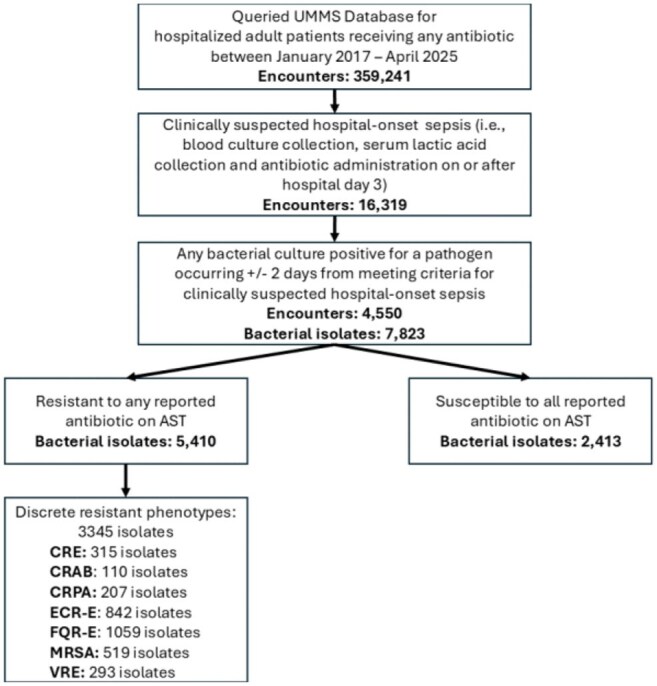 Figure 1
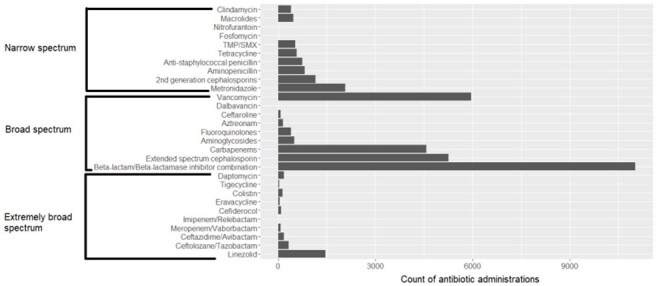 Figure 2
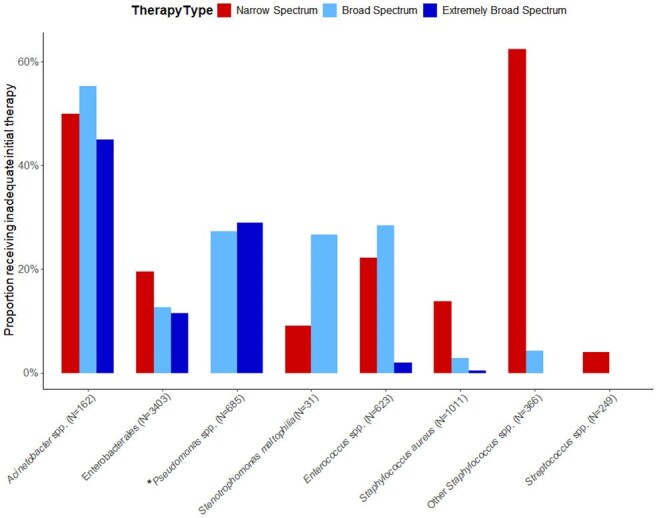 Figure 3
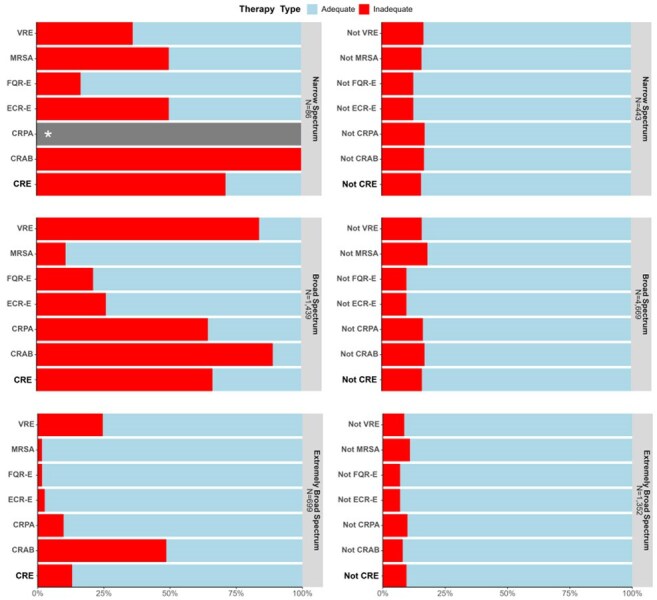 Figure 4
Peer Reviews
No public reviews on file for this paper yet. If you reviewed it on a platform where reviews are public (OpenReview, ICLR, NeurIPS, ICML), you can paste yours below so the community can read it here.
Videos
No videos yet. Explain this paper in a talk, walkthrough, or lecture? Add one.
Taxonomy
TopicsSepsis Diagnosis and Treatment · Neonatal and Maternal Infections · Nosocomial Infections in ICU