P-1687. Evaluation and Characterization of a Novel DNA Lysis Technique for Extraction of Nontuberculous Mycobacteria DNA
Monique Gainey, Alexia Stettinius, Hal Holmes, Emmanuel Naatei Nartey, Sydney Stayrook, Adam Maxwell, Eli Vlaisavljevich, Jayasimha Rao

TL;DR
A new DNA lysis technique called FUSE was tested and shown to extract more DNA from Mycobacterium smegmatis faster than traditional methods.
Contribution
The study introduces and evaluates FUSE, a focused ultrasound system for rapid and efficient DNA extraction from Mycobacterium.
Findings
FUSE produced a median DNA yield of 6.9 μg/150 μl, significantly higher than the lysozyme method.
FUSE reduced lysis time to 12.5 seconds, cutting overall extraction time by 96 minutes.
Both methods yielded DNA with acceptable purity, indicating low protein contamination.
Abstract
From enzymatic buffers to boiling methods, the complexity of Mycobacterium’s cell wall has challenged traditional lysis techniques in extracting adequate DNA for downstream analyses. A novel focused ultrasound extraction (FUSE) system was developed to address such gaps. FUSE uses a miniaturized benchtop focused ultrasound transducer to create cavitation clouds that mechanically lyse targeted samples (Fig 1). Previous studies have proven that this innovative system can successfully lyse cell walls of complex plant tissue. The aim of this study is to determine whether FUSE can rapidly lyse Mycobacterium’s cell wall and release DNA at greater yields compared to standard extraction methods.FUSE Setup.FUSE uses a cylindrical, piezoelectric (PZT) transducer to generate cavitation clouds that mechanically lyse samples (A; B). The transducer is placed on top of driving electronics (C) which…
Genes, proteins, chemicals, diseases, species, mutations and cell lines named across the full text — each resolved to its canonical identifier and authoritative record.
Click any figure to enlarge with its caption.
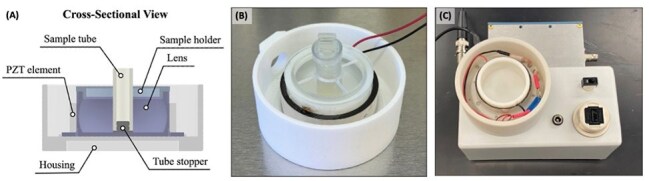 Figure 1
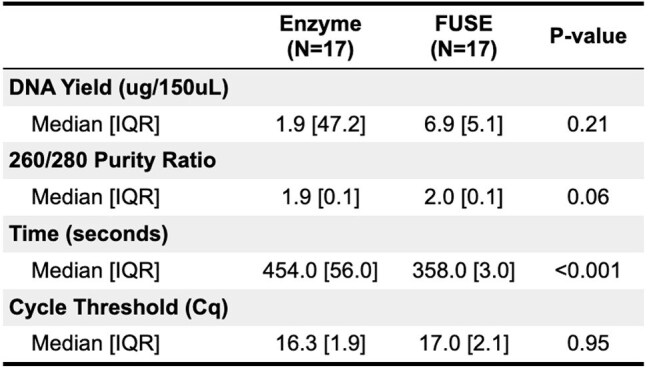 Figure 2
 Figure 3
Peer Reviews
No public reviews on file for this paper yet. If you reviewed it on a platform where reviews are public (OpenReview, ICLR, NeurIPS, ICML), you can paste yours below so the community can read it here.
Videos
No videos yet. Explain this paper in a talk, walkthrough, or lecture? Add one.
Taxonomy
TopicsMycobacterium research and diagnosis · Innovative Microfluidic and Catalytic Techniques Innovation · Ultrasound and Cavitation Phenomena