P-796. Using Interruptive Alerts for Diagnostic Stewardship of the BioFire Pneumonia PCR Panel
Alexander S Plattner, Valerie Yuenger, Christine R Lockowitz, Monica Abdelnour, Vahid Azimi, Stephanie Bledsoe, Rebekah Dumm, Evan E Facer, Nicholas B Hampton, Ronald Jackups, Elizabeth Neuner, Jason G Newland, Matthew M Sattler, Nasiri Sarawanangkoor, Sena Sayood

TL;DR
This study evaluates how interruptive alerts in an electronic health record system can reduce unnecessary use of a pneumonia diagnostic test called the BioFire Pneumonia PCR Panel.
Contribution
The paper introduces and evaluates two interruptive alerts designed to reduce inappropriate use of a rapid diagnostic test in clinical settings.
Findings
The duplicate order alert prevented 25% of repeat BioFire Pneumonia Panel tests within 72 hours.
The tracheostomy alert prevented 62% of tests ordered for patients with long-standing tracheostomies.
Despite initial success, overall test ordering eventually exceeded baseline levels.
Abstract
The BioFire Pneumonia Panel (BFPP) uses multiplex polymerase chain reaction technology to detect pneumonia-causing pathogens and select antimicrobial resistance genes. While initial studies suggested one possible benefit of the BFPP was to aid in promptly narrowing antibiotics, evaluation of real-world use shows little impact on antibiotic use, especially for repeat tests during the same admission and tests from tracheostomies. Figure 1.Duplicate Order AlertInterruptive alert for attempts to order a repeat BFPP within 72 hours of a prior BFPP. Clinician choices of “Do Not Order” or “Cancel” were considered successful interventions. Figure 2.Tracheostomy Alert.Interruptive alert for attempts to order a BFPP on a patient with a tracheostomy in place for more than 72 hours. Clinicians choosing to order the aerobic culture and gram stain instead of the BFPP was considered a success.…
Genes, proteins, chemicals, diseases, species, mutations and cell lines named across the full text — each resolved to its canonical identifier and authoritative record.
Click any figure to enlarge with its caption.
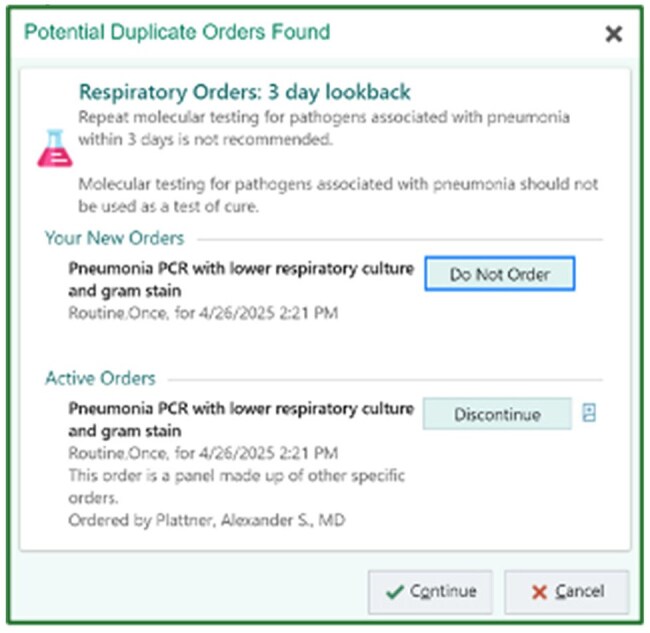 Figure 1
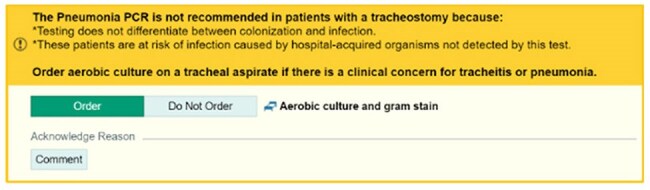 Figure 2
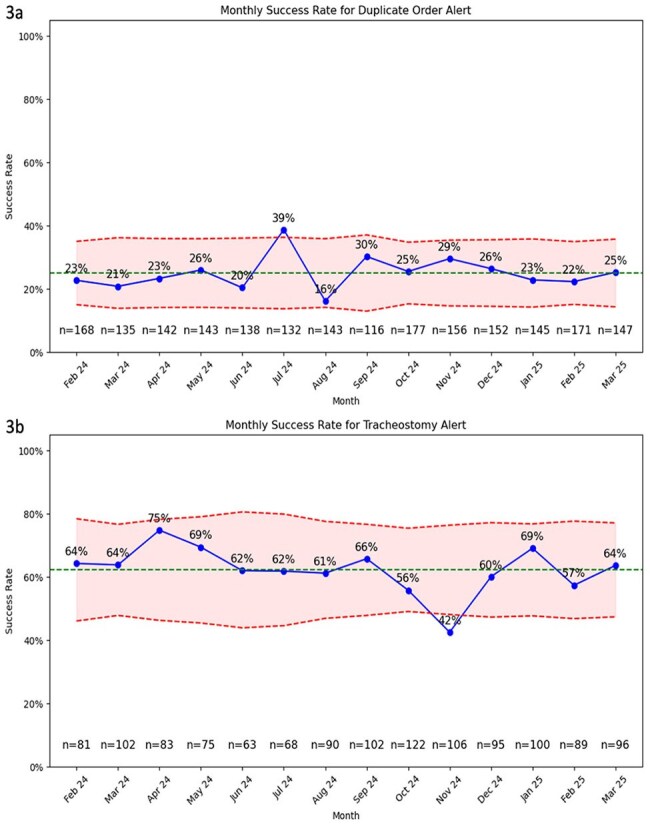 Figure 3
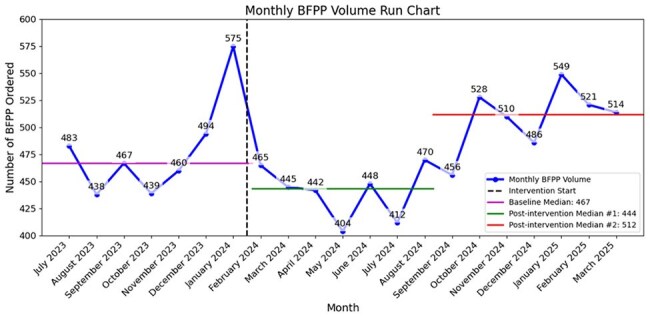 Figure 4
Peer Reviews
No public reviews on file for this paper yet. If you reviewed it on a platform where reviews are public (OpenReview, ICLR, NeurIPS, ICML), you can paste yours below so the community can read it here.
Videos
No videos yet. Explain this paper in a talk, walkthrough, or lecture? Add one.
Taxonomy
TopicsNosocomial Infections in ICU · Bacterial Identification and Susceptibility Testing · Respiratory viral infections research