P-1175. Discrepancies Between Bacteriophage Plaque Assays and Time-Kill Analyses in Daptomycin Non-Susceptible Methicillin-Resistant Staphylococcus aureus
Sean R Van Helden, Callan Bleick, Michael J Rybak

TL;DR
This study shows that plaque assays may not reliably predict phage effectiveness in treating daptomycin non-susceptible MRSA compared to time-kill analyses.
Contribution
The study highlights discrepancies between plaque assays and time-kill analyses for phage activity against DNS MRSA strains.
Findings
Plaque assays showed strong phage activity against all DNS-MRSA strains, but time-kill analyses showed mixed results.
The 2-phage cocktail killed some strains but promoted growth in others, contradicting plaque assay results.
Adding a third phage improved efficacy in some cases, indicating limitations of plaque assays in predicting real-world phage performance.
Abstract
Bacteriophage (phage) therapy is a promising adjunct to antibiotics in treating methicillin-resistant Staphylococcus aureus (MRSA), including daptomycin non-susceptible (DNS) strains. Phage activity against specific bacterial strains is most frequently determined using the double agar overlay plaque-forming assay (plaque assay). Although this assay is often utilized in laboratory settings for determining phage activity, the conditions under which it is performed may not correspond to those of other in vitro assays or models and thus may compromise its ability to reliably predict phage efficacy in these applications. In this study, we describe discrepancies observed between plaque assays and time-kill analyses (TKAs) across multiple phages and DNS MRSA strains. Activity of bacteriophages Intesti-13 (Kayvirus), Sb-1 (Kayvirus), and Romulus (Silviavirus) as determined by the double agar…
Genes, proteins, chemicals, diseases, species, mutations and cell lines named across the full text — each resolved to its canonical identifier and authoritative record.
Click any figure to enlarge with its caption.
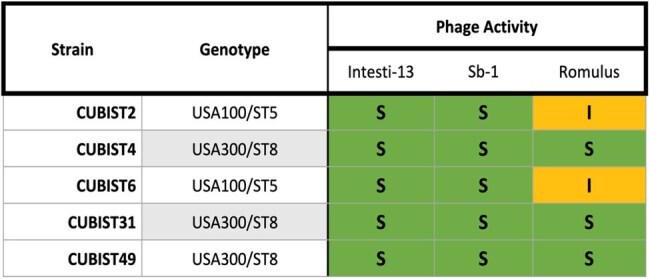 Figure 1
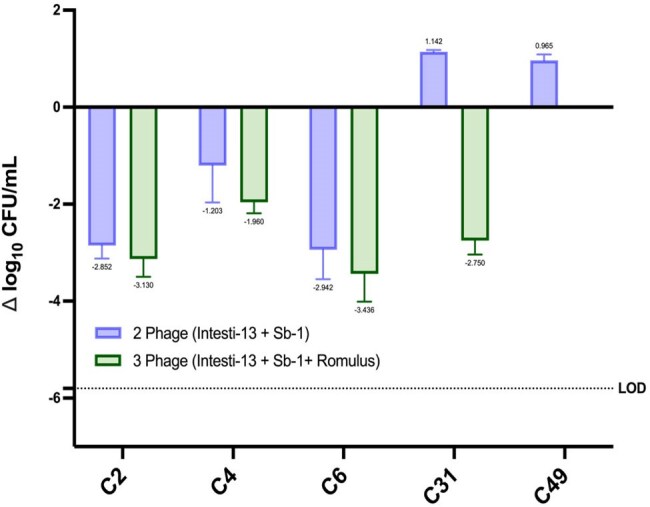 Figure 2
Peer Reviews
No public reviews on file for this paper yet. If you reviewed it on a platform where reviews are public (OpenReview, ICLR, NeurIPS, ICML), you can paste yours below so the community can read it here.
Videos
No videos yet. Explain this paper in a talk, walkthrough, or lecture? Add one.
Taxonomy
TopicsBacteriophages and microbial interactions · Monoclonal and Polyclonal Antibodies Research · Microbial infections and disease research