P-1422. Immunogenicity and Reactogenicity of Adjuvanted (Arexvy) and Non-Adjuvanted (Abrysvo) RSV Vaccines in Immunocompromised Individuals with Hematological Malignancies
Alisse Hannaford, Natalie E Izaguirre, Zoe Swank, Simon D Van Haren, Bridget Yates, Urwah Kanwal, Hannah Levine, Alexandra Tong, Maria Shehata, Fathia Oladipupo, Kevin Ryff, Xiaofang Li, Aidan Eustace, Lindsey Parisi, Louise L Hansen, Colleen J Sedney, Sanya Thomas, David Walt

TL;DR
This study compares how well RSV vaccines work in people with blood cancers versus healthy individuals, finding weaker and less lasting immune responses in cancer patients.
Contribution
The study provides novel insights into the immunogenicity of adjuvanted and non-adjuvanted RSV vaccines in immunocompromised individuals with hematological malignancies.
Findings
RSV vaccination induced a significant but short-lived antibody response in hematological malignancy patients at one month.
Healthy controls had significantly higher and more durable anti-FGP antibody titers compared to the malignancy cohort.
Cellular immune responses were modest, with minimal CD8+ T cell induction in the malignancy group.
Abstract
Given the limited data regarding RSV vaccine immunogenicity in individuals with hematological malignancies (HM), we evaluated the immune response of the RSV adjuvanted (Arexvy, GSK) and non-adjuvanted (Abrysvo, Pfizer) vaccines in people with HM as compared to healthy controls (HC).Table 1Baseline participant characteristics including demographic information, underlying hematologic malignancy, history of prior hematopoietic cell transplantation (HCT), indication for HCT, and immunosuppression used in the three months prior to vaccine administration. *Prior HCT recipients were eligible to receive vaccination if they were >100 days from transplant. **Participants could be on more than one immunosuppressive agent.Table 2Vaccine type received and reactogenicity symptoms documented in the first 72 hours post-vaccination. Baseline participant characteristics including demographic…
Genes, proteins, chemicals, diseases, species, mutations and cell lines named across the full text — each resolved to its canonical identifier and authoritative record.
Click any figure to enlarge with its caption.
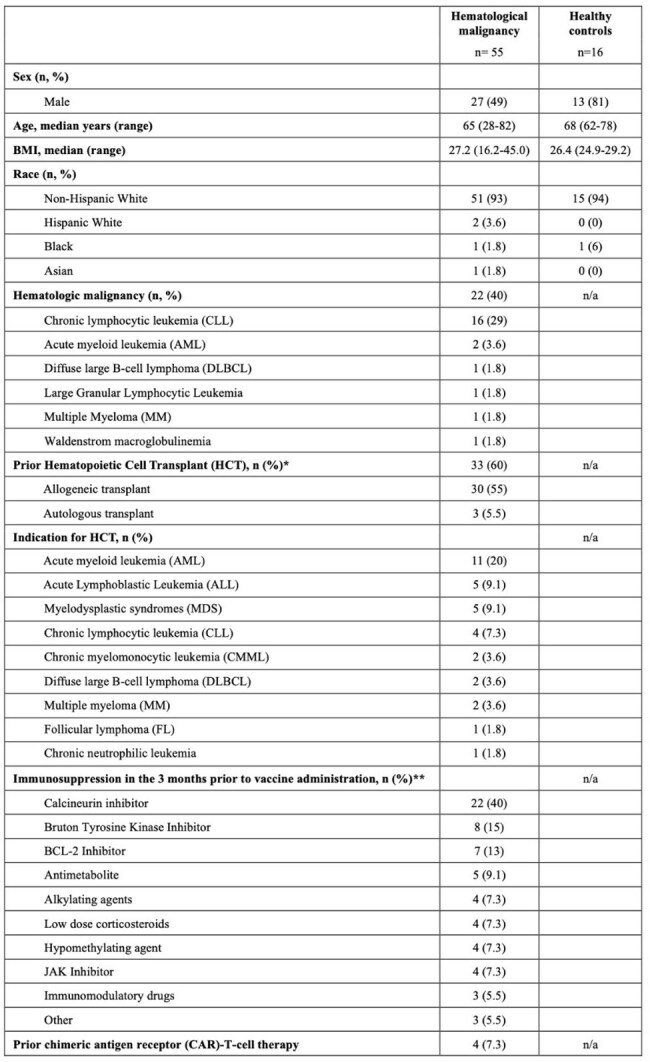 Figure 1
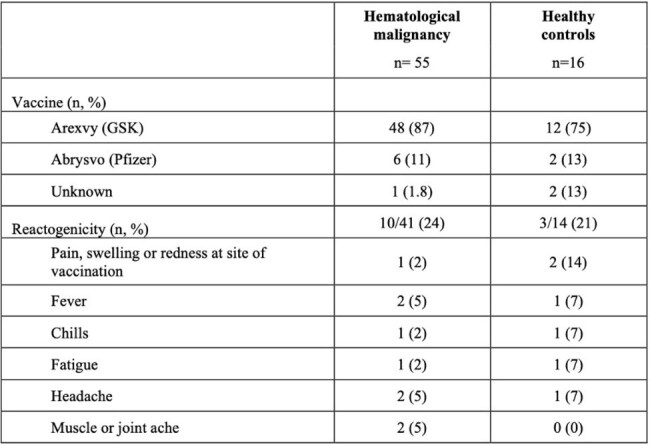 Figure 2
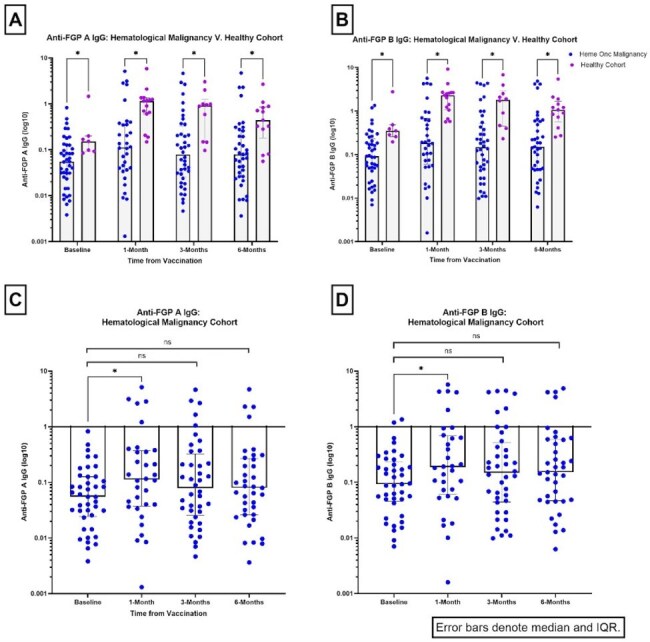 Figure 3
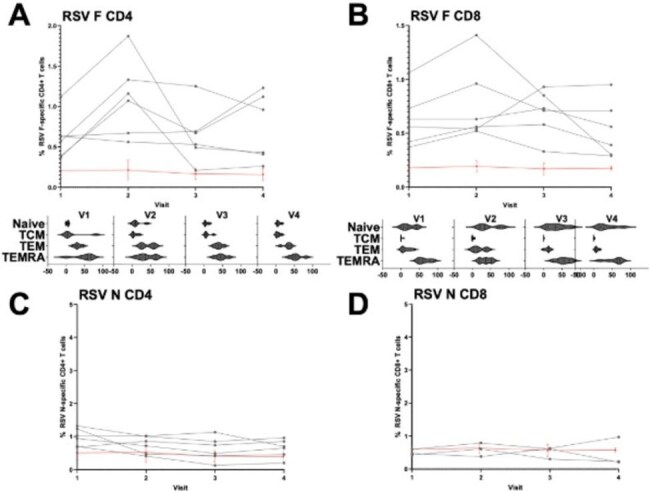 Figure 4
Peer Reviews
No public reviews on file for this paper yet. If you reviewed it on a platform where reviews are public (OpenReview, ICLR, NeurIPS, ICML), you can paste yours below so the community can read it here.
Videos
No videos yet. Explain this paper in a talk, walkthrough, or lecture? Add one.
Taxonomy
TopicsRespiratory viral infections research · Cytomegalovirus and herpesvirus research · Polyomavirus and related diseases