P-789. Urinary Tract Infections in Outpatient Men: An Analysis of Clinicians’ Diagnostic and Treatment Patterns
Tyler Brehm, Larissa Grigoryan, Laura Dillon, Trenton M Haltom, Barbara W Trautner

TL;DR
This study examines how clinicians diagnose and treat urinary tract infections in men, finding inconsistent practices and reliance on unreliable signs like cloudy urine.
Contribution
The study identifies significant variability and lack of evidence-based practices in diagnosing and treating UTIs in men among different clinician groups.
Findings
APPs and emergency department clinicians are more likely to use misleading signs like cloudy urine for UTI diagnosis.
There is no consensus on antibiotic treatment duration or choice for UTIs in men.
Most clinicians rely on dysuria and suprapubic tenderness as primary indicators of UTI.
Abstract
There is limited evidence to guide the diagnosis and treatment of urinary tract infections (UTIs) in men. In this study, we characterized clinicians’ diagnostic and treatment decisions for outpatient men with UTIs.Table 1:Clinician CharacteristicsCharacteristics of clinicians who responded to the survey. APP = advanced practice professional; IQR = interquartile range; IM = internal medicine. a APPs excluded.Characteristics Predicting Use of Misleading UTI Signs – Professional RoleMultivariate analysis with attendings used as the reference range. APPs were significantly more likely to view cloudy (Odds Ratio [OR] 3.623, Confidence Interval [CI] 1.289-10.179, p = 0.015) and foul-smelling urine (OR 2.933, CI 1.047-8.220, p = 0.041) as indicative of UTI. APP = advanced practice professional. N = 196 (cloudy urine), N = 199 (foul-smelling). Clinician Characteristics Characteristics of…
Genes, proteins, chemicals, diseases, species, mutations and cell lines named across the full text — each resolved to its canonical identifier and authoritative record.
Click any figure to enlarge with its caption.
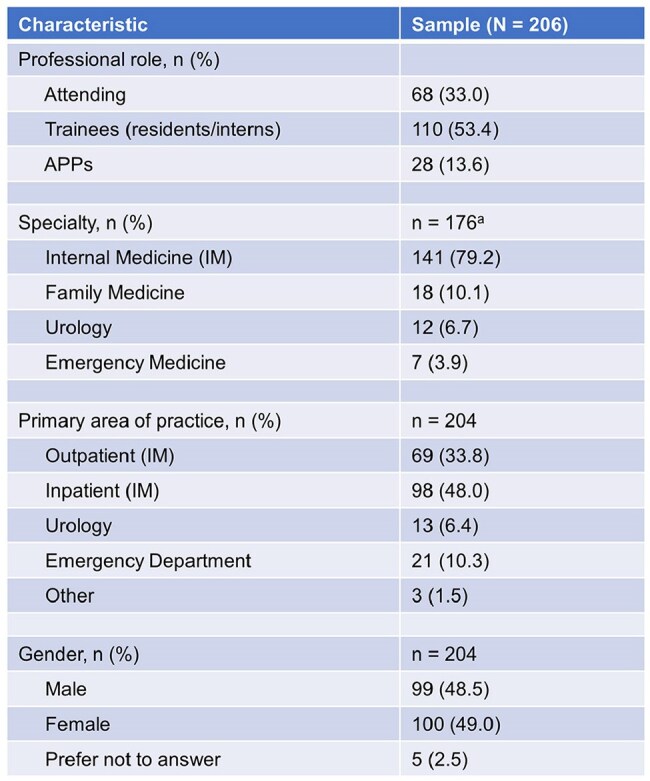 Figure 1
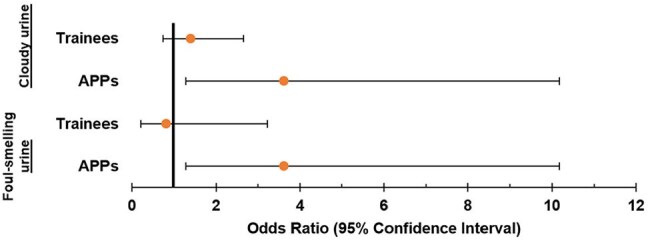 Figure 2
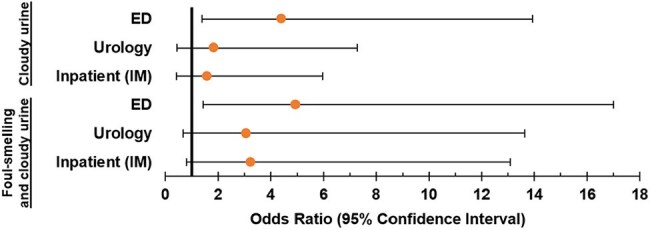 Figure 3
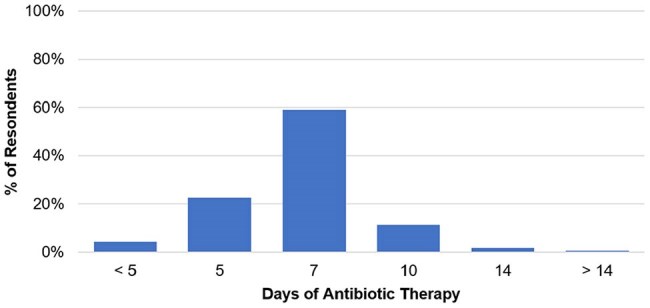 Figure 4
Peer Reviews
No public reviews on file for this paper yet. If you reviewed it on a platform where reviews are public (OpenReview, ICLR, NeurIPS, ICML), you can paste yours below so the community can read it here.
Videos
No videos yet. Explain this paper in a talk, walkthrough, or lecture? Add one.
Taxonomy
TopicsUrinary Tract Infections Management · Pediatric Urology and Nephrology Studies · Reproductive tract infections research