P-798. Urine-Based Expansion of a CRISPR Diagnostic Platform for Antimicrobial Resistance and Bacterial Identification
Bhrus Sangruji

TL;DR
BADLOCK is a CRISPR-based diagnostic system that rapidly detects urinary tract infections and antimicrobial resistance genes in urine samples, offering faster and more efficient results than traditional methods.
Contribution
BADLOCK is adapted for urine-based detection of uropathogens and AMR genes, enabling rapid and resource-efficient diagnostics for UTIs.
Findings
BADLOCK achieved 98.8% accuracy for bacterial species identification and 96.2% accuracy for AMR detection in mock urine samples.
The final workflow provided clinically actionable results within 1.5 hours using minimal resources.
Sample concentration via centrifugation significantly improved detection signal without compromising specificity.
Abstract
Urinary tract infections (UTIs) are among the most common bacterial infections globally, yet their diagnosis is often delayed by reliance on culture-based methods. These delays contribute to the misuse of empiric antibiotics and fuel antimicrobial resistance (AMR). The BADLOCK (Bacterial and AMR Detection by SHERLOCK) platform, a CRISPR-Cas13a-based diagnostic system originally developed for bloodstream infections, was adapted here for rapid detection of uropathogens and AMR genes directly from urine.Figure 1.Integration of BADLOCK into UTI Diagnostic Workflow: From Sample Collection to CRISPR-Based DetectionBADLOCK workflow enables faster and less resource-intensive detection of urinary tract infections compared to standard diagnostics. (A) Schematic comparing the conventional diagnostic workflow for urine samples (top) with the BADLOCK workflow (bottom). While standard methods require…
Genes, proteins, chemicals, diseases, species, mutations and cell lines named across the full text — each resolved to its canonical identifier and authoritative record.
Click any figure to enlarge with its caption.
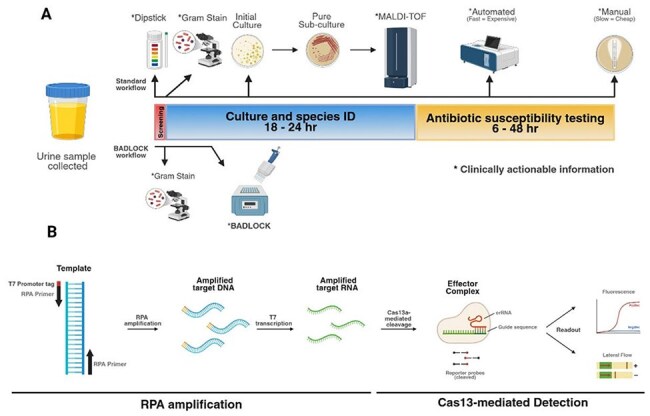 Figure 1
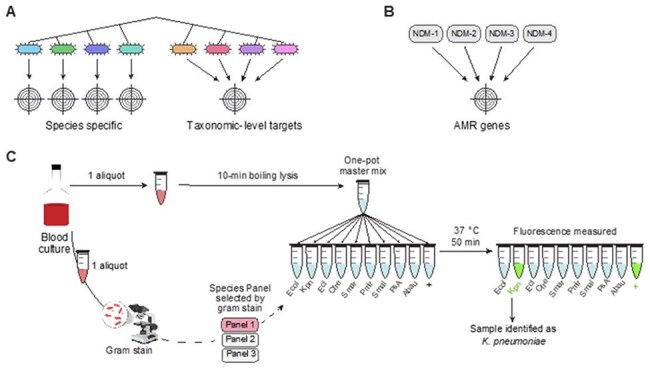 Figure 2
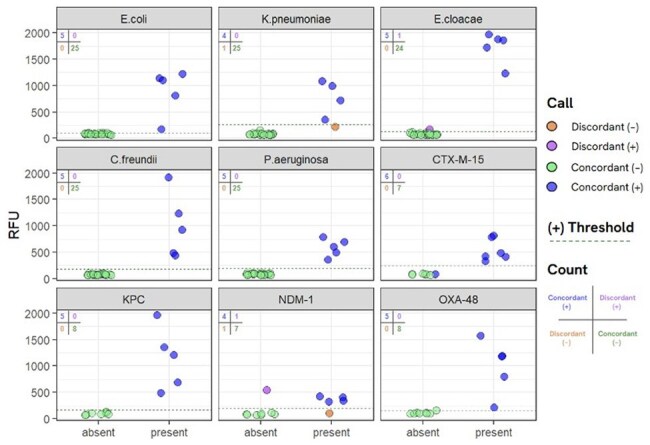 Figure 3
Peer Reviews
No public reviews on file for this paper yet. If you reviewed it on a platform where reviews are public (OpenReview, ICLR, NeurIPS, ICML), you can paste yours below so the community can read it here.
Videos
No videos yet. Explain this paper in a talk, walkthrough, or lecture? Add one.
Taxonomy
TopicsCRISPR and Genetic Engineering · Biosensors and Analytical Detection · Bacterial Identification and Susceptibility Testing