P-901. Characterizing Changes in Antibiotic Use in the Outpatient Setting – United States, 2019 and 2022
Christine Kim, Tessa Schwarze, Lauri A Hicks, Adam Hersh, Sarah Kabbani, Emily McDonald

TL;DR
This study analyzed changes in outpatient antibiotic use in the U.S. from 2019 to 2022, finding a significant decrease in unnecessary prescriptions, especially for conditions where antibiotics are not indicated.
Contribution
The study provides updated data on antibiotic prescribing trends and highlights age-specific patterns in unnecessary use.
Findings
The proportion of outpatient visits with antibiotic prescriptions decreased in 2022 compared to 2019 across all age groups.
The largest decline in antibiotic use was observed for tier 3 conditions, where antibiotics are not indicated, especially among adults aged 20-64.
Tier 2 conditions had the highest prescribing rates in 2022, particularly for children aged 0-19 years.
Abstract
Unnecessary antibiotic use is common in outpatient settings, particularly for acute respiratory illnesses. Monitoring antibiotic prescribing and appropriateness is important for identifying stewardship priorities and tracking progress toward national goals. We evaluated changes in outpatient antibiotic prescribing practices and estimated proportions of unnecessary prescribing.Figure 1.Proportion of outpatient visits with an antibiotic prescription by tier* and age group, Merative MarketScan (<65 years) and CMS Medicare (≥65 years) data, 2019 and 2022.*Tier 1 antibiotics are indicated; including pneumonia, urinary tract infection, and miscellaneous bacterial infection.Tier 2 antibiotics are sometimes indicated; including pharyngitis, sinusitis, suppurative otitis media, non-bacterial pneumonia, acute exacerbation of chronic bronchitis, gastrointestinal infection, skin/mucosal infection,…
Genes, proteins, chemicals, diseases, species, mutations and cell lines named across the full text — each resolved to its canonical identifier and authoritative record.
Click any figure to enlarge with its caption.
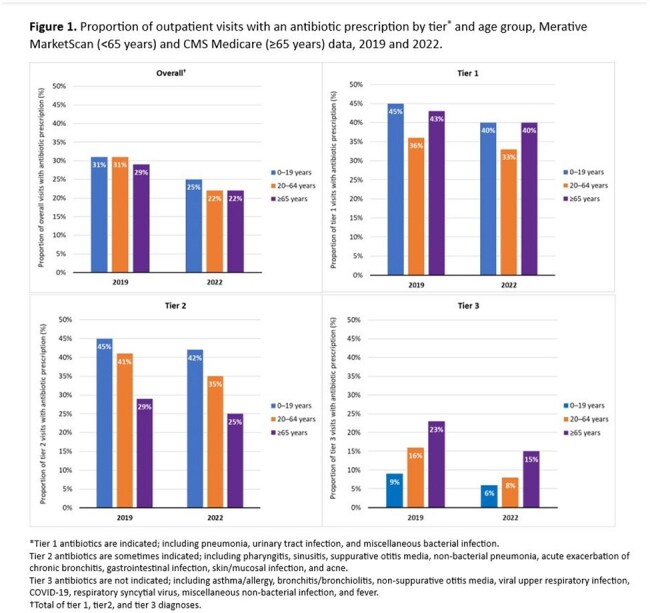 Figure 1
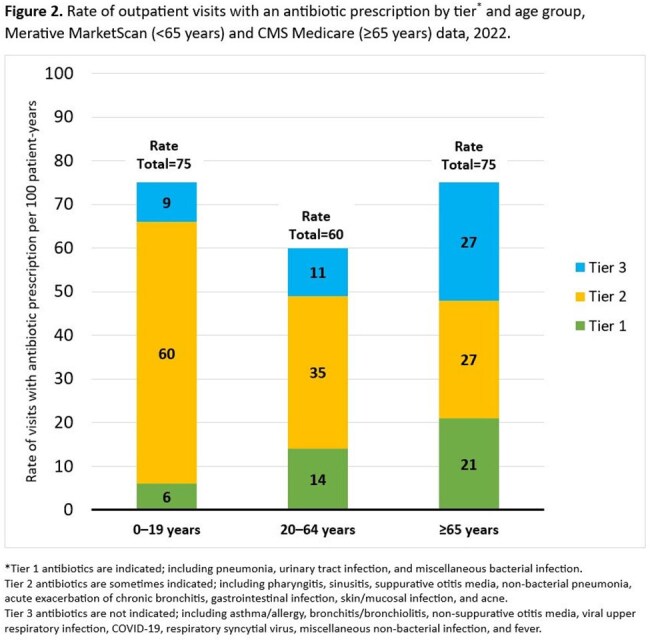 Figure 2
Peer Reviews
No public reviews on file for this paper yet. If you reviewed it on a platform where reviews are public (OpenReview, ICLR, NeurIPS, ICML), you can paste yours below so the community can read it here.
Videos
No videos yet. Explain this paper in a talk, walkthrough, or lecture? Add one.
Taxonomy
TopicsAntibiotic Use and Resistance · Pneumonia and Respiratory Infections · Streptococcal Infections and Treatments