P-1045. Death by CLABSI?
Natalie Ross, Holly Meacham, Kristin Varzavand, Elizabeth Krigbaum, Olivia Wulf, Philip M Polgreen, Karen Brust

TL;DR
The study suggests that some bloodstream infections in critically ill patients near death may be due to gut bacteria rather than catheter infections, which could affect hospital infection reporting.
Contribution
The study introduces evidence that gut translocation may lead to misclassification of CLABSIs in end-of-life patients.
Findings
MBI organisms accounted for more bloodstream infections in patients who died compared to survivors.
CLABSIs within a week of death were more often caused by MBI organisms.
Findings suggest CLABSIs may result from gut translocation, not catheter infections.
Abstract
Central line-associated bloodstream infections (CLABSIs) are hospital-acquired infections tied to quality metrics and penalties, but their validity near the end of life is unclear. We hypothesized that critically ill patients experience gut translocation of mucosal barrier injury (MBI) organisms, leading to bloodstream infections misclassified as CLABSIs. We evaluated the microbiology near death to assess the impact of gut translocation on reporting.Figure 1Figure 2 A retrospective review of 191 adult inpatients with mucosal barrier injury (MBI) and non-MBI CLABSIs at University of Iowa Hospitals and Clinics (2021–2025) was conducted using National Healthcare Safety Network (NHSN) surveillance definitions. Patients were divided into survival and death groups, and blood culture data were analyzed relative to the time of death. Organisms were classified as MBI or non-MBI per NHSN…
Click any figure to enlarge with its caption.
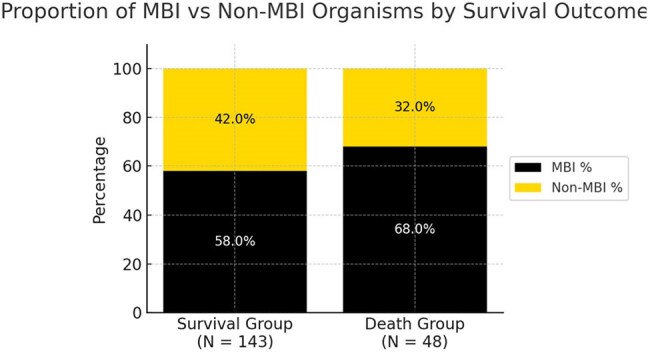 Figure 1
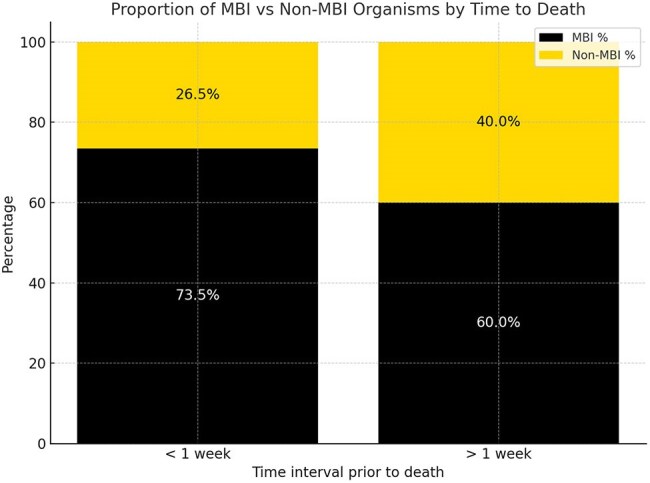 Figure 2
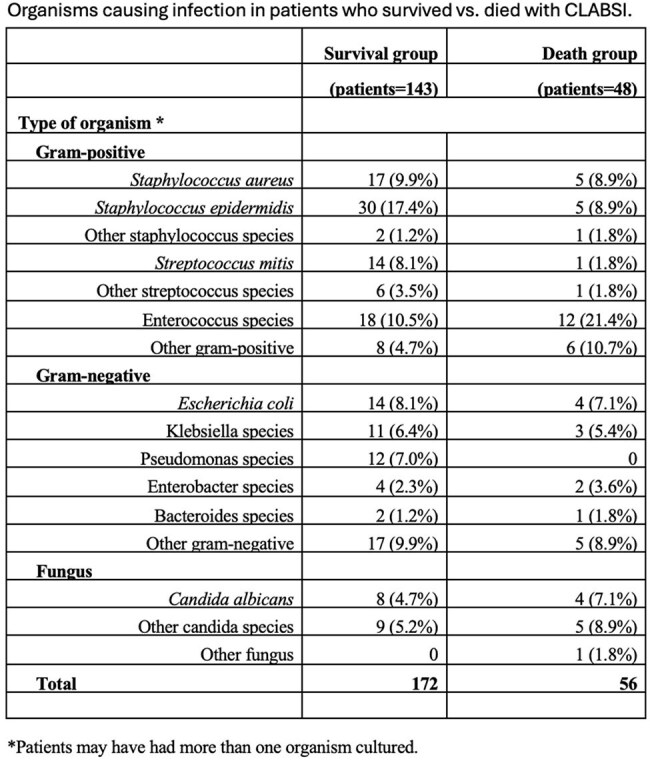 Figure 3
Peer Reviews
No public reviews on file for this paper yet. If you reviewed it on a platform where reviews are public (OpenReview, ICLR, NeurIPS, ICML), you can paste yours below so the community can read it here.
Videos
No videos yet. Explain this paper in a talk, walkthrough, or lecture? Add one.
Taxonomy
TopicsCentral Venous Catheters and Hemodialysis · Nosocomial Infections in ICU · Bacterial Identification and Susceptibility Testing