P-438. Microbiology and Epidemiology of Lemierre’s Syndrome in the U.S. Military Health System
Erinne Salo, Sarah Deperrior, Milissa U Jones, Daniel J Adams

TL;DR
This study examines the causes and patterns of Lemierre’s Syndrome in U.S. military patients, finding that Fusobacterium is the main cause and that it mostly affects young males.
Contribution
The study provides updated microbiological and epidemiological data on Lemierre’s Syndrome in a U.S. military population.
Findings
Lemierre’s Syndrome predominantly affects adolescent males in the U.S. Military Health System.
Fusobacterium species were the most commonly isolated pathogens in 70% of cases.
Polymicrobial infections and Staphylococcal or Streptococcal species were less frequently observed.
Abstract
Lemierre’s Syndrome (LS), or septic thrombophlebitis of the internal jugular vein, is a rare complication of oropharyngeal infections. Given the severity of this infection and its nonspecific clinical presentation, accurate microbiologic data are essential to guide optimal empiric antibiotic therapy. Fusobacterium necrophorum has been classically implicated in LS; however, polymicrobial infections and other pathogens, including S. aureus, are increasingly identified. The objective of this analysis is to clarify the microbiology and epidemiology of LS specifically in pediatric and young adult populations within the U.S. Military Health System.Table 1.ICD-9 and ICD-10 codes used to identify patients with thrombophlebitisTable 2.Demographic data for patients hospitalized with Lemierre's Syndrome ICD-9 and ICD-10 codes used to identify patients with thrombophlebitis Demographic data for…
Click any figure to enlarge with its caption.
 Figure 1
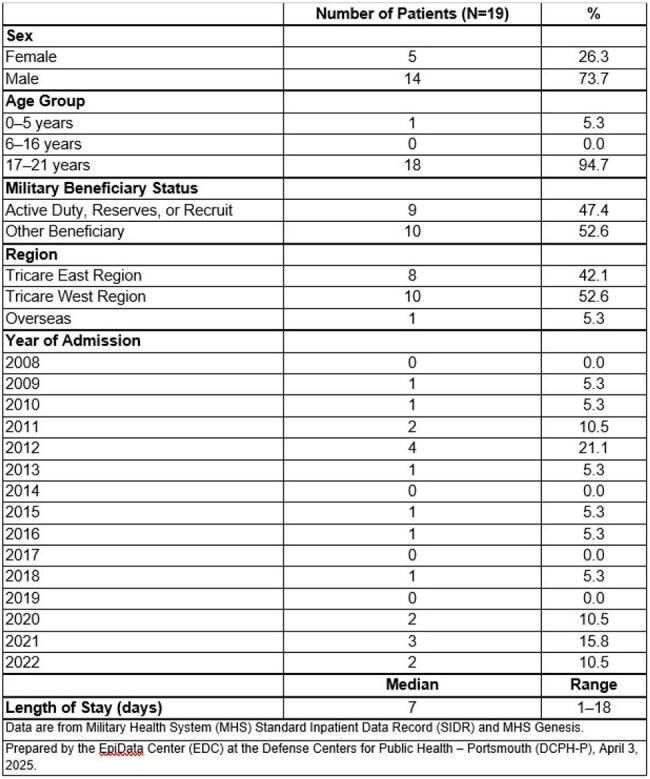 Figure 2
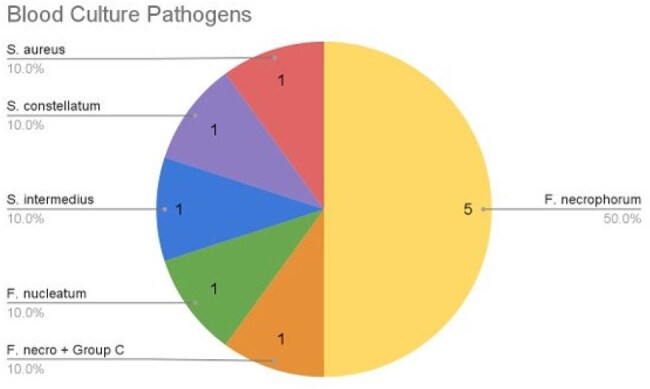 Figure 3
Peer Reviews
No public reviews on file for this paper yet. If you reviewed it on a platform where reviews are public (OpenReview, ICLR, NeurIPS, ICML), you can paste yours below so the community can read it here.
Videos
No videos yet. Explain this paper in a talk, walkthrough, or lecture? Add one.
Taxonomy
TopicsOtolaryngology and Infectious Diseases · Streptococcal Infections and Treatments · Infective Endocarditis Diagnosis and Management