P-967. Antimicrobial Stewardship Program Supported by Infectious Disease Specialists and Consultations at a University-Affiliated Hospital Under Multiple Antimicrobial Shortages: Bayesian Structural Time Series Analysis
Naoya Itoh, Nobumasa Okumura, Shunsuke Kuriki, Chiharu Wachino, Takanori Kawabata, Nana Akazawa-Kai

TL;DR
This study shows that involving infectious disease specialists in an antimicrobial stewardship program significantly reduced the use of certain antibiotics during shortages without harming patient outcomes.
Contribution
The study demonstrates the effectiveness of ID specialist-supported antimicrobial stewardship during drug shortages using Bayesian time series analysis.
Findings
Carbapenem use decreased significantly by an average of 1.31 days of therapy per 100 patient-days.
Antipseudomonal agent use also significantly decreased by 0.44 days of therapy per 100 patient-days.
Patient outcomes like mortality and hospital stay duration remained unchanged despite reduced antibiotic use.
Abstract
Antimicrobial shortages have become increasingly common owing to manufacturing issues and sudden surges in demand. Thus, individualized antimicrobial optimization supported by infectious disease (ID) specialists is essential under such constraints. In this study, we evaluated the effects of a 12-month antimicrobial stewardship program (ASP) supported by ID specialists and consultations at a university-affiliated hospital in Japan during the ongoing antimicrobial shortages.Figure 1.The days of therapy with carbapenems per 100 patient-days per monthThe days of therapy (DOT) with three carbapenems—imipenem/cilastatin, meropenem, and doripenem—per 100 patient-days per month is shown. The study period was divided into two phases: the pre-intervention period (April 1, 2023, to March 31, 2024) and the post-intervention period (April 1, 2024, to March 31, 2025). The light blue shaded area…
Genes, proteins, chemicals, diseases, species, mutations and cell lines named across the full text — each resolved to its canonical identifier and authoritative record.
Click any figure to enlarge with its caption.
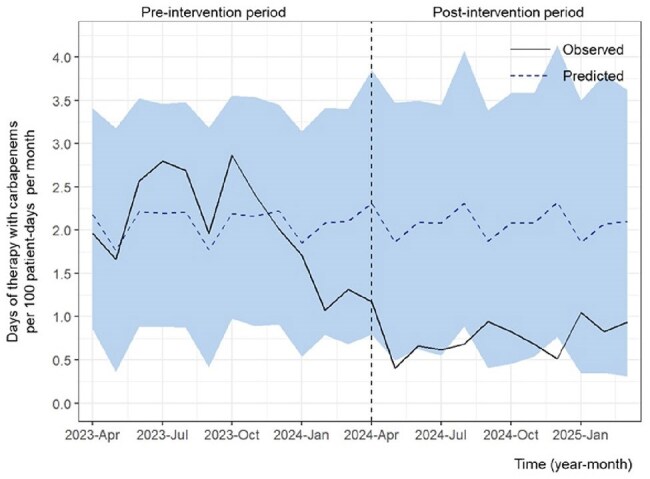 Figure 1
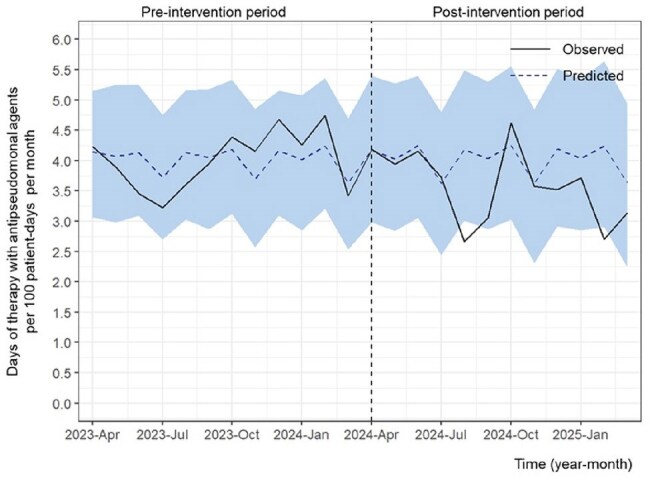 Figure 2
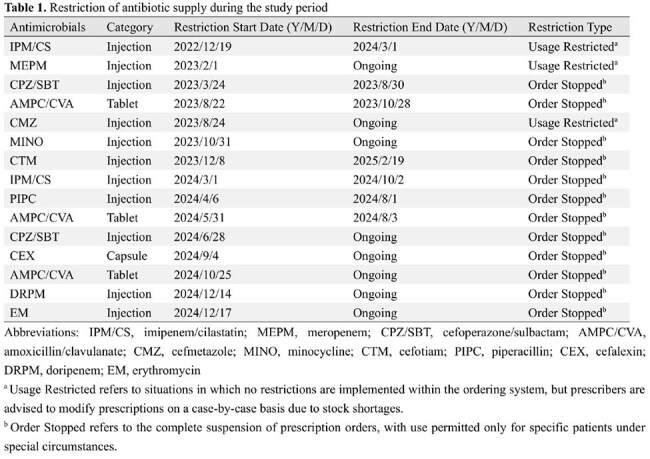 Figure 3
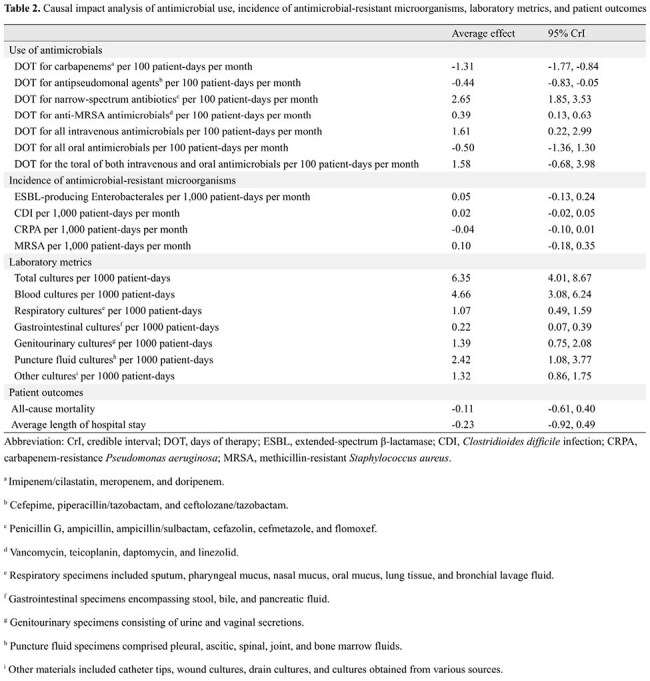 Figure 4
Peer Reviews
No public reviews on file for this paper yet. If you reviewed it on a platform where reviews are public (OpenReview, ICLR, NeurIPS, ICML), you can paste yours below so the community can read it here.
Videos
No videos yet. Explain this paper in a talk, walkthrough, or lecture? Add one.
Taxonomy
TopicsAntibiotic Use and Resistance · Antibiotics Pharmacokinetics and Efficacy · Urinary Tract Infections Management