P-328. PrEP Utilization Patterns and Indications in a Cohort of HIV-Negative Individuals
Richard A Elion, Kenneth H Mayer, Rachel Scott, Aniruddha Hazra, Helen Koenig, Isobel McEwen, Chris Nguyen, Kristin Baker, Olayemi Oladapo, Yenyen Tran, Joshua Gruber, Brett Shannon, Janna Radtchenko

TL;DR
This study examines how PrEP is used among HIV-negative individuals, finding that many who could benefit from it are not prescribed it, suggesting missed prevention opportunities.
Contribution
The study identifies gaps in PrEP prescription patterns and highlights limitations in using clinical codes to determine eligibility.
Findings
Only 17% of HIV-negative individuals received a PrEP prescription, and 19% of initiators discontinued.
Individuals with indicators of PrEP eligibility were less likely to receive prescriptions compared to those without such indicators.
Clinical codes may not reliably capture behavioral risk, leading to missed opportunities for PrEP.
Abstract
Pre-exposure prophylaxis (PrEP) is effective in preventing HIV, yet many individuals who could benefit remain unprotected. This study assessed the PrEP cascade in a database enriched for populations disproportionately affected by HIV.Figure 1:PrEP Cascade SummaryTable 1:HIV Exposure Classification by PrEP Prescriptions and HIV Seroconversions PrEP Cascade Summary HIV Exposure Classification by PrEP Prescriptions and HIV Seroconversions People without HIV (PWoH) with ≥2 visits were evaluated using Trio Health Database from 2016 onward. “PrEP indicated” population was identified based on STI testing or diagnosis, post-exposure prophylaxis (PEP) use, and ICD codes indicating sexual behaviors associated with HIV acquisition (SBawH) or prevention counseling. Gaps (no drug supply >90 days) and discontinuation were analyzed based on prescription and dispensing of emtricitabine/tenofovir or…
Genes, proteins, chemicals, diseases, species, mutations and cell lines named across the full text — each resolved to its canonical identifier and authoritative record.
Click any figure to enlarge with its caption.
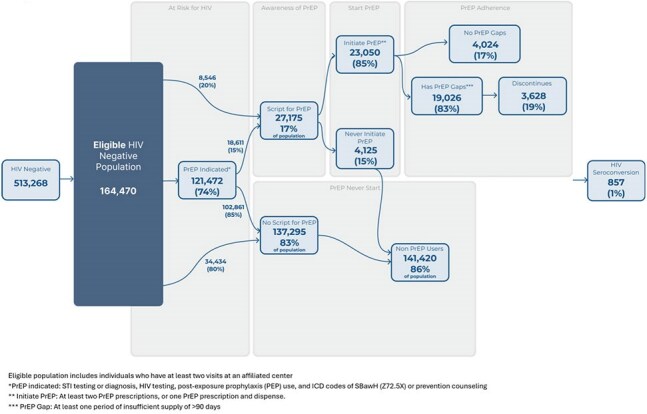 Figure 1
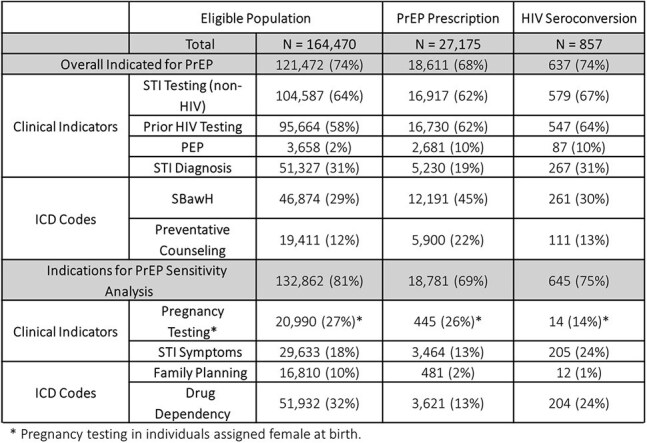 Figure 2
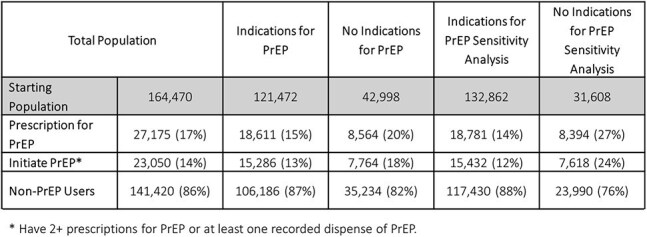 Figure 3
Peer Reviews
No public reviews on file for this paper yet. If you reviewed it on a platform where reviews are public (OpenReview, ICLR, NeurIPS, ICML), you can paste yours below so the community can read it here.
Videos
No videos yet. Explain this paper in a talk, walkthrough, or lecture? Add one.
Taxonomy
TopicsHIV/AIDS Research and Interventions · HIV Research and Treatment · HIV, Drug Use, Sexual Risk