691. Epidemiology of Viral Respiratory Infections in Pediatric Transplant: Initial results from the Viral Infections in Pediatric Transplant Recipients (VIPER) Study
Gabriela Maron, Sarah E Longserre, Jose Ferrolino, Ronald H Dallas, Madeline Johnson, Sarah K Johnson, Alexander L Greninger, Margaret Mills, Lara A Danziger-Isakov, Jason B Weinberg, Maria A Garcia Fernandez, Jonathan Albert, Elizabeth A Moulton, Maria S Rueda-Altez

TL;DR
This study investigates the frequency and impact of respiratory viral infections in children who have received transplants, finding that rhinovirus/enterovirus is the most common virus and may predict future infections.
Contribution
The VIPER study provides new prospective data on the epidemiology of respiratory viral infections in pediatric transplant recipients.
Findings
Rhinovirus/enterovirus (RhV/EV) was the most frequent virus detected in both hematopoietic cell and solid organ transplant recipients.
Baseline RhV/EV predicted subsequent RhV/EV respiratory viral infections (OR:2.9).
Upper respiratory tract infections were more common than lower respiratory tract infections in both transplant groups.
Abstract
Respiratory viral infections (RVIs) cause substantial morbidity in pediatric transplant recipients. Previous efforts to establish the epidemiology of RVIs are mainly retrospective, with limited evaluation of association between pre-transplant screening of respiratory viruses and future RVIs. The VIPER study is a prospective, multicenter cohort study investigating the epidemiology and impact of RVIs in these patients.Figure 1Clinical Presentation of Respiratory Viral Infections Post Transplant Clinical Presentation of Respiratory Viral Infections Post Transplant Patients undergoing Hematopoietic Cell Transplantation (HCT) and Solid Organ Transplant (SOT) at 26 US institutions were enrolled at transplant and monitored for RVIs for a year. Nasal swabs (NS) were collected at baseline and first clinical RVI, and clinical data extracted from medical records. Baseline NS were tested for…
Genes, proteins, chemicals, diseases, species, mutations and cell lines named across the full text — each resolved to its canonical identifier and authoritative record.
Click any figure to enlarge with its caption.
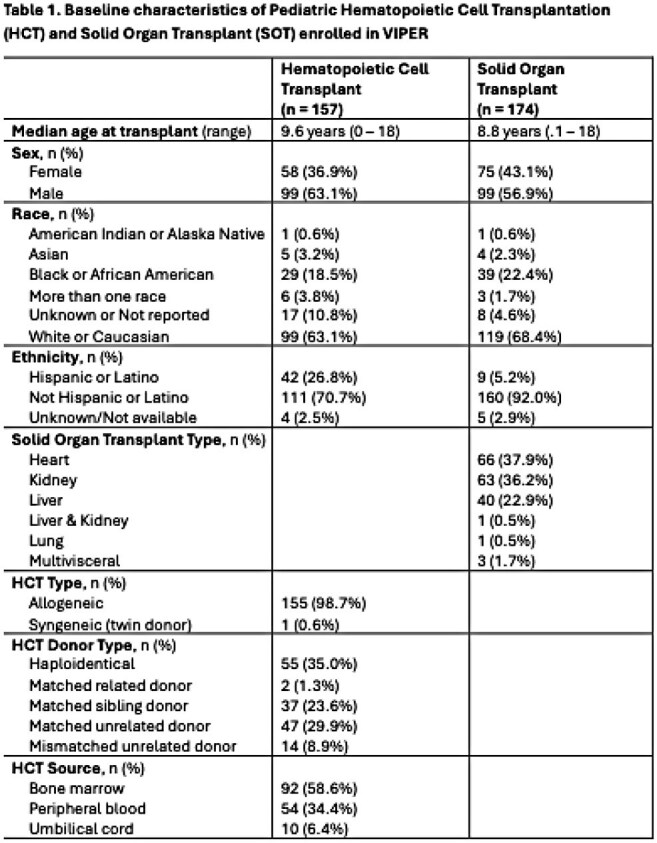 Figure 1
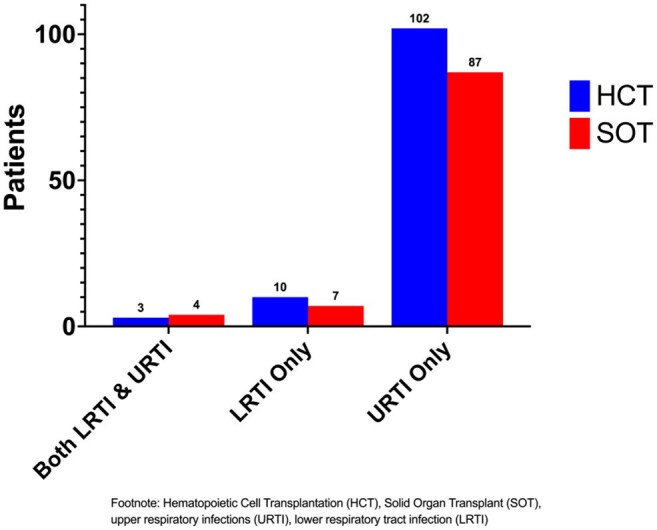 Figure 2
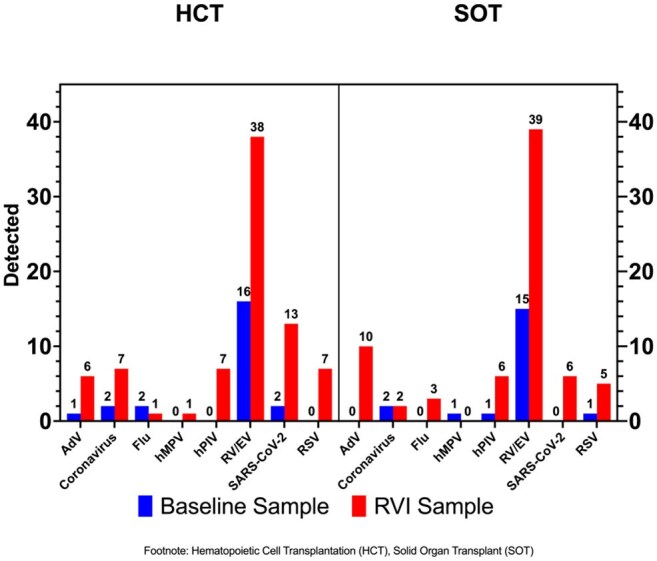 Figure 3
Peer Reviews
No public reviews on file for this paper yet. If you reviewed it on a platform where reviews are public (OpenReview, ICLR, NeurIPS, ICML), you can paste yours below so the community can read it here.
Videos
No videos yet. Explain this paper in a talk, walkthrough, or lecture? Add one.
Taxonomy
TopicsRespiratory viral infections research · SARS-CoV-2 detection and testing · Pneumonia and Respiratory Infections