400. Exploring the Evolving Landscape of Dermatophytosis: Insights from a Case Series on Trichophyton indotineae and Related Genotypes Emerging in the UAE
Fatima Al Dhaheri, Hari Vanam, Dana Aljneibi, Akela Ghazawi, Febin Anes, Fouzia Jabeen, Mushtaq Khan, Ahmed R Alsuwaidi, Jens Thomsen, Mohammad AlBataineh, Stefan Weber, Connie Gibas, Nathan P Wiederhold

TL;DR
This study examines the rise of terbinafine-resistant Trichophyton indotineae in the UAE, highlighting the need for better fungal identification and antifungal stewardship.
Contribution
The study provides the first detailed molecular and epidemiological characterization of T. indotineae and related genotypes in the UAE.
Findings
80% of isolates were identified as T. indotineae, with 80.7% showing SQLE gene mutations linked to terbinafine resistance.
Phylogenetic analysis revealed three distinct clades, suggesting local transmission and clonal expansion of resistant strains.
Risk factors included topical steroid misuse, animal contact, and inadequate antifungal treatment.
Abstract
Dermatophytosis is one of the most common superficial fungal infections globally, increasingly complicated by the emergence of antifungal-resistant strains such as Trichophyton indotineae. A member of the T. mentagrophytes complex, T. indotineae is particularly notable for terbinafine resistance, a frontline oral antifungal. Despite its global spread, limited data exist on the genetic and resistance profiles of T. indotineae and related genotypes in the UAE. This study aimed to characterize the molecular and epidemiological landscape of dermatophytosis in the region.Figure 1.Maximum likelihood phylogenetic tree based on ITS sequences illustrating the relationships among UAE isolates and reference sequences. The tree is color-coded by clade: green, orange, and purple, indicating distinct ITS lineages or genotypes. Red numbers represent branch lengths, corresponding to the evolutionary…
Genes, proteins, chemicals, diseases, species, mutations and cell lines named across the full text — each resolved to its canonical identifier and authoritative record.
Click any figure to enlarge with its caption.
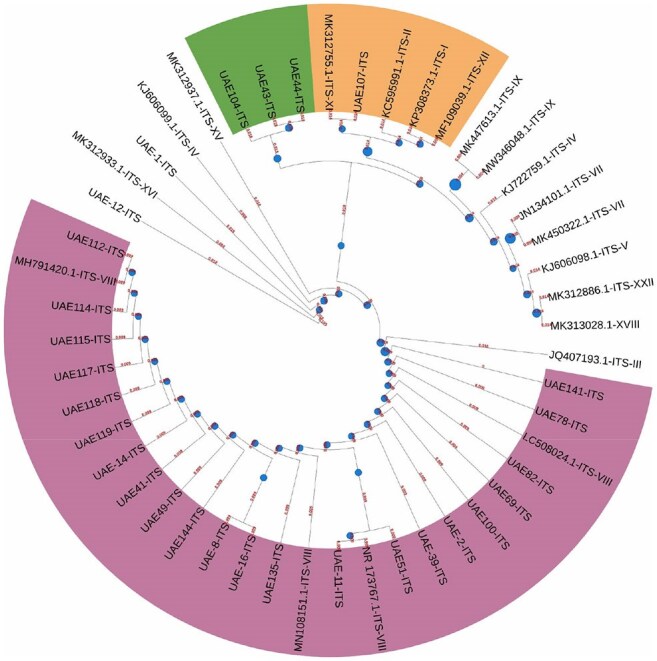 Figure 1
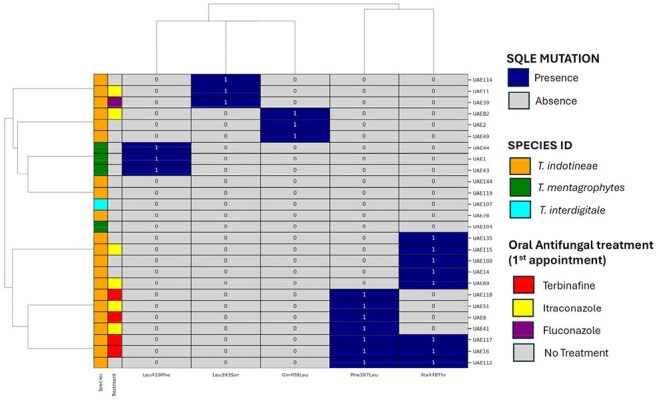 Figure 2
Peer Reviews
No public reviews on file for this paper yet. If you reviewed it on a platform where reviews are public (OpenReview, ICLR, NeurIPS, ICML), you can paste yours below so the community can read it here.
Videos
No videos yet. Explain this paper in a talk, walkthrough, or lecture? Add one.
Taxonomy
TopicsNail Diseases and Treatments · Acne and Rosacea Treatments and Effects · Neonatal skin health care