111. A Growing Threat: The Rising Incidence of Extended-Spectrum Beta-Lactamase-Producing Enterobacterales Infections Among Pediatric Patients in Monroe County, NY
Hsioa Che Looi, Julia Tellerman, Christina B Felsen, Elizabeth L Anderson, Jenna Dietz, christopher J Myers, Rebecca Tsay, Brenda L Tesini, Ghinwa Dumyati

TL;DR
This study shows a significant rise in ESBL-E infections among children in Monroe County, NY, with infants being most affected and more likely to have risk factors like hospitalization or surgery.
Contribution
The study provides new insights into the epidemiology of ESBL-E infections in U.S. pediatric populations, particularly highlighting trends and risk factors specific to infants.
Findings
ESBL-E incidence increased from 26.1 to 36.9 per 100,000 population between 2019 and 2024 in Monroe County.
Infants had a 68.1% increase in ESBL-E incidence and were more likely to have risk factors like prematurity and hospitalization.
Most cases were community-associated, but infants were less likely to be classified as such compared to older children.
Abstract
Extended-spectrum beta-lactamase-producing Enterobacterales (ESBL-E) infections are increasing globally. Studies specific to the pediatric population in the U.S. are limited. This study aims to describe the epidemiology of ESBL-E infections in infants and children in Monroe County, NY.Table 1:Demographic and clinical characteristics of pediatric patients with ESBL-E infections, Monroe County, July 2019-2024Figure 1:ESBL-E Incidence by age group, Monroe County, 2019-2024 Demographic and clinical characteristics of pediatric patients with ESBL-E infections, Monroe County, July 2019-2024 ESBL-E Incidence by age group, Monroe County, 2019-2024 ESBL-E infections in residents < 18 years were identified from 7/2019 to 12/2024 through CDC Emerging Infections Program surveillance. Incident cases were defined by the first isolation of E. coli or Klebsiella spp. from sterile sites or urine…
Genes, proteins, chemicals, diseases, species, mutations and cell lines named across the full text — each resolved to its canonical identifier and authoritative record.
Click any figure to enlarge with its caption.
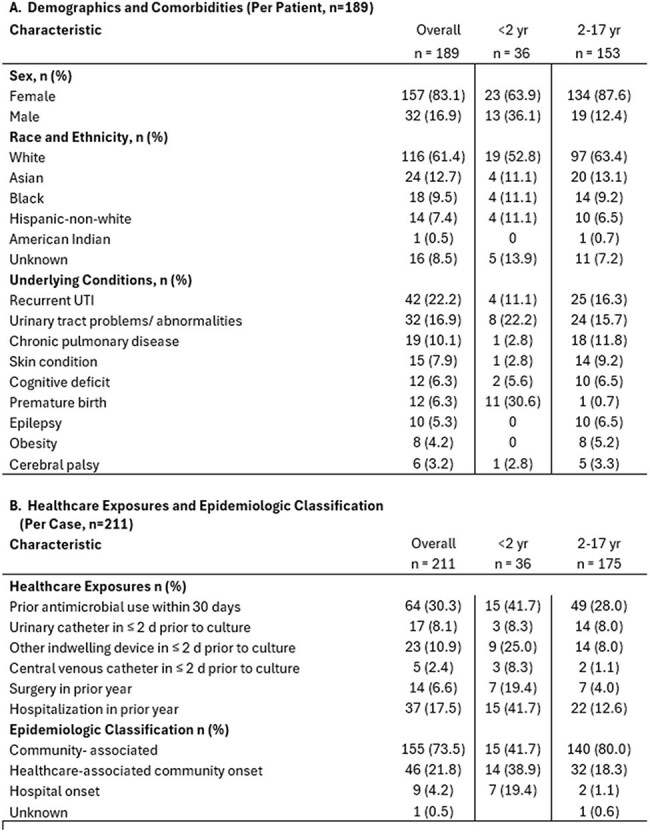 Figure 1
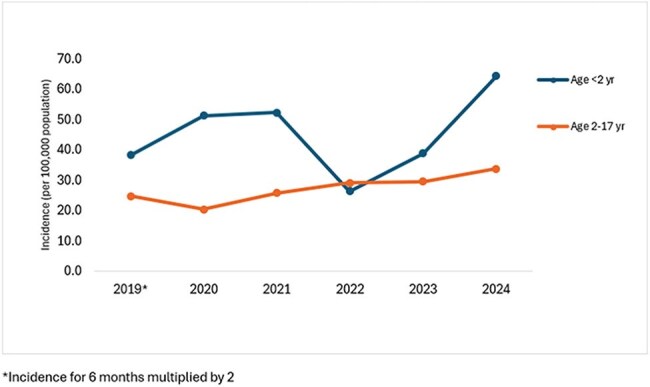 Figure 2
Peer Reviews
No public reviews on file for this paper yet. If you reviewed it on a platform where reviews are public (OpenReview, ICLR, NeurIPS, ICML), you can paste yours below so the community can read it here.
Videos
No videos yet. Explain this paper in a talk, walkthrough, or lecture? Add one.
Taxonomy
TopicsAntibiotic Resistance in Bacteria · Enterobacteriaceae and Cronobacter Research · Antibiotic Use and Resistance