P-237. Impact of Acute Malaria on Viral Load Among People with HIV: A Multi-Site Prospective Cohort Study in Sub-Saharan Africa
Lauren Sweet, Seth Frndak, Nicole Dear, Kartavya J Vyas, Hannah Kibuuka, John Owuoth, Valentine Sing’oei, Jonah K Maswai, Reginald R Gervas, Abdulwasiu Tiamiyu, Zahra Parker, Trevor A Crowell, Julie A Ake, Neha Shah, Joseph Yabes

TL;DR
This study examines how acute malaria affects HIV viral load in people living with HIV in Sub-Saharan Africa, finding that most remain virally suppressed despite malaria.
Contribution
The study identifies a small subset of HIV-positive individuals who experience viral non-suppression around malaria episodes, linked to younger age and less ART experience.
Findings
Most PWH with malaria remained virally suppressed (<200 copies/mL), indicating effective HIV care.
A minority of PWH (13.6%) showed viral non-suppression before and after malaria, associated with younger age and lower CD4 counts.
PWH on dolutegravir (DTG) were less likely to be in the non-suppressor group, suggesting potential benefits of this ART regimen.
Abstract
Characterization of malaria episodes among people with HIV (PWH) is lacking since shifts to HIV test-and-treat and adoption of integrase-strand inhibitors. Improvements in HIV care may have minimized previously seen impacts of malaria on HIV outcomes.Table 1.Clinical characteristics of PLWH participants at closest visit to first positive malaria testFigure 1.A) Predicted probability of viral non-suppression (>=200 copies/mL) across months from acute malaria visit. B) Growth Mixture modeling of the 2 identified clusters. i) consistent suppressors, and ii) non-suppressors and the probability of viral non-suppression prior-to and after the malaria event. Malaria event is noted at time “0”. Clinical characteristics of PLWH participants at closest visit to first positive malaria test A) Predicted probability of viral non-suppression (>=200 copies/mL) across months from acute malaria visit.…
Genes, proteins, chemicals, diseases, species, mutations and cell lines named across the full text — each resolved to its canonical identifier and authoritative record.
Click any figure to enlarge with its caption.
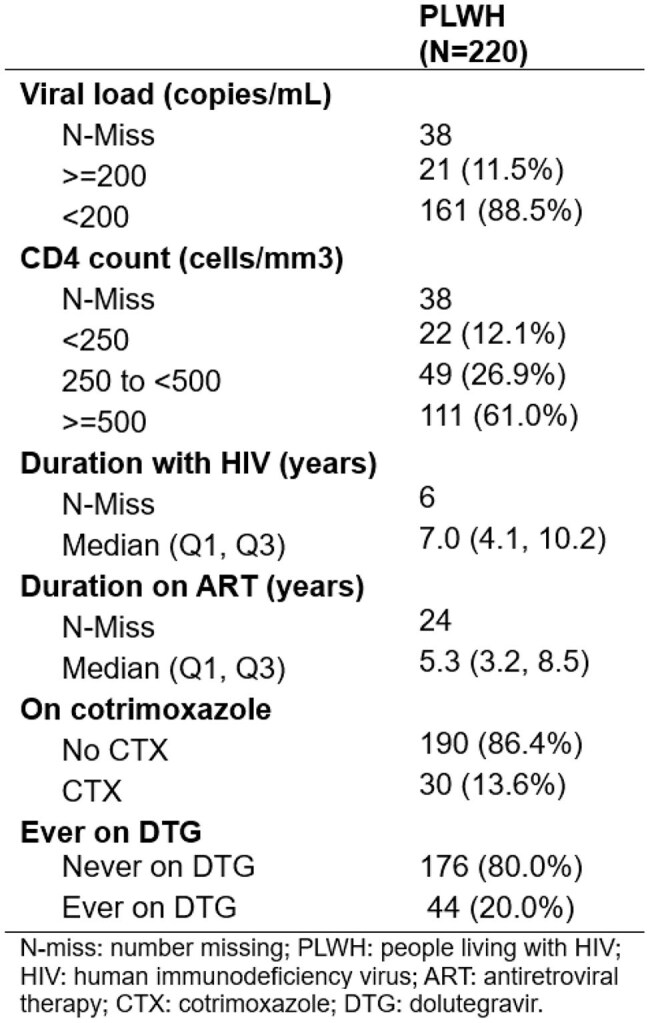 Figure 1
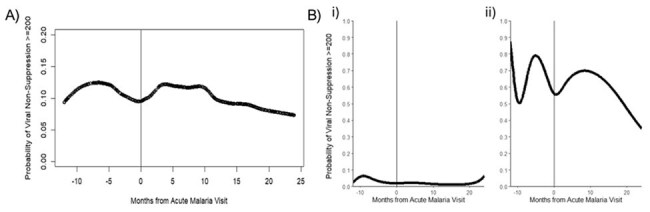 Figure 2
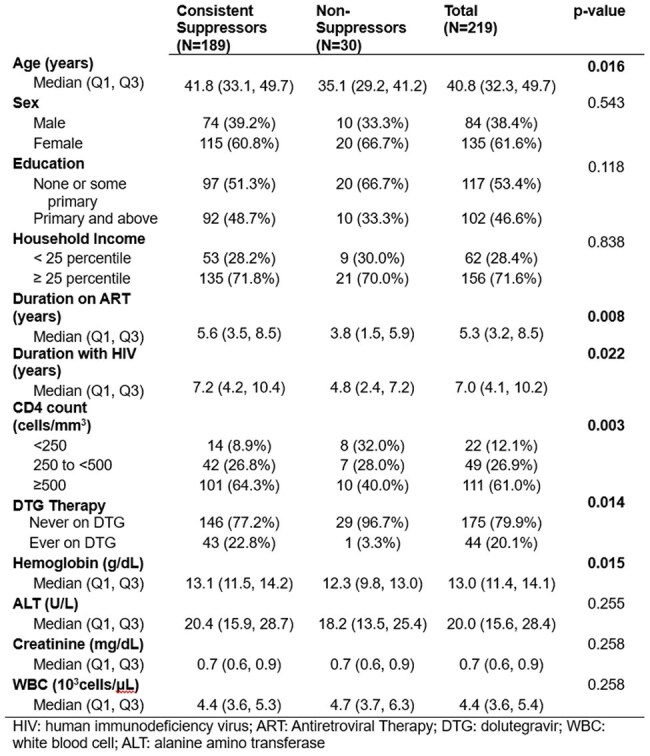 Figure 3
Peer Reviews
No public reviews on file for this paper yet. If you reviewed it on a platform where reviews are public (OpenReview, ICLR, NeurIPS, ICML), you can paste yours below so the community can read it here.
Videos
No videos yet. Explain this paper in a talk, walkthrough, or lecture? Add one.
Taxonomy
TopicsMalaria Research and Control · Mosquito-borne diseases and control · HIV Research and Treatment