A Method for Preparing Morphologically Preserved Wildlife Fecal Specimens for Long‐Term Ecological Studies
Jiahao Zhang, Dongling Zhang, Xinrui Xu, Yunqiao Zhang, Qiang Dai

TL;DR
This paper presents a new method to preserve wildlife feces for long-term ecological studies, maintaining their shape, DNA, and chemical properties.
Contribution
A multistep preservation method that maintains fecal morphology, DNA integrity, and enables heavy metal detection.
Findings
Preserved fecal specimens retained morphology and showed no mold or insect damage over 18 months.
DNA extraction success was 100%, with species identification matching pre-preservation samples.
Heavy metals like chromium, arsenic, and lead were successfully detected in preserved fecal samples.
Abstract
Wildlife feces are a valuable noninvasive resource in ecological and conservation research. However, traditional preservation methods are unable to maintain morphological integrity while simultaneously preserving the biological and chemical composition of fecal samples. This study introduces a novel method for the preparation of fecal specimens through a multistep infiltrated process using sodium carboxymethyl cellulose, sodium benzoate, clotrimazole, ethanol, pyrethroid emulsion, and polyvinylpyrrolidone solution. The entire procedure takes approximately 7 days to complete one batch of specimens. The specimens produced using this method exhibited high mechanical strength, ensuring durability and resistance to handling damage. Over an 18‐month storage period, the preserved specimens retained their external morphology and showed no signs of mold or insect damage. DNA integrity was well…
Genes, proteins, chemicals, diseases, species, mutations and cell lines named across the full text — each resolved to its canonical identifier and authoritative record.
Click any figure to enlarge with its caption.
 Figure 1
 Figure 2
 Figure 3
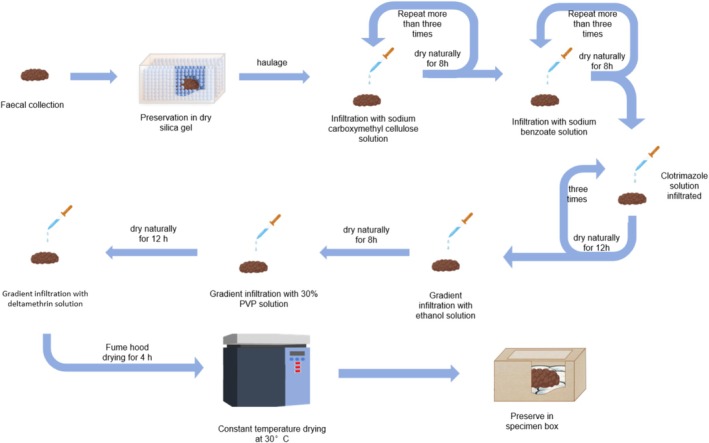 Figure 4
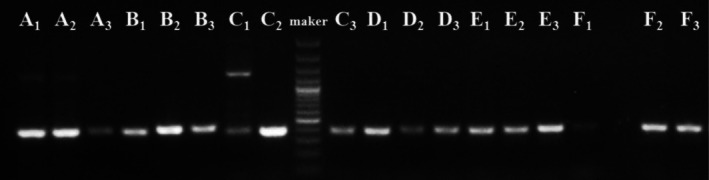 Figure 5
Peer Reviews
No public reviews on file for this paper yet. If you reviewed it on a platform where reviews are public (OpenReview, ICLR, NeurIPS, ICML), you can paste yours below so the community can read it here.
Videos
No videos yet. Explain this paper in a talk, walkthrough, or lecture? Add one.
Taxonomy
TopicsEnvironmental DNA in Biodiversity Studies · Heavy metals in environment · Freshwater macroinvertebrate diversity and ecology