Synaptic Vesicle Glycoprotein 2A Suppresses Amyloidogenesis Beyond Its Synaptic Role: A Novel Mechanism Disrupting BACE1 Binding and Altering APP Localization
Xiaoling Wang, Qian Zhang, Xiaomin Zhang, Jing Liu, Jingjing Zhang, Congcong Liu, Yuting Cui, Qiao Song, Yuli Hou, Yaqi Wang, Min Cao, Peichang Wang

TL;DR
This study shows that SV2A, a brain protein, reduces amyloid plaques in Alzheimer's by blocking a key enzyme and changing where a harmful protein is located.
Contribution
SV2A is newly identified as an APP-binding protein that suppresses amyloidogenesis by inhibiting BACE1-APP interaction.
Findings
SV2A overexpression reduces Aβ plaque deposition in APP/PS1 mice.
SV2A inhibits BACE1-APP interaction, suppressing amyloidogenic processing.
SV2A alters APP localization away from endosomal-lysosomal compartments.
Abstract
Synaptic vesicle glycoprotein 2A (SV2A), a transmembrane protein widely localized to synaptic vesicles, serves as a key indicator of synaptic loss in Alzheimer's disease (AD). In this study, adeno‐associated virus (AAV) was injected by brain stereotactic injection technique to construct SV2A‐overexpressing APP/PS1 mice, then the effects of SV2A on amyloid precursor protein (APP) degradation and its molecular mechanism were further explored in vivo or in vitro. Our results demonstrated that SV2A overexpression significantly reduced Aβ plaque deposition in brain tissue of APP/PS1 mice. Mechanistically, SV2A was identified as a novel APP‐binding protein that attenuated the amyloidogenic processing of APP by inhibiting its interaction with β‐site APP cleaving enzyme 1 (BACE1). Furthermore, SV2A overexpression altered the subcellular distribution of APP, shifting its localization away from…
Genes, proteins, chemicals, diseases, species, mutations and cell lines named across the full text — each resolved to its canonical identifier and authoritative record.
Click any figure to enlarge with its caption.
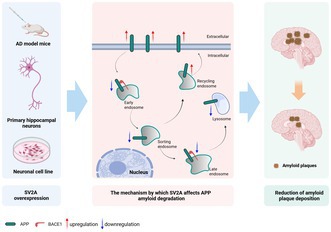 Figure 1
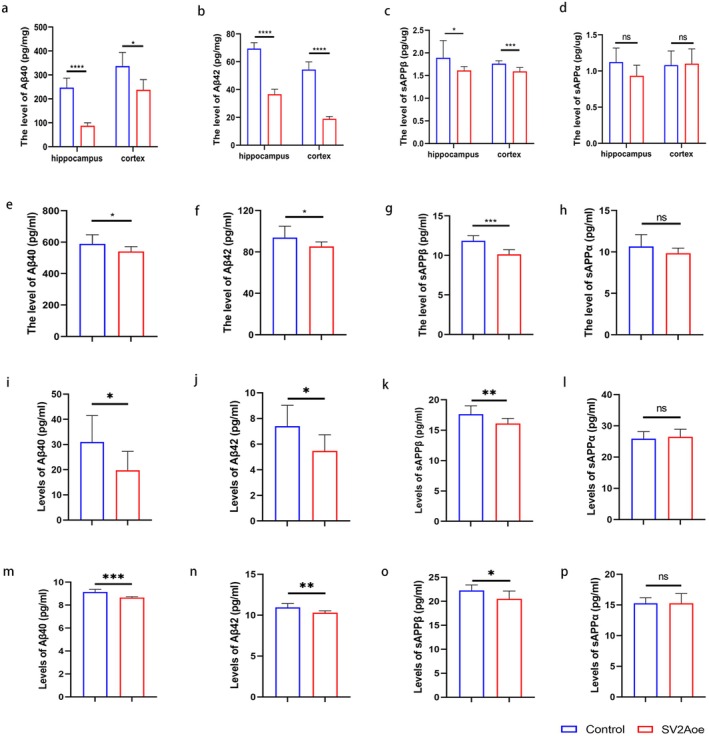 Figure 2
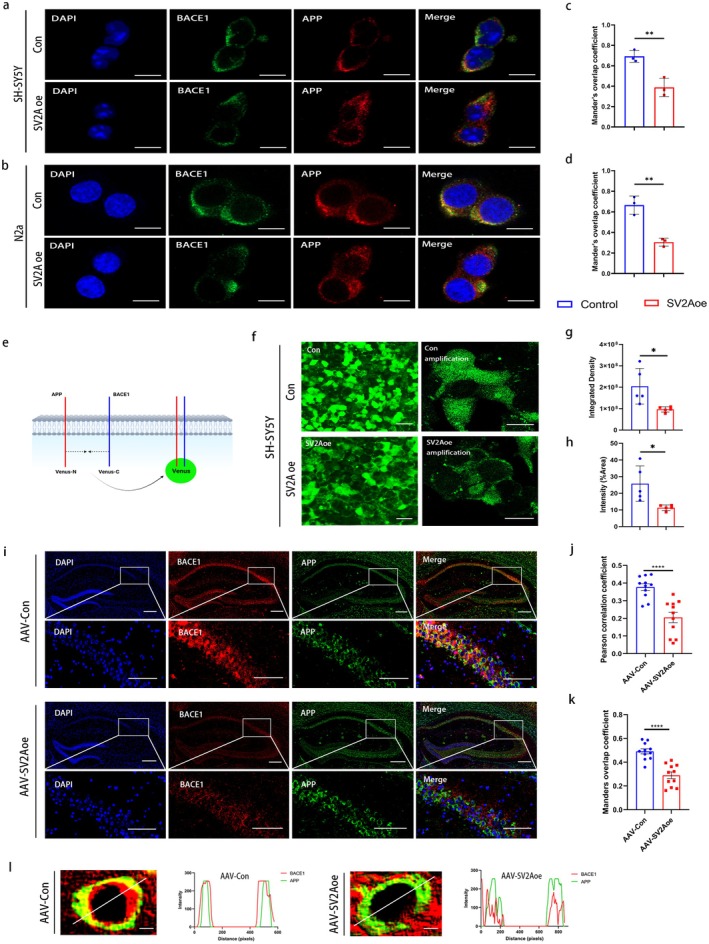 Figure 3
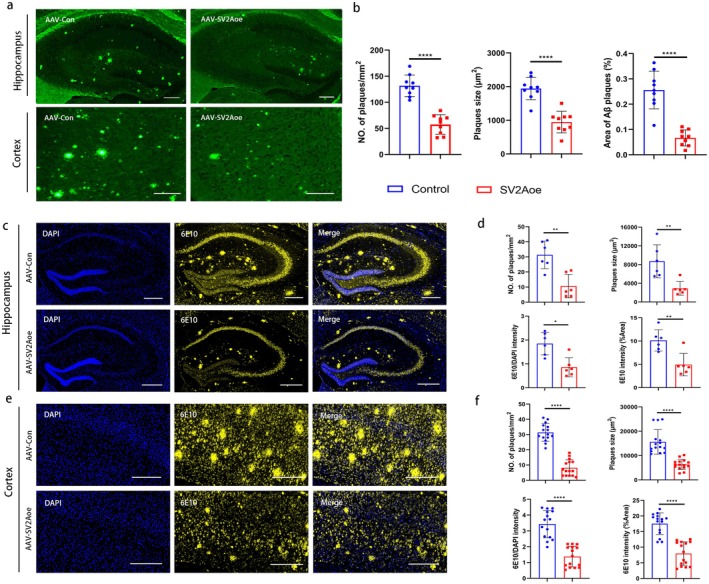 Figure 4
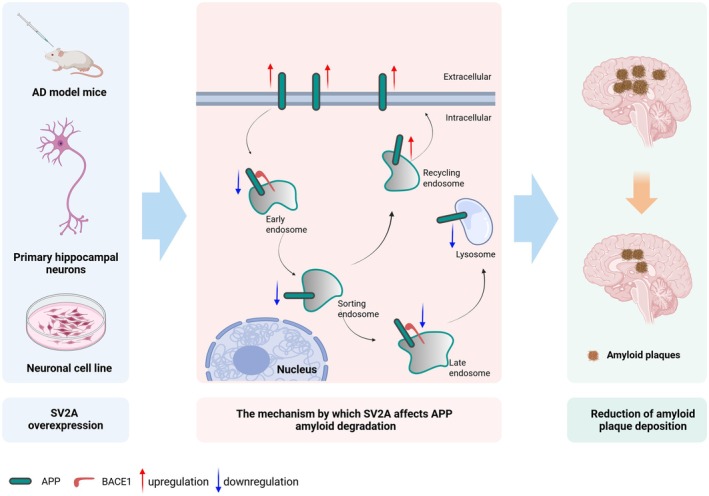 Figure 5
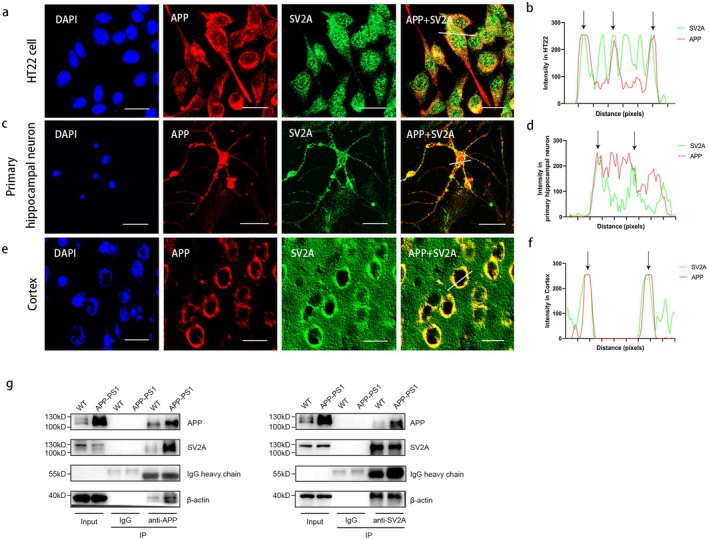 Figure 6
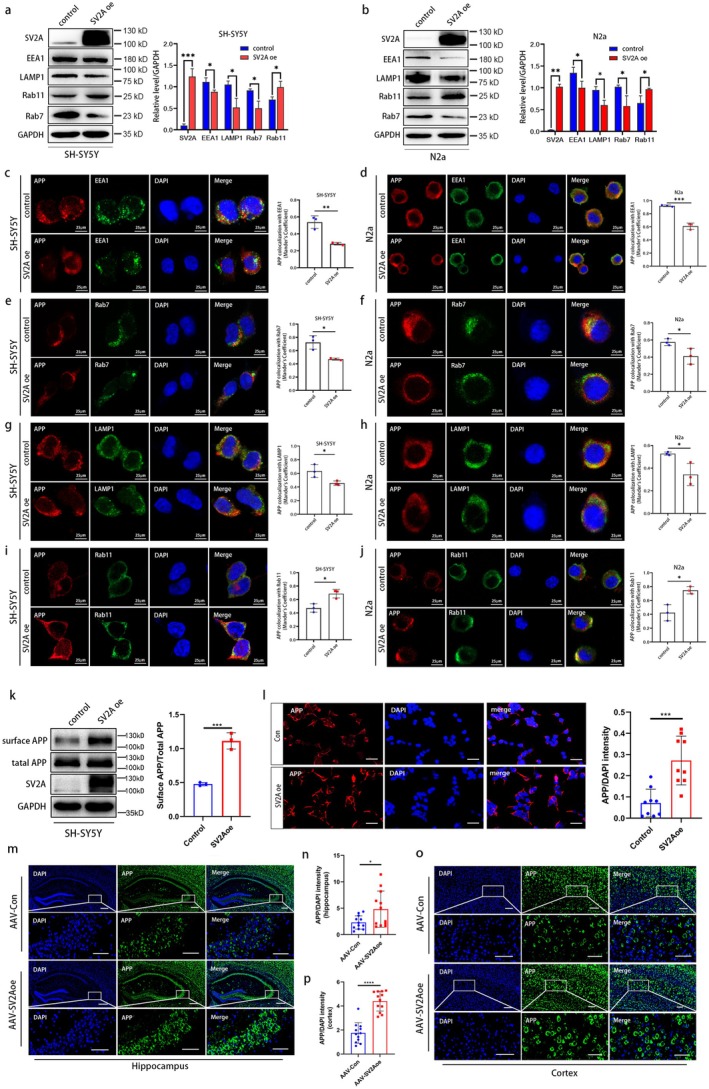 Figure 7
Peer Reviews
No public reviews on file for this paper yet. If you reviewed it on a platform where reviews are public (OpenReview, ICLR, NeurIPS, ICML), you can paste yours below so the community can read it here.
Videos
No videos yet. Explain this paper in a talk, walkthrough, or lecture? Add one.
Taxonomy
TopicsAlzheimer's disease research and treatments · Cellular transport and secretion · S100 Proteins and Annexins