P-1296. Impact of Metallo-Beta Lactamases on Outcomes in Patients with Carbapenem-Resistant Gram-Negative Infections
Angelique E Boutzoukas, Wanying Shao, Jianping Jiang, Souha S Kanj, Minggui Wang, Soraya Salcedo Mendoza, Kalisvar Marimuthu, Zhengyin Liu, Lauren Komarow, Vance G Fowler, Barry N Kreiswirth, Cesar A Arias, Yohei Doi, David L Paterson, Michael Satlin, Robert A Bonomo

TL;DR
This study examines how metallo-beta-lactamase (MBL) enzymes affect outcomes in patients with carbapenem-resistant Gram-negative infections, finding that MBL presence is linked to worse outcomes in some infection types.
Contribution
The study provides new insights into the clinical impact of MBL-producing bacteria in carbapenem-resistant infections, particularly in non-fermenter infections.
Findings
MBL presence was not associated with increased 30- or 90-day mortality in the overall cohort.
In non-fermenter infections (CRPA/CRAb), MBL presence was linked to less desirable outcomes.
The association between MBL and worse outcomes was not observed in carbapenem-resistant Enterobacterales (CRE).
Abstract
Treatment options for Carbapenem-resistant (CR) Gram-negative infections due to metallo-beta-lactamase (MBL) enzymes are limited. The clinical impact of MBLs vs. other mechanisms of carbapenem resistance in Enterobacterales and non-fermenting bacteria remains unclear.Table 1.Demographics, isolate characteristics, and outcomes of patients with carbapenem-resistant Gram-negative infections, stratified by MBL statusFigure 1.30-day desirability of outcome ranking (DOOR) outcomes of patients with carbapenem-resistant Gram-negative infections, stratified by MBL statusCRPA – carbapenem-resistant Pseudomonas aeruginosa, CRAb – carbapenem-resistant Acinetobacter baumannii, CRE – carbapenem-resistant Enterobacterales, DOOR – desirability of outcome ranking. MBL – metallo-beta-lactamase. DOOR events assessed at 30 days include: unsuccessful discharge, lack of clinical response, and C. difficile…
Genes, proteins, chemicals, diseases, species, mutations and cell lines named across the full text — each resolved to its canonical identifier and authoritative record.
Click any figure to enlarge with its caption.
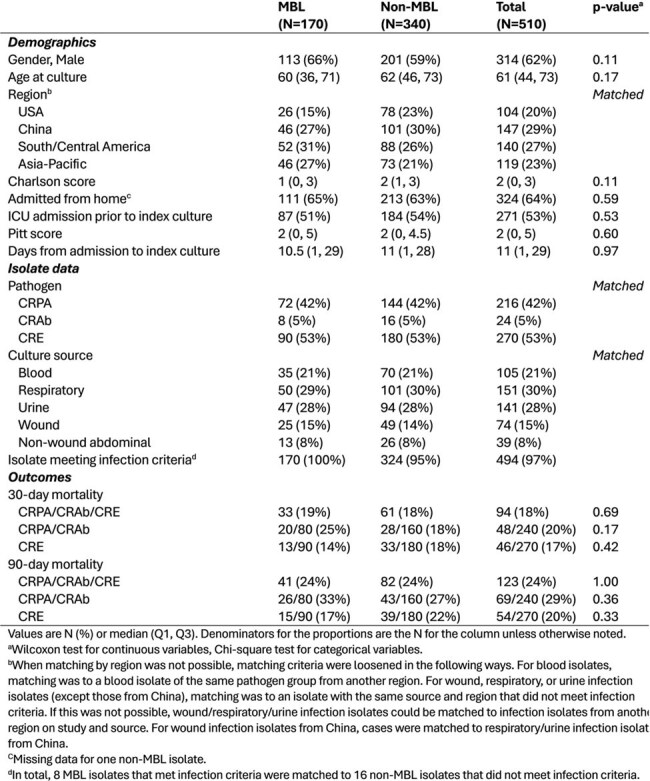 Figure 1
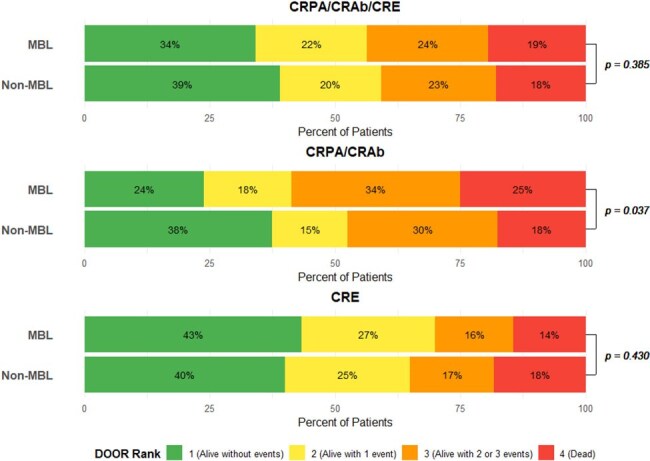 Figure 2
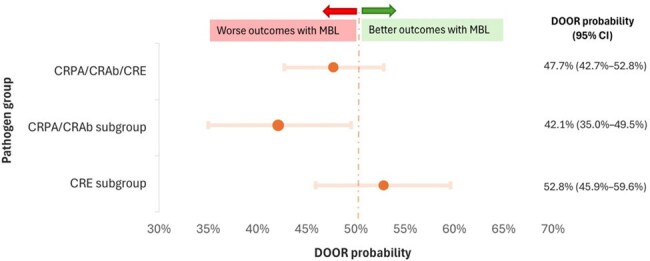 Figure 3
Peer Reviews
No public reviews on file for this paper yet. If you reviewed it on a platform where reviews are public (OpenReview, ICLR, NeurIPS, ICML), you can paste yours below so the community can read it here.
Videos
No videos yet. Explain this paper in a talk, walkthrough, or lecture? Add one.
Taxonomy
TopicsAntibiotic Resistance in Bacteria · Nosocomial Infections in ICU · Clostridium difficile and Clostridium perfringens research