The maximum 2D diameter column of the notch as the most important bone risk indicator compared with the posterior tibial slopes for ACL injury based on computed tomography: Analysis using machine learning approach
Ke Xiao, Song Wu, Benjamin Rothrauff, Bosomtwe Kwabena Richmond, Damaris Topola Boko, Jiewen Luo, Chi Liang, Yangbo Cao, Yunheng Yao, Jinshen He

TL;DR
This study uses machine learning to identify the Maximum 2D Diameter Column of the notch as the key bone risk factor for non-contact ACL injuries, outperforming other measures like tibial slopes.
Contribution
The study introduces a novel machine learning approach to identify the Maximum 2D Diameter Column as the most important bone risk indicator for ACL injuries.
Findings
The Maximum 2D Diameter Column was significantly smaller in non-contact ACL injury cases compared to controls.
The Extreme Gradient Boosting model achieved a high precision-recall curve of 0.94 for predicting ACL injuries.
SHAP analysis confirmed the Maximum 2D Diameter Column as the most predictive feature, followed by tibial slopes.
Abstract
To develop a machine learning model capable of predicting the bony risk of non‐contact anterior cruciate ligament injury, thereby enabling the identification of factors that contribute to such injuries. Data were collected from 400 cases of non‐contact ACL‐injured and 200 ACL‐intact control subjects using Computed Tomography between March 2022 and June 2025. Thirteen features, encompassing demographic, clinical, and radiomic data, as well as six different algorithms, were utilised to develop predictive machine learning models. Shapley Additive Explanations (SHAP) analysis was subsequently performed on the optimal model. The Maximum 2D Diameter Column values for the non‐contact ACL injury group and the intact ACL group were 31.12 ± 2.92 mm (95% confidence interval [CI]: 30.83–31.40, p < 0.05) and 32.37 ± 3.07 mm (95% CI: 31.94–32.80, p < 0.05). The Extreme Gradient Boosting classifier…
Genes, proteins, chemicals, diseases, species, mutations and cell lines named across the full text — each resolved to its canonical identifier and authoritative record.
Click any figure to enlarge with its caption.
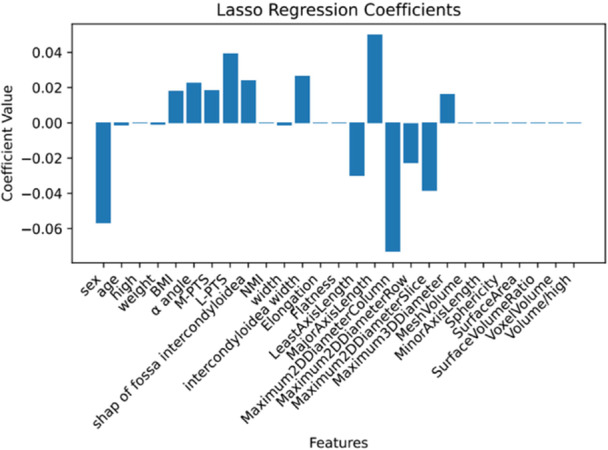 Figure 1
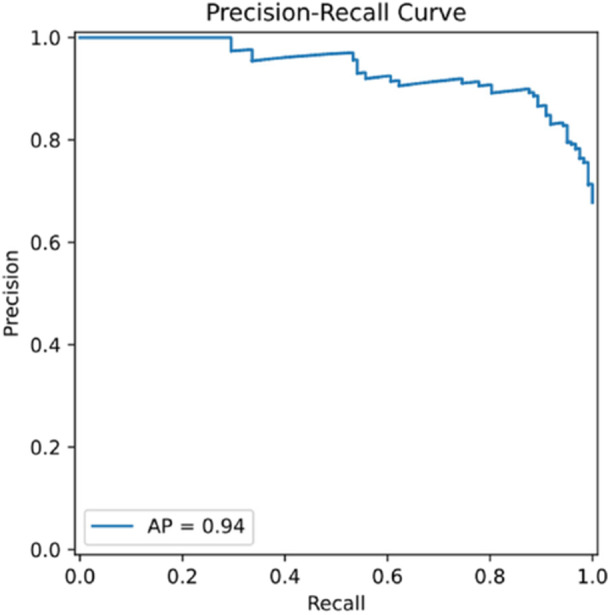 Figure 2
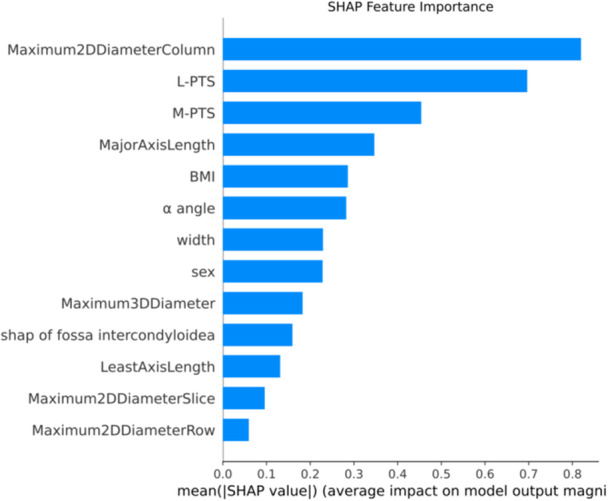 Figure 3
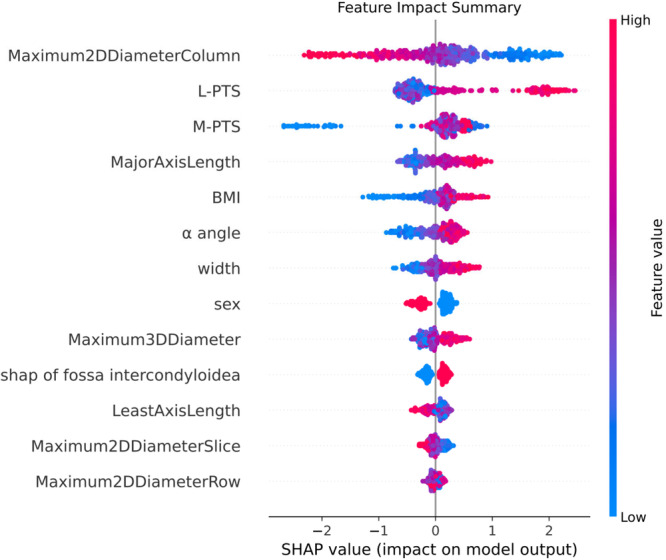 Figure 4
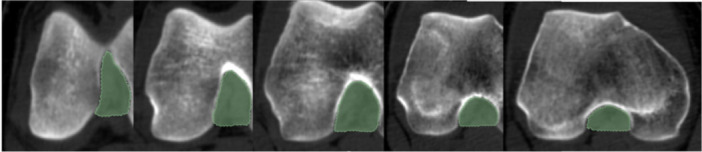 Figure 5
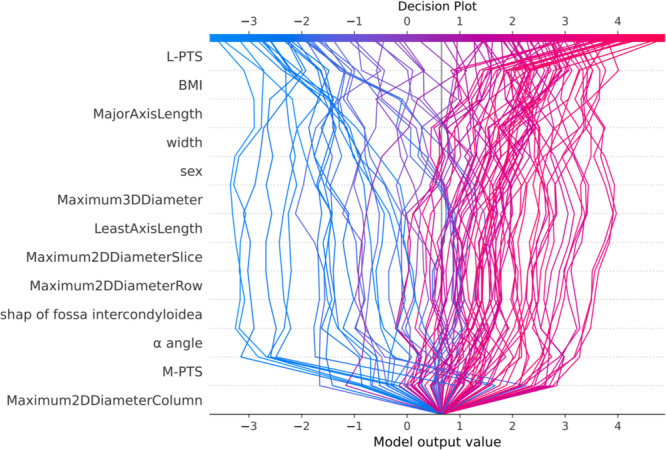 Figure 6
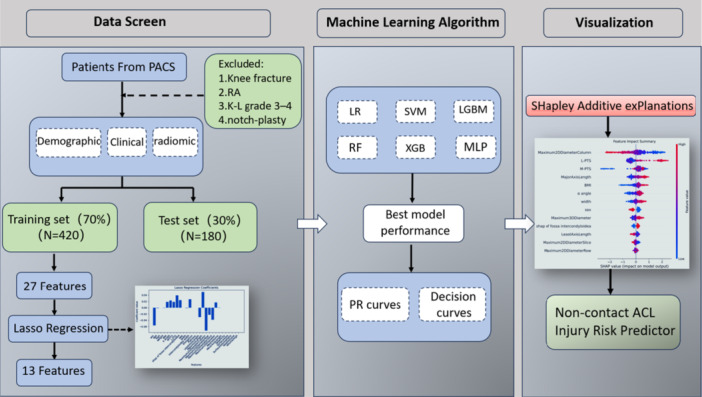 Figure 7
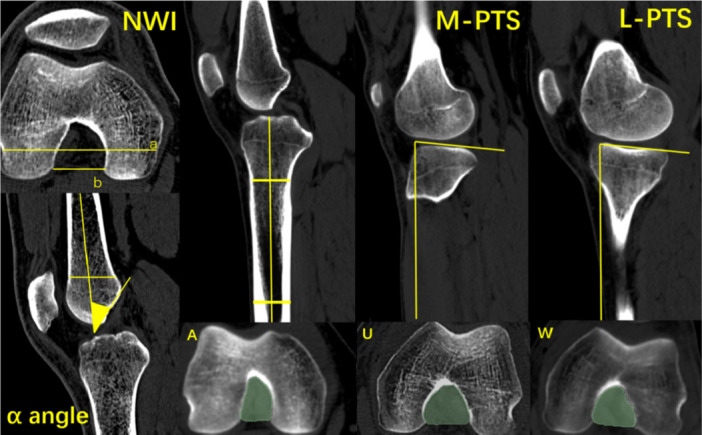 Figure 8
Peer Reviews
No public reviews on file for this paper yet. If you reviewed it on a platform where reviews are public (OpenReview, ICLR, NeurIPS, ICML), you can paste yours below so the community can read it here.
Videos
No videos yet. Explain this paper in a talk, walkthrough, or lecture? Add one.
Taxonomy
TopicsKnee injuries and reconstruction techniques · Total Knee Arthroplasty Outcomes · Bone fractures and treatments