P-447. Differences in Invasive Pneumococcal Disease Clinical Presentations and Serotype Distribution among Children with and without Underlying Risk Factors
Kristina G Hulten, William J Barson, Philana L Lin, Steven Dahl, John S Bradley, Tina Q Tan, Pia Pannaraj, Jennifer Dien Bard, Kacy A Ramirez, Lindsay Grant, Adriano Arguedas, Maria J Tort, Ashley Miller, Alejandro D Cane, Bradford Gessner, Sheldon L Kaplan

TL;DR
This study compares clinical features and pneumococcal serotypes in children with and without underlying health conditions who developed invasive pneumococcal disease.
Contribution
The study reveals distinct clinical presentations and serotype distributions in children with underlying conditions versus those without.
Findings
Children with immunocompromising conditions most commonly had bacteremia and serotype 23B, which is not in licensed pediatric PCVs.
Children without underlying conditions were younger and more likely to present with pneumonia or meningitis, with serotype 3 being most common.
PCV20 may offer broader protection, as 18% of immunocompromised IPD cases involved serotypes unique to PCV20.
Abstract
Following the introduction of routine administration of pneumococcal conjugate vaccines (PCV) to infants, more than half of children with invasive pneumococcal disease (IPD) in our surveillance study now have an underlying condition. We investigated IPD among children with and without underlying conditions to further characterize these groups.Table.Demographic and clinical characteristics of the study populationThe CDC list of risk conditions: https://www.cdc.gov/pneumococcal/hcp/vaccine-recommendations/risk-indications.html#cdc_generic_section_5-risk-conditions:*e.g. nephrotic syndrome, asplenia, immunodeficiency, solid organ transplant;$e.g. cerebrospinal fluid leak, chronic heart, liver, kidney or lung disease;^conditions not listed above e.g. mild asthma, certain genetic conditions;‡Other disease presentations included orbital cellulitis or abscess (n=8), endocarditis (n=5),…
Genes, proteins, chemicals, diseases, species, mutations and cell lines named across the full text — each resolved to its canonical identifier and authoritative record.
Click any figure to enlarge with its caption.
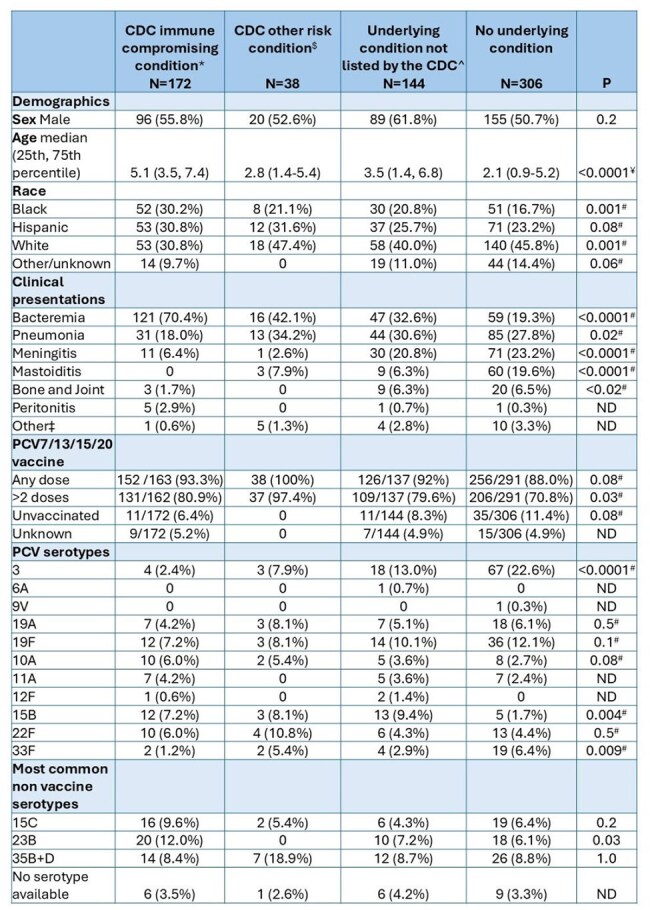 Figure 1
Peer Reviews
No public reviews on file for this paper yet. If you reviewed it on a platform where reviews are public (OpenReview, ICLR, NeurIPS, ICML), you can paste yours below so the community can read it here.
Videos
No videos yet. Explain this paper in a talk, walkthrough, or lecture? Add one.
Taxonomy
TopicsPneumonia and Respiratory Infections · Respiratory viral infections research · Kawasaki Disease and Coronary Complications