P-481. Commensals in Early-Onset Sepsis Blood Cultures: A Common Driver of Increased Antibiotic Days and Length of Stay
Erica Prochaska, Nora Elhaissouni, Elizabeth Colantuoni, Veeral Tolia, Daniel Benjamin, Sagori Mukhopadyay, Aaron Milstone

TL;DR
Commensal organisms in blood cultures of newborns are common and lead to more antibiotic use and longer hospital stays.
Contribution
This study quantifies the impact of commensal organisms in neonatal blood cultures on antibiotic use and hospital length of stay.
Findings
Commensals were found in 50% of positive blood cultures in the cohort.
Infants with commensal blood cultures had a median excess of 2 antibiotic and admission days compared to controls.
Abstract
Contaminated blood cultures are a driver of healthcare and antibiotic overuse. The burden of neonatal contaminated blood cultures is unknown. Within a retrospective cohort of neonates born ≥37 weeks gestational age who had a blood culture obtained in the first 3 days after birth with no central line in place, our objectives were to 1) estimate the proportion of blood cultures that grew commensals, and 2) to compare the length of stay and antibiotic use among neonates with a commensal versus negative blood culture.Figure 1Stacked bar graph of positive neonatal blood cultures, stratified by commensal and non-commensal organisms.Figure 2Unadjusted and adjusted differences in median antibiotic days and length of stay among infants with a commensal versus negative blood culture. Confidence intervals calculated using a bootstrap with resamples taken within NICU. Stacked bar graph of positive…
Click any figure to enlarge with its caption.
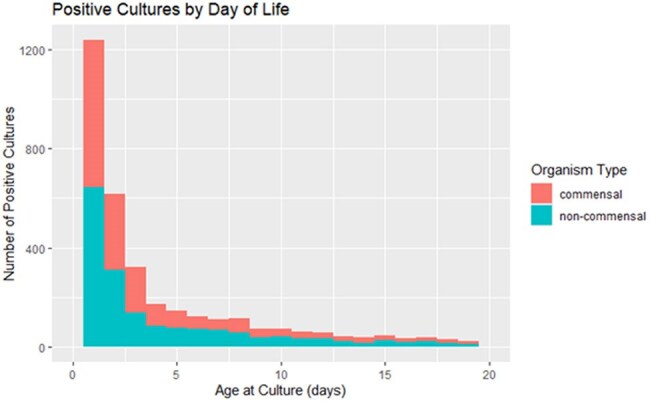 Figure 1
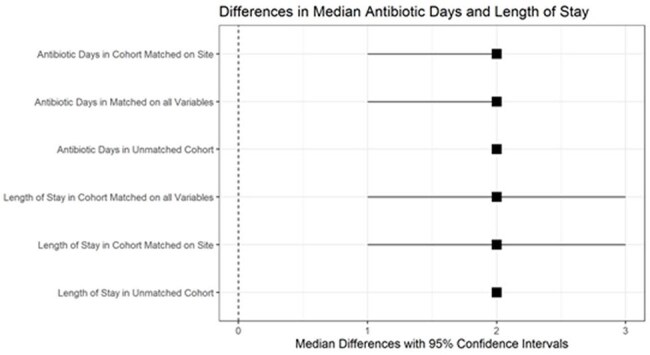 Figure 2
Peer Reviews
No public reviews on file for this paper yet. If you reviewed it on a platform where reviews are public (OpenReview, ICLR, NeurIPS, ICML), you can paste yours below so the community can read it here.
Videos
No videos yet. Explain this paper in a talk, walkthrough, or lecture? Add one.
Taxonomy
TopicsNeonatal and Maternal Infections · Bacterial Identification and Susceptibility Testing · Urinary Tract Infections Management