P-144. Antimicrobial resistance to ceftriaxone and ciprofloxacin is increasingly observed in Salmonella Infantis isolates from clinical and retail meat sources in the United States
Brendan J Kelly, Sameh W Boktor, Edward G Dudley, Nkuchia M M’ikanatha

TL;DR
Salmonella Infantis is increasingly showing resistance to key antibiotics in both patients and retail meats in the U.S.
Contribution
This study reports rising resistance to ceftriaxone and ciprofloxacin in S. Infantis isolates from clinical and retail meat sources.
Findings
Ceftriaxone resistance increased from <1% in 2012 to 16.9% in 2021 in clinical isolates and 47.7% in retail meat isolates by 2023.
Most ceftriaxone-resistant isolates carried ESBL genes like blaCTX-M-65 and blaCMY-2.
DSC to ciprofloxacin was common, with 86.9% of retail meat isolates and 25.3% of clinical isolates showing decreased susceptibility.
Abstract
Nontyphoidal Salmonella (NTS), a leading cause of bacterial foodborne infections in the United States, is typically acquired from contaminated meat. Antimicrobial resistance in NTS varies by serotype. S. Infantis is one of the top ten most frequently isolated NTS and resistance to first-line antibiotics is emerging in this serotype. The National Antimicrobial Resistance Monitoring System (NARMS) tracks Salmonella from humans and retail meats nationwide.Figure. Percentages of isolates resistant to amoxicillin-clavulanate (AMC), ampicillin, ceftriaxone or with decreased susceptibility to ciprofloxacin (DSC) in patient (blue) and meat (orange) samples. Figure. Percentages of isolates resistant to amoxicillin-clavulanate (AMC), ampicillin, ceftriaxone or with decreased susceptibility to ciprofloxacin (DSC) in patient (blue) and meat (orange) samples. We analyzed whole genome sequences and…
Genes, proteins, chemicals, diseases, species, mutations and cell lines named across the full text — each resolved to its canonical identifier and authoritative record.
Click any figure to enlarge with its caption.
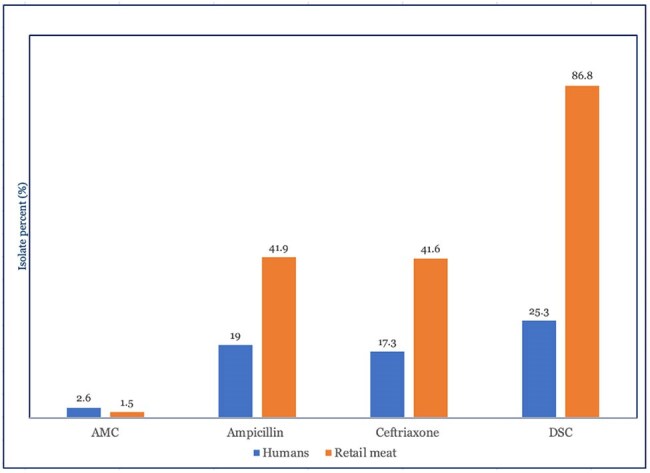 Figure 1
Peer Reviews
No public reviews on file for this paper yet. If you reviewed it on a platform where reviews are public (OpenReview, ICLR, NeurIPS, ICML), you can paste yours below so the community can read it here.
Videos
No videos yet. Explain this paper in a talk, walkthrough, or lecture? Add one.
Taxonomy
TopicsSalmonella and Campylobacter epidemiology · Melamine detection and toxicity · Listeria monocytogenes in Food Safety