P-1933. Co-Administration of Triazoles with Chemotherapy and/or Immunosuppressants Known to Have Moderate-to-Severe Drug-Drug Interactions in Patients with Hematologic Malignancies Who Are Hospitalized for Invasive Aspergillosis
Thomas J Walsh, Craig I Coleman, Melissa D Johnson, Belinda Lovelace, Barbara D Alexander

TL;DR
This study finds that most patients with blood cancers and invasive aspergillosis are given antifungal drugs that can dangerously interact with their other medications.
Contribution
The study provides real-world data on drug-drug interactions between triazole antifungals and chemotherapies/immunosuppressants in hematologic malignancy patients.
Findings
97.2% of patients received triazole antifungals during hospitalization for invasive aspergillosis.
78.2% of these patients were also given chemotherapies or immunosuppressants with moderate-to-severe drug interactions.
Corticosteroids were the most common interacting medication co-administered with triazoles.
Abstract
Chemotherapy and immunosuppressant use in patients with hematologic malignancies increases their risk of invasive aspergillosis (IA). Antifungal triazoles are used for treatment of IA but can cause serious drug-drug interactions (DDIs) with chemotherapies and immunosuppressants via inhibition of CYP3A4. The extent of these DDIs in treatment of IA is unknown in real world settings. We studied US IQVIA claims including adults with ≥1 claim for an inpatient stay with a new diagnosis code for IA (B44.0, B44.1, B44.2, B44.7) from October 2015-November 2022 and evidence of systemic antifungal therapy for ≥3 days during the hospitalization. The cohort was limited to patients with recent hematologic malignancy defined by the presence of ≥1 claim with a diagnosis code of C81-C96 within 6 months prior to IA admission (index date). The proportion of patients receiving a triazole with chemotherapy…
Genes, proteins, chemicals, diseases, species, mutations and cell lines named across the full text — each resolved to its canonical identifier and authoritative record.
Click any figure to enlarge with its caption.
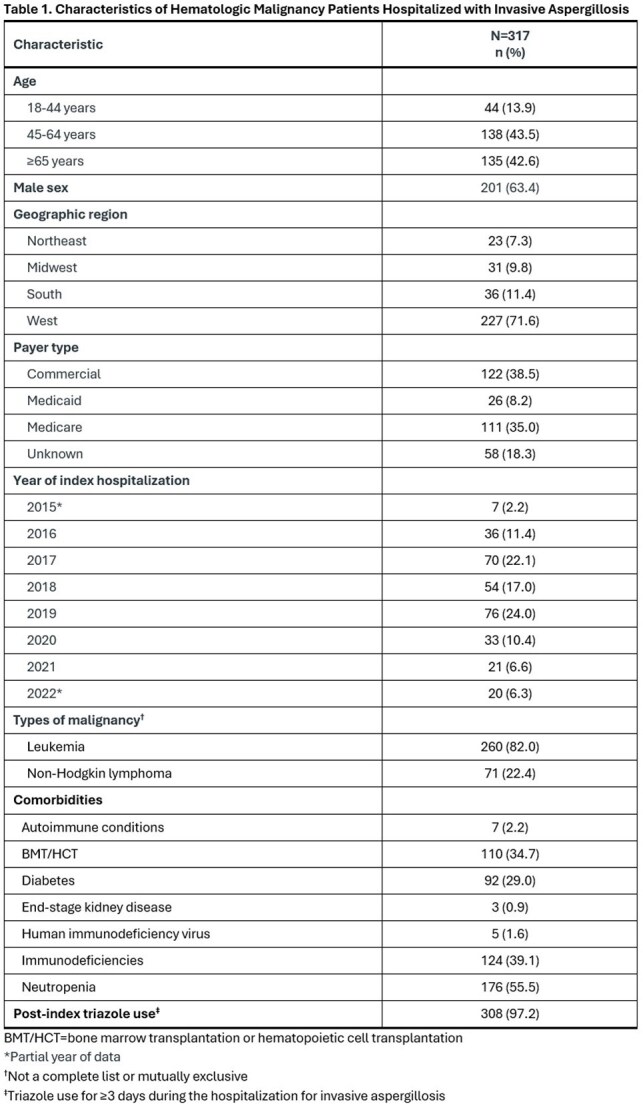 Figure 1
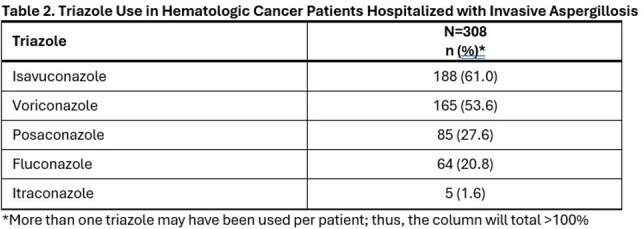 Figure 2
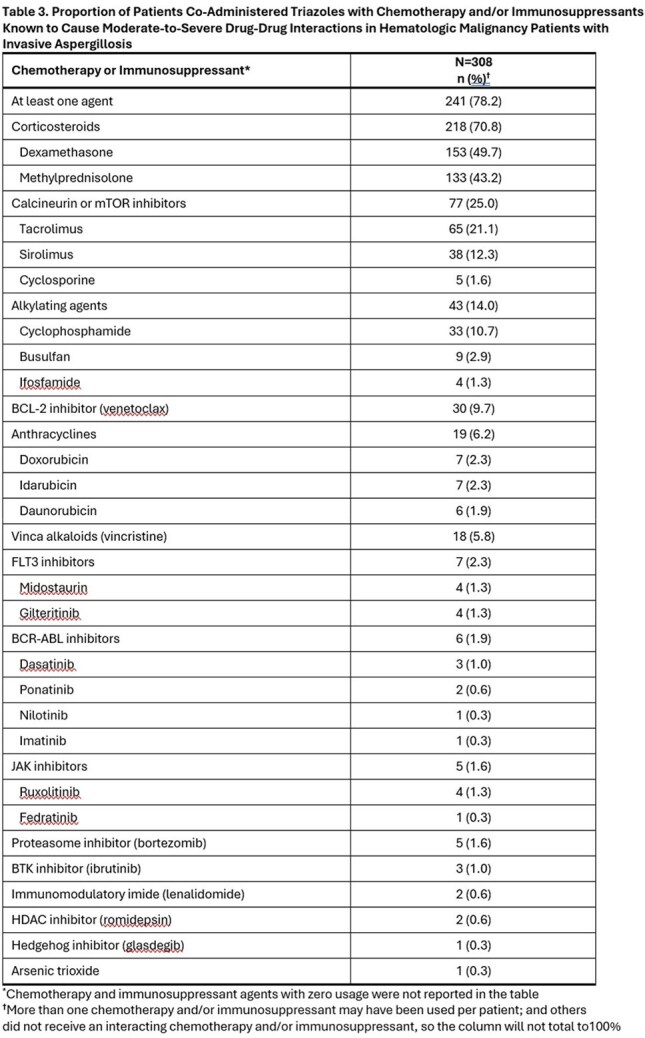 Figure 3
Peer Reviews
No public reviews on file for this paper yet. If you reviewed it on a platform where reviews are public (OpenReview, ICLR, NeurIPS, ICML), you can paste yours below so the community can read it here.
Videos
No videos yet. Explain this paper in a talk, walkthrough, or lecture? Add one.
Taxonomy
TopicsAntifungal resistance and susceptibility · Ocular Infections and Treatments · Infectious Diseases and Mycology