P-1811. The Perfect Storm: An Analysis of the Relationship Between Texas Weather Patterns and the Incidence of West Nile Virus
Marissa Nicolas-Cagigal, Jonathan Pavia, J "Patrik" Hornak

TL;DR
This study finds that higher summer temperatures in Texas are linked to fewer cases of West Nile Virus, suggesting weather patterns influence its spread.
Contribution
The study identifies a statistically significant negative relationship between average summer temperature and WNV incidence in Texas.
Findings
For every 1°F increase in average summer temperature, WNV incidence decreases by ~44.11 cases.
About 20% of WNV incidence variability is explained by average summer temperature alone.
Abstract
West Nile Virus (WNV) is the most prevalent mosquito-borne illness in the United States, with 20–30% of infected individuals experiencing symptomatic illness. Previous studies have suggested that temperature and precipitation strongly influence mosquito survival and therefore WNV transmission. Since 1999 the CDC has tracked U.S. cases, of particular significance is the state of Texas, which has consistently reported some of the highest case numbers. As weather patterns inevitably change it is crucial to identify environmental conditions that promote WNV transmission to inform prevention efforts.Average Summer Temperature & Incidence of West Nile Virus in TexasThis figure demonstrates the negative relationship between average summer temperature and incidence of West Nile Virus in TexasTexas West Nile Virus IncidenceThis figure shows the number of West Nile Virus cases in Texas that were…
Click any figure to enlarge with its caption.
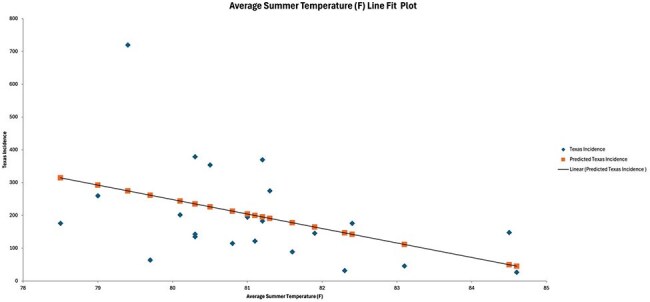 Figure 1
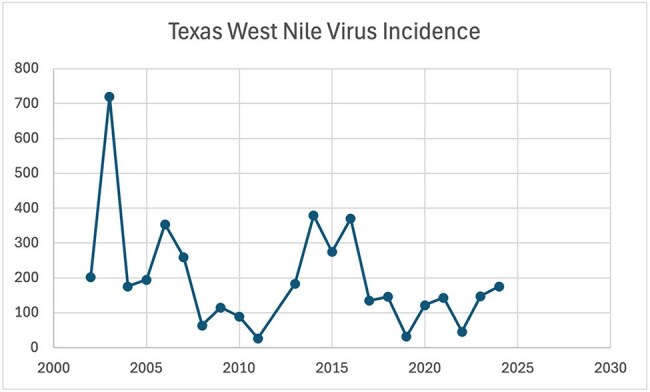 Figure 2
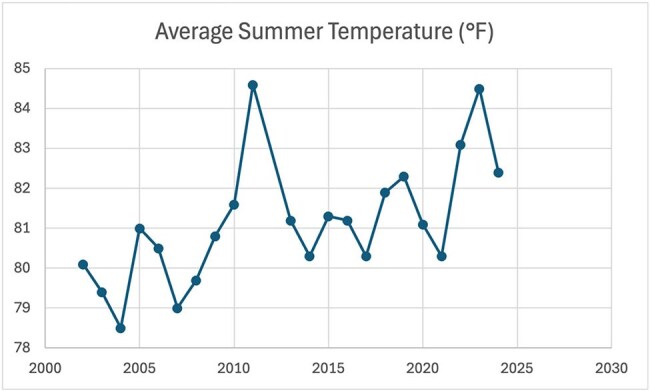 Figure 3
Peer Reviews
No public reviews on file for this paper yet. If you reviewed it on a platform where reviews are public (OpenReview, ICLR, NeurIPS, ICML), you can paste yours below so the community can read it here.
Videos
No videos yet. Explain this paper in a talk, walkthrough, or lecture? Add one.
Taxonomy
TopicsMosquito-borne diseases and control · Parasitic Diseases Research and Treatment · Vector-Borne Animal Diseases