P-458. Genomic Characterization of Invasive and Colonizing Antibiotic-Resistant Enterobacterales in Infants
Nabgha Farhat, Aspen Kremer, Alima Sajwani, Abigail Aron, Chao Qi, Cecilia Thompson, Joel Fisher, Egon A Ozer, Mehreen Arshad, Leena B Mithal

TL;DR
This study compares antibiotic-resistant Enterobacterales in infants that cause infections versus those that just colonize, finding that E. coli ST131 is a key strain with more virulence genes in invasive cases.
Contribution
The study identifies specific virulence genes in E. coli isolates from invasive infections that are less common in colonizing strains, offering insights for future screening and interventions.
Findings
E. coli ST131 was the most common strain in invasive infections and also colonized healthy infants.
Eight virulence genes were significantly more frequent in invasive E. coli isolates.
Invasive isolates had genes related to adhesion, invasion, and iron uptake, suggesting targets for intervention.
Abstract
Infants are vulnerable to bacterial infections, including those caused by antibiotic-resistant Enterobacterales (AR-E). These bacteria can asymptomatically colonize the gut of young infants or cause invasive infections leading to morbidity and mortality. The objective of this study is to characterize differences between AR-E that cause invasive infections and those that are asymptomatic stool colonizers.Clinical Characteristics of Patients with Antibiotic-Resistant Enterobacterales by GroupMicrobiologic Characteristics of Antibiotic-Resistant Enterobacterales by GroupBolded sections represent E. coli ST Types that were observed > 2 times in this study Clinical Characteristics of Patients with Antibiotic-Resistant Enterobacterales by Group Microbiologic Characteristics of Antibiotic-Resistant Enterobacterales by Group Bolded sections represent E. coli ST Types that were observed > 2…
Genes, proteins, chemicals, diseases, species, mutations and cell lines named across the full text — each resolved to its canonical identifier and authoritative record.
Click any figure to enlarge with its caption.
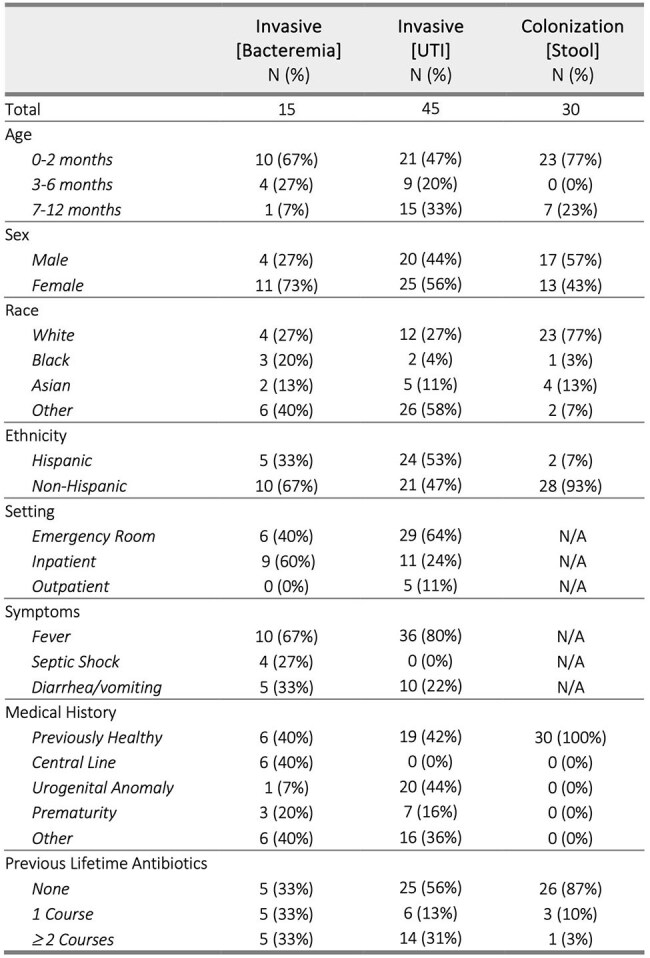 Figure 1
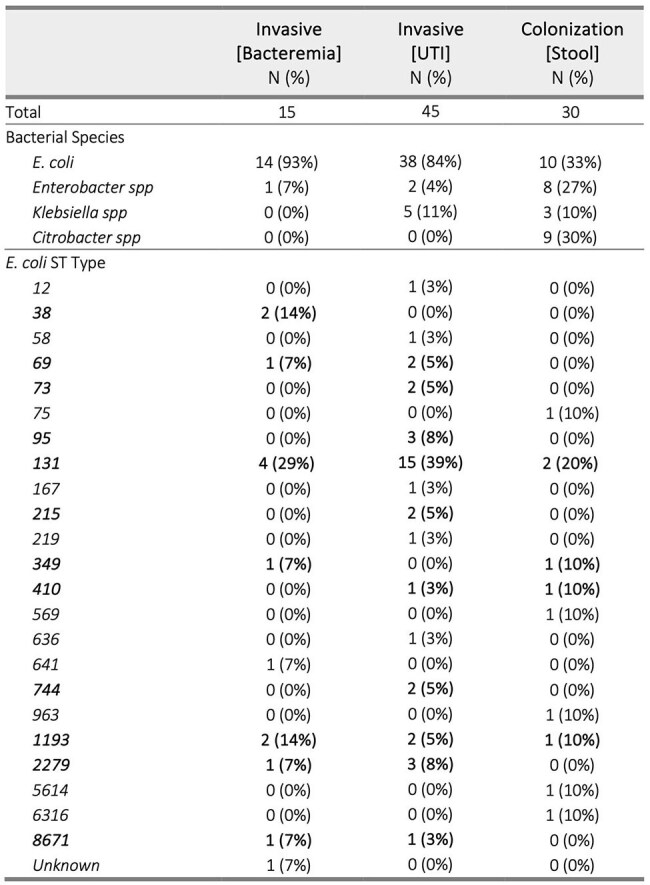 Figure 2
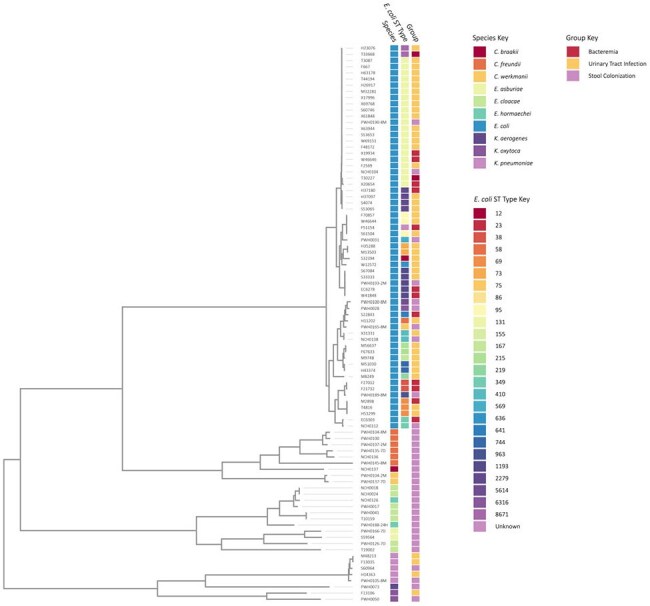 Figure 3
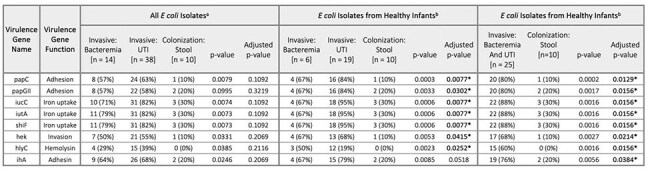 Figure 4
Peer Reviews
No public reviews on file for this paper yet. If you reviewed it on a platform where reviews are public (OpenReview, ICLR, NeurIPS, ICML), you can paste yours below so the community can read it here.
Videos
No videos yet. Explain this paper in a talk, walkthrough, or lecture? Add one.
Taxonomy
TopicsAntibiotic Resistance in Bacteria · Neonatal and Maternal Infections · Enterobacteriaceae and Cronobacter Research