185. Nirsevimab Binding Site Conservation in RSV F Protein between 2019 and 2024: Analysis of Sequencing Data from the US OUTSMART-RSV Surveillance Study and Public Databases
Kelly Ann Mahool, Gustavo H Kijak, Bahar Ahani, Tyler M Brady, Amy Nguyen, Emma Schaefer, Sarah R Sincero, Katie Streicher, Kevin M Tuffy, Deidre Wilkins

TL;DR
This study shows that the nirsevimab antibody remains effective against most RSV strains by analyzing genetic data from 2019 to 2024.
Contribution
The study provides updated evidence that RSV F protein binding site conservation for nirsevimab is maintained globally and over time.
Findings
Nirsevimab binding site in RSV F protein was >99% conserved in 25/25 positions for RSV A and 22/25 for RSV B.
Nirsevimab neutralized all tested RSV A variants with binding site substitutions and rare resistance in RSV B.
Global RSV F sequences showed high concordance with surveillance data, indicating low genetic diversity.
Abstract
Nirsevimab is an extended half-life anti-respiratory syncytial virus (RSV) fusion (F) protein monoclonal antibody licensed for the prevention of RSV lower respiratory tract disease in neonates, infants, and medically vulnerable children. Vigilant surveillance programs are required to monitor the conservation of the nirsevimab epitope between RSV seasons due to potential viral evolution. OUTSMART-RSV is an ongoing multi-center, prospective, molecular surveillance study to monitor the prevalence and distribution of RSV strains in the US and track the emergence of RSV F variants and their susceptibility to nirsevimab neutralization. Nasal swabs were collected from infants and adults seeking medical attention for a respiratory infection. RSV-positive isolates were analyzed using next-generation sequencing and subtyped based on the hypervariable region of the G protein. F protein…
Click any figure to enlarge with its caption.
 Figure 1
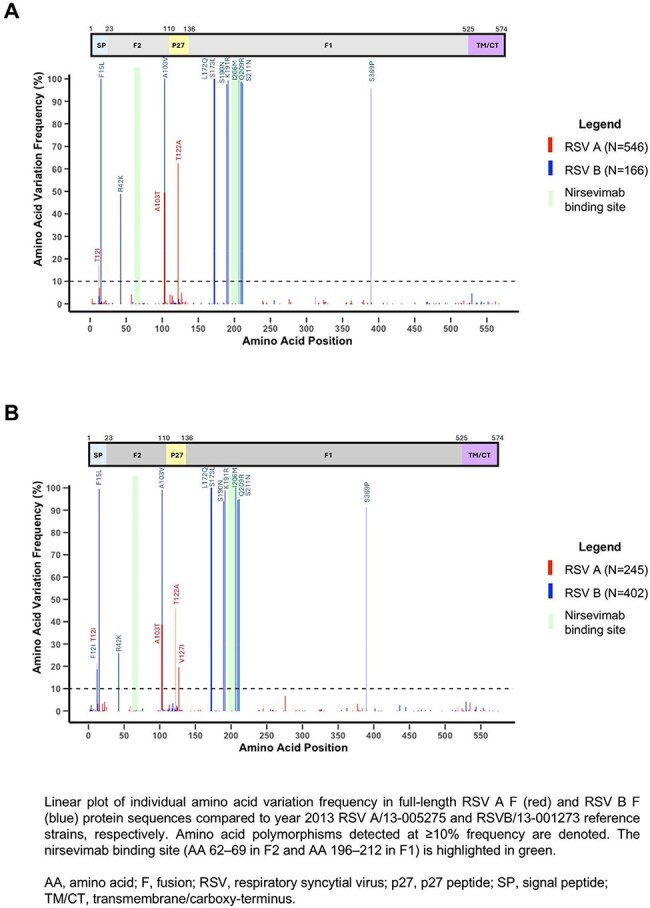 Figure 2
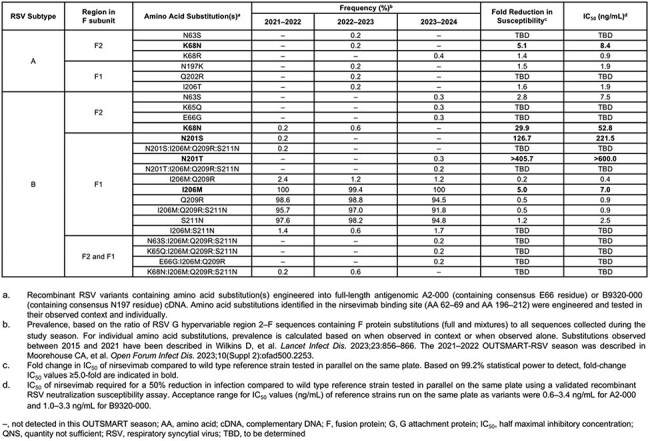 Figure 3
Peer Reviews
No public reviews on file for this paper yet. If you reviewed it on a platform where reviews are public (OpenReview, ICLR, NeurIPS, ICML), you can paste yours below so the community can read it here.
Videos
No videos yet. Explain this paper in a talk, walkthrough, or lecture? Add one.
Taxonomy
TopicsRespiratory viral infections research · SARS-CoV-2 detection and testing · Virology and Viral Diseases