P-667. The outcomes of Respiratory Syncytial Virus Infection in patients with cancer, solid organ transplant, and other co-morbidities: an international multicenter comparative study
Tali Shafat, Jonathan Hand, Kamil Manzoor, Nicholas Marschalk, Courtney Nichols, Rotem Gorfinkel, Lior Nesher, David S Y Ong, W Ashwin Mak, Po-Yu Liu, Hsien-Po Huang, Vielka Lopez, Jennifer Jackson, Yusuke Ohashi, Georgios Angelidakis, Amy Spallone, Roy F Chemaly

TL;DR
This study examines how RSV affects cancer patients, organ transplant recipients, and others with health issues, finding higher risks of severe illness and death.
Contribution
The study identifies risk factors for severe RSV outcomes in high-risk patient groups using an international multicenter dataset.
Findings
Cancer patients and SOT recipients had higher rates of lower respiratory tract infection (LRI) and mortality from RSV.
Independent risk factors for LRI included older age, higher comorbidity index, and hematologic malignancies.
SOT recipients had higher 30-day mortality compared to cancer patients and those with other comorbidities.
Abstract
Respiratory syncytial virus (RSV) is a common cause of lower respiratory tract illnesses (LRI) worldwide, particularly affecting high-risk groups such as cancer patients, solid organ transplant (SOT) recipients, older adults, and those with significant comorbidities. The Advisory Committee on Immunization Practices (ACIP) recommends vaccinating adults aged ≥75 years, and those aged 60-74 at greater risk for severe RSV disease (1). Recently, they proposed expanding this recommendation to at-risk patients aged 50-59 (2). Our study aims to investigate outcomes of RSV infection and identify risk factors for complications in various populations.Table 1:Baseline characteristics and clinical outcomes of patients with RSV-related respiratory viral infection by underlying conditions.aData are no. (%) unless otherwise specified; bn=528; cn=419; dn=435; en=159; fn=298; gn=332; hn=263; in=512;…
Genes, proteins, chemicals, diseases, species, mutations and cell lines named across the full text — each resolved to its canonical identifier and authoritative record.
Click any figure to enlarge with its caption.
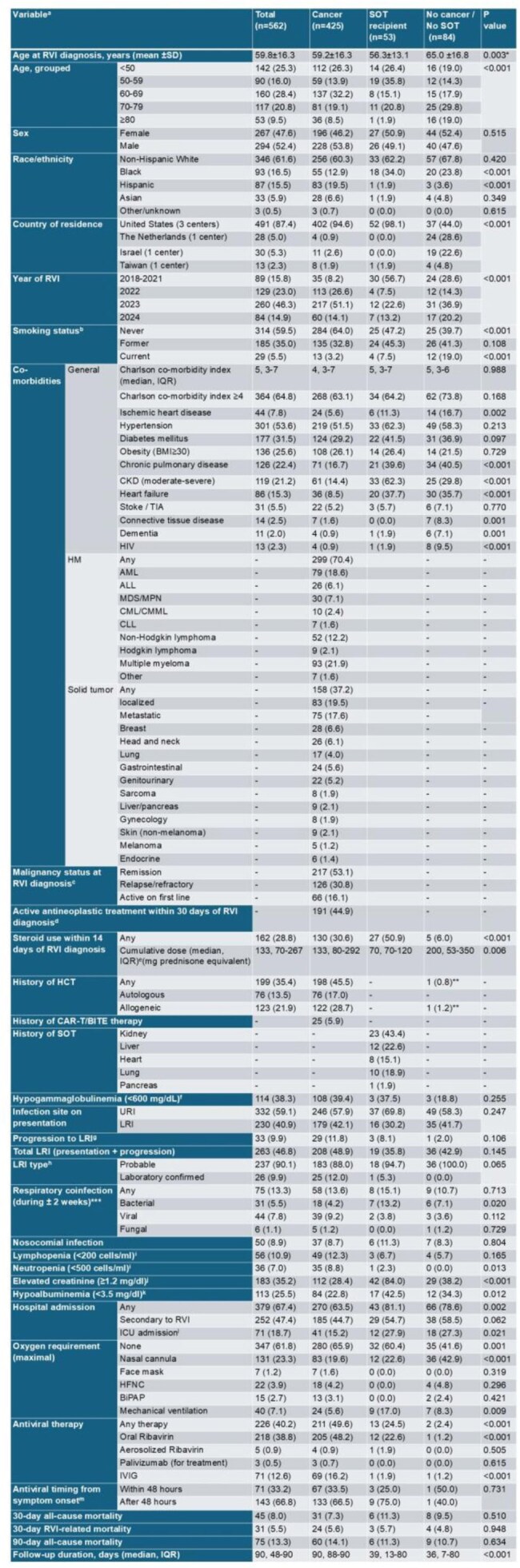 Figure 1
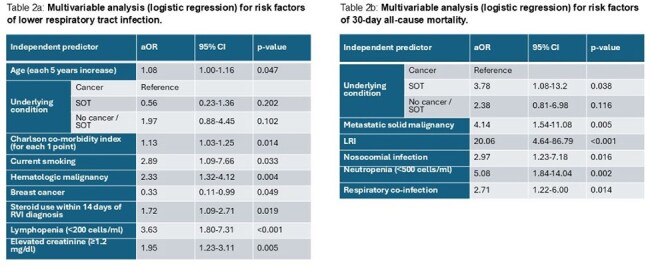 Figure 2
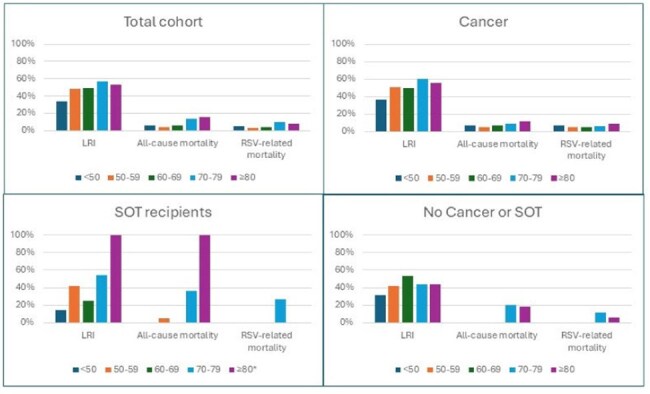 Figure 3
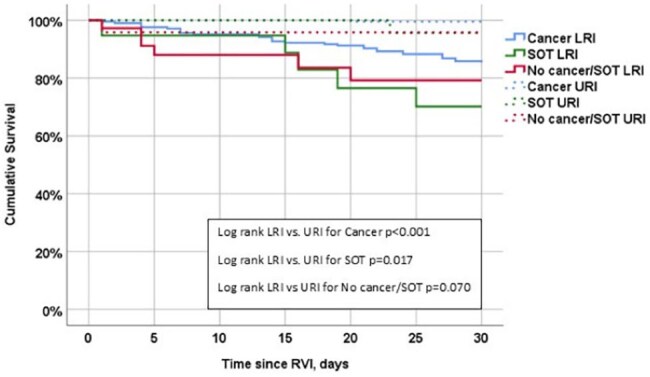 Figure 4
Peer Reviews
No public reviews on file for this paper yet. If you reviewed it on a platform where reviews are public (OpenReview, ICLR, NeurIPS, ICML), you can paste yours below so the community can read it here.
Videos
No videos yet. Explain this paper in a talk, walkthrough, or lecture? Add one.
Taxonomy
TopicsRespiratory viral infections research · Cystic Fibrosis Research Advances · Delphi Technique in Research