P-465. Evaluating Urinary i-FABP as a Predictor of Clinical Outcomes in Preterm Infants ≤ 33 weeks with Complicated Intraabdominal Infection
Taylor Kohlmann, Angel A Marks, Iyanuoluwa Ayodele, N David Yanez, Daniel Benjamin, Michael Cohen-Wolkowiez, Michael J Smith, P Brian Smith, Angelique E Boutzoukas

TL;DR
This study explores whether urinary i-FABP can predict outcomes in preterm infants with complicated intraabdominal infections.
Contribution
The study is the first to evaluate i-FABP as a predictor of clinical outcomes in preterm infants with cIAI.
Findings
Higher end-of-therapy i-FABP levels were associated with increased odds of severe illness and gastrointestinal surgery.
Maximum i-FABP levels were linked to lower 30-day mortality in infants with cIAI.
i-FABP measurements showed similar distributions in NEC and non-NEC subgroups.
Abstract
Complicated intraabdominal infections (cIAIs) cause significant morbidity and mortality in premature infants. Intestinal fatty acid-binding protein (i-FABP), a noninvasive biomarker of enterocyte death, has been shown to predict the occurrence and severity of necrotizing enterocolitis (NEC). Whether i-FABP predicts outcomes of preterm infants with cIAI is unknown.Table 1.Characteristics of preterm infants with cIAI and at least one i-FABP measurement (N=131)Figure 1.Maximum, End-of-Therapy, and Change in i-FABP in Preterm Infants with cIAIA. Distribution of maximum i-FABP (ng/mL) by cIAI diagnosis. From left to right: NEC vs. non-NEC vs. all infants with cIAI, mean [95% CI]: 1.45 [1.29, 1.61], 1.53 [1.21, 1.86], and 1.47 [1.33, 1.61], respectively. B. Distribution of end-of-therapy i-FABP by cIAI diagnosis. From left to right: NEC vs. non-NEC vs. all infants with cIAI, 0.97 [0.76,…
Genes, proteins, chemicals, diseases, species, mutations and cell lines named across the full text — each resolved to its canonical identifier and authoritative record.
Click any figure to enlarge with its caption.
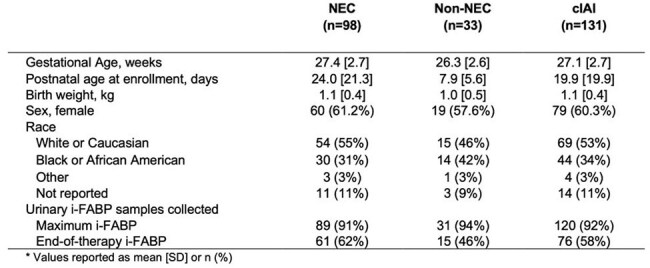 Figure 1
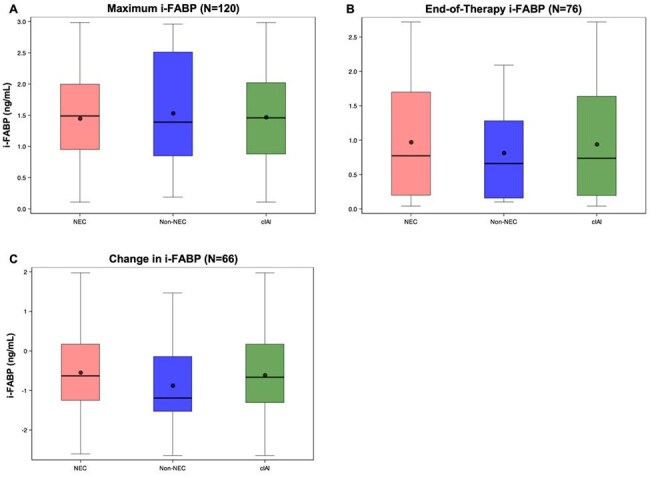 Figure 2
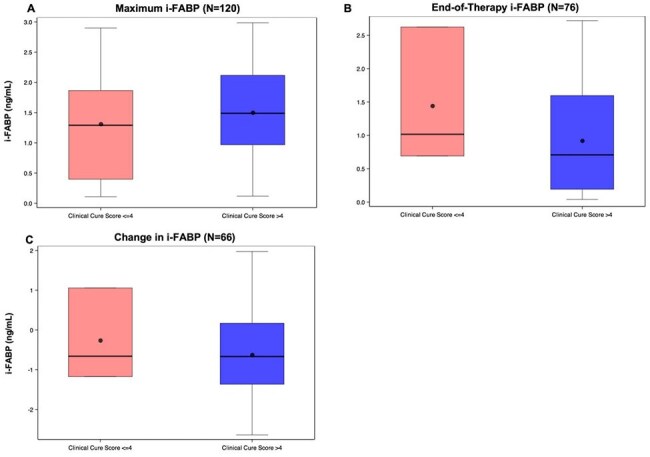 Figure 3
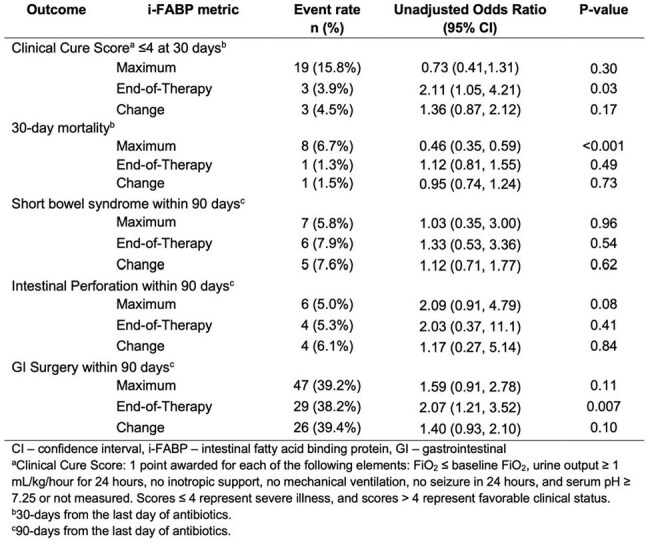 Figure 4
Peer Reviews
No public reviews on file for this paper yet. If you reviewed it on a platform where reviews are public (OpenReview, ICLR, NeurIPS, ICML), you can paste yours below so the community can read it here.
Videos
No videos yet. Explain this paper in a talk, walkthrough, or lecture? Add one.
Taxonomy
TopicsInfant Nutrition and Health · Neonatal and Maternal Infections · Preterm Birth and Chorioamnionitis