P-114. Nasal-Spray Bacillus Spore Probiotics Prevent Respiratory Infections in Preschoolers: A Community RCT
Anh Tran Pham, Thu Thi Hoai Nguyen, Huyen Thi Bui, Anh Thi My Bui, Hung Thanh Phung, Anh Quynh Pham, Huong Thi Le, Hai Hoang Tran, Viet Duc Le, Anh Hoa Nguyen, Tung Dinh Pham, Nga Thi Tuyet Nguyen, Anh Thi Van Nguyen

TL;DR
A nasal spray containing Bacillus spore probiotics reduced respiratory infections and medication use in preschool children during a 28-day study.
Contribution
This is the first clinical evidence showing that nasal-sprayed Bacillus spores can safely and effectively prevent respiratory infections in young children.
Findings
The Navax group had significant reductions in symptoms like runny nose, tonsillitis, and sore throat compared to the control group.
Medication use decreased by 27–75%, and viral infection incidence dropped by 69.2%, including a 92.3% reduction in rhinovirus cases.
Nasal microbiota showed increased beneficial bacteria and decreased pathogenic taxa in the Navax group.
Abstract
Respiratory tract infections (RTIs) are a leading cause of pediatric morbidity and excessive medication use, contributing to antimicrobial resistance. Current preventive strategies remain limited in long-term effectiveness.Figure 1:Incidence of viral (A) and bacterial (B) infections in the Control group (white bars) and Navax group (black bars) across all participants at days 0, 14, and 28. Incidence of viral (A) and bacterial (B) infections in the Control group (white bars) and Navax group (black bars) across all participants at days 0, 14, and 28. Here, we evaluated the efficacy of nasal-spraying Bacillus spore probiotics in reducing RTI incidence and medication use among preschool children. In a randomized, double-blind, controlled trial, preschool children aged 2–5 in Hanoi, Vietnam received daily nasal sprays for 28 days during the winter-spring transition. The intervention…
Genes, proteins, chemicals, diseases, species, mutations and cell lines named across the full text — each resolved to its canonical identifier and authoritative record.
Click any figure to enlarge with its caption.
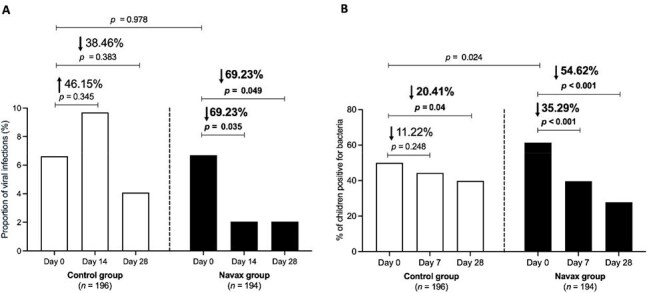 Figure 1
Peer Reviews
No public reviews on file for this paper yet. If you reviewed it on a platform where reviews are public (OpenReview, ICLR, NeurIPS, ICML), you can paste yours below so the community can read it here.
Videos
No videos yet. Explain this paper in a talk, walkthrough, or lecture? Add one.
Taxonomy
TopicsPediatric health and respiratory diseases · Probiotics and Fermented Foods · Pneumonia and Respiratory Infections