P-1950. Updated Epidemiology of Candidemia in the United States, 2015-2024: Using A Large Nation-Wide Electronic Health Record Database
María A Pérez-Ardila, Khush Patel, Laila Bekhet, Cesar A Arias, Max W Adelman, Masayuki Nigo

TL;DR
This study analyzed candidemia trends in the U.S. from 2015 to 2024, finding a shift from C. albicans to drug-resistant species like C. auris, with high mortality rates.
Contribution
The study provides updated nationwide epidemiological data on candidemia using a large EHR database, highlighting the rise of non-albicans species.
Findings
Candidemia incidence remained stable at 1.35% of bloodstream infections between 2015 and 2024.
C. albicans decreased from 41% to 37%, while C. auris increased to 4% by 2024.
C. auris had a 30% 30-day mortality rate in 2024, the highest among emerging species.
Abstract
Candidemia is associated with high morbidity and mortality in hospitalized patients. The Candida species responsible for candidemia has shifted over the past decade. While C. albicans has been the most common species, drug-resistant species like C. auris are emerging. These changes highlight the need for ongoing monitoring of Candida epidemiology in the United States (U.S.)Figure 1.Distribution of candidemia cases that contributed to the study.Figure 2.Candidemia incidence rates among positive blood cultures and number of candidemia cases over time Distribution of candidemia cases that contributed to the study. Candidemia incidence rates among positive blood cultures and number of candidemia cases over time Retrospective cross-sectional study using data from Epic COSMOS, a de-identified electronic health record dataset (EHR) including 1,626 hospitals and 289 million patients across…
Genes, proteins, chemicals, diseases, species, mutations and cell lines named across the full text — each resolved to its canonical identifier and authoritative record.
Click any figure to enlarge with its caption.
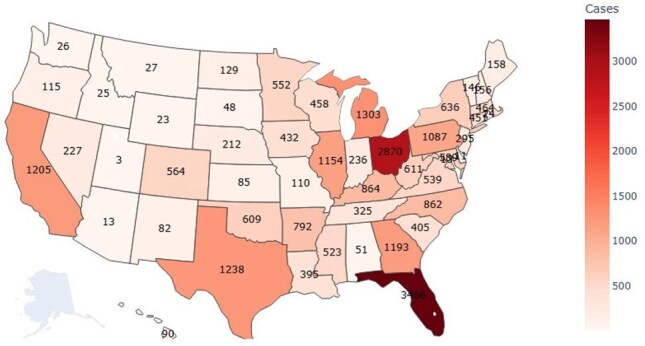 Figure 1
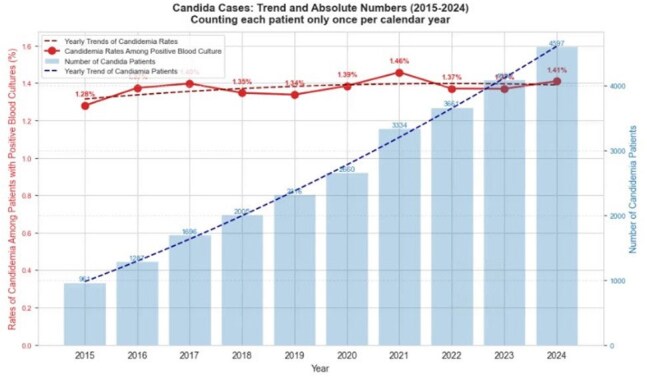 Figure 2
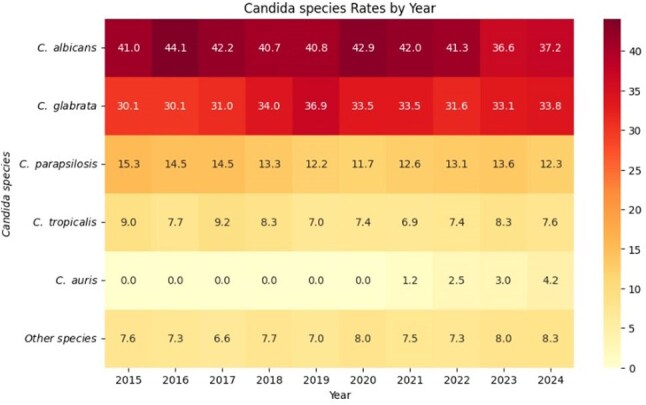 Figure 3
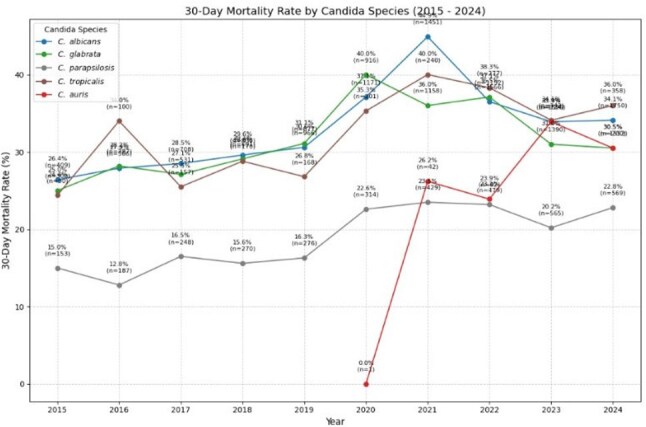 Figure 4
Peer Reviews
No public reviews on file for this paper yet. If you reviewed it on a platform where reviews are public (OpenReview, ICLR, NeurIPS, ICML), you can paste yours below so the community can read it here.
Videos
No videos yet. Explain this paper in a talk, walkthrough, or lecture? Add one.
Taxonomy
TopicsAntifungal resistance and susceptibility · Reproductive tract infections research · Neutropenia and Cancer Infections