P-795. Comparison of Clinical Outcomes after Treatment of Urinary Tract Infections Caused by Serratia marcescens, Morganella morganii, and Providencia spp. with Antibiotics Susceptible to versus Stable against AmpC Hydrolysis
Yingsi Fang, Kendall Bell, Ryan W Chapin, Christopher McCoy, Matthew Gwiazdon

TL;DR
The study compared antibiotic treatment outcomes for urinary tract infections caused by specific bacteria, finding similar recurrence rates between antibiotics that are susceptible or stable against AmpC hydrolysis.
Contribution
This is the first study to compare clinical outcomes of UTIs caused by Serratia marcescens, Morganella morganii, and Providencia spp. using AmpC-susceptible versus AmpC-stable antibiotics.
Findings
UTI recurrence rates were similar between patients treated with AmpC-susceptible and AmpC-stable antibiotics.
Only 2.53% in Group 1 and 3.8% in Group 2 experienced infection recurrence within 28 days.
All recurrent infections had unchanged susceptibility patterns.
Abstract
The 2024 IDSA Guidance on the Treatment of Antimicrobial-Resistant Gram-Negative Infections suggests selecting antibiotics according to susceptibility results to treat infections caused by S. marcescens, M. morganii, and Providencia spp. Although these organisms are thought to be at moderate to low risk of developing clinically significant AmpC expression, use of broad-spectrum beta-lactam antibiotics remains common even for urinary tract infections (UTIs). No study to date has compared the clinical outcomes for UTIs caused by these organisms in patients who initially received antibiotics susceptible to AmpC hydrolysis to those treated with AmpC-stable antibiotics.Table 1.Baseline CharacteristicsTable 2.Primary and Secondary Outcomes Baseline Characteristics Primary and Secondary Outcomes This was a single-center retrospective study of non-pregnant patients > 18 years old with S.…
Genes, proteins, chemicals, diseases, species, mutations and cell lines named across the full text — each resolved to its canonical identifier and authoritative record.
Click any figure to enlarge with its caption.
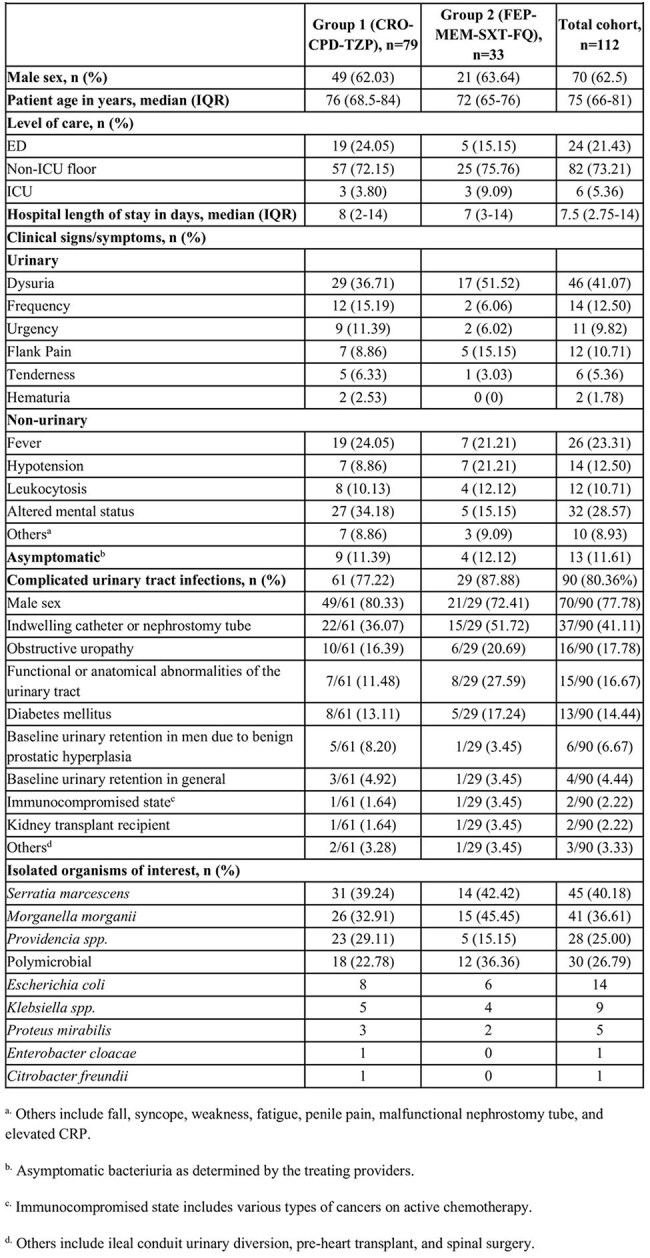 Figure 1
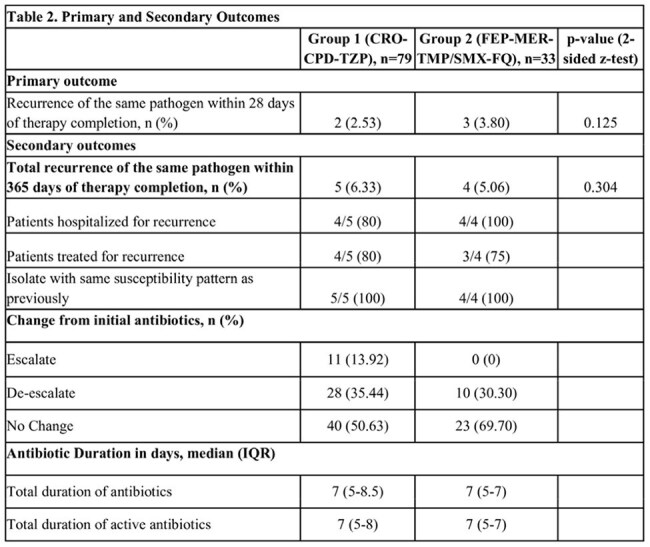 Figure 2
Peer Reviews
No public reviews on file for this paper yet. If you reviewed it on a platform where reviews are public (OpenReview, ICLR, NeurIPS, ICML), you can paste yours below so the community can read it here.
Videos
No videos yet. Explain this paper in a talk, walkthrough, or lecture? Add one.
Taxonomy
TopicsUrinary Tract Infections Management · Reproductive tract infections research · Antibiotics Pharmacokinetics and Efficacy