P-1792. Bridging Genomics and Clinical Medicine: RSVrecon Enhances RSV Surveillance with Automated Genotyping and Clinical-important Mutation Reporting
Lei Li, Haidong Yi, Jessica Brazelton, Richard Webby, Randall Hayden, Gang Wu, Diego R Hijano

TL;DR
RSVrecon is a new pipeline that improves RSV surveillance by automatically identifying genotypes and clinically important mutations in the F protein, making genomic data more useful for clinical research.
Contribution
RSVrecon introduces integrated detection of clinically critical features like genotype classification and F protein mutation calling, which are missing in most existing pipelines.
Findings
RSVrecon achieves comparable genomic assembly accuracy to existing pipelines while offering expanded functional capabilities.
The pipeline provides user-friendly outputs in multiple formats, including batch-level summaries and detailed sample-specific reports.
Benchmarking shows RSVrecon excels in biological interpretation, user experience, and accessibility.
Abstract
Respiratory Syncytial Virus (RSV) causes significant respiratory infections, particularly in young children and elderly adults. Genetic variations in the fusion (F) protein can reduce the efficacy of vaccination and monoclonal antibody treatments, emphasizing the need for genomic surveillance of this virus. Current pipelines for RSV genome assembly focus on sequence reconstruction but often lack features for detecting genotypes, clinically relevant mutations, or presenting results in formats that are suitable for clinical researchers.Figure 1.Overview of the RSVrecon pipeline workflow.The pipeline uses raw sequences (paired FASTQ) as inputs from users. It then sequentially processes the data. Outputs include consensus sequences (FASTA) and aggregated results in multiple formats (CSV, PDF, HTML). The workflow is implemented in NextFlow, enabling parallelized execution and containerized…
Genes, proteins, chemicals, diseases, species, mutations and cell lines named across the full text — each resolved to its canonical identifier and authoritative record.
Click any figure to enlarge with its caption.
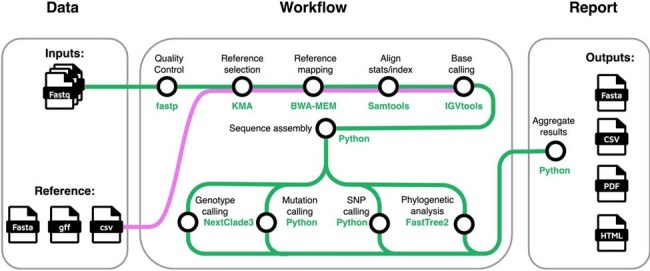 Figure 1
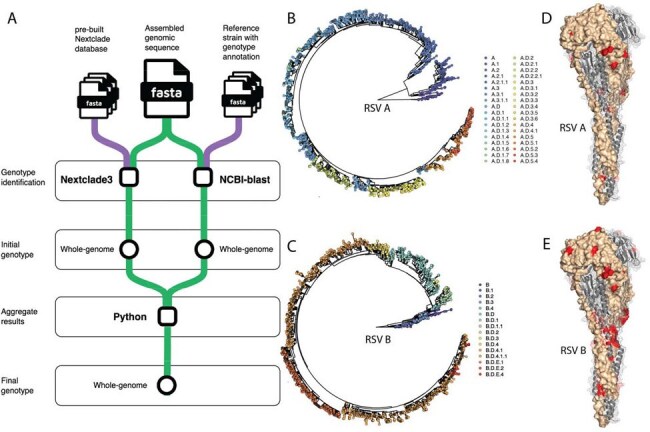 Figure 2
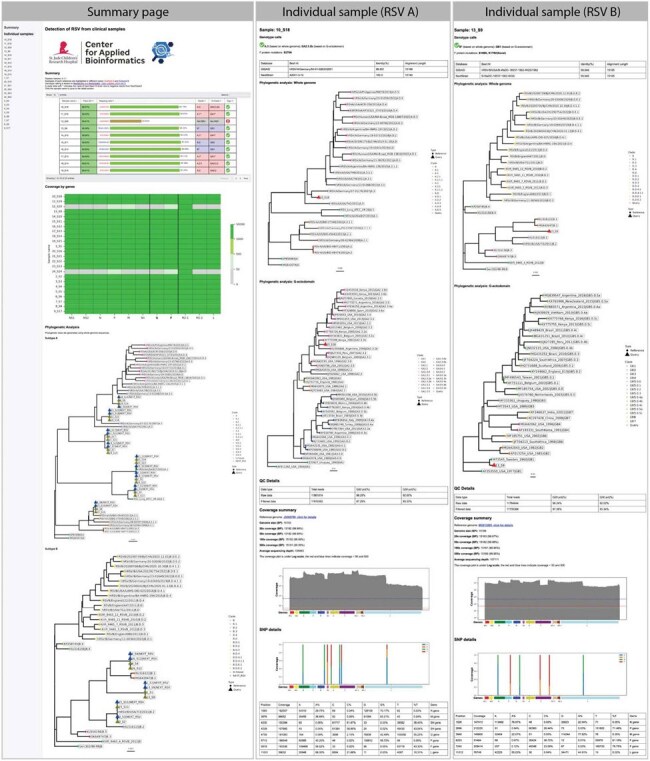 Figure 3
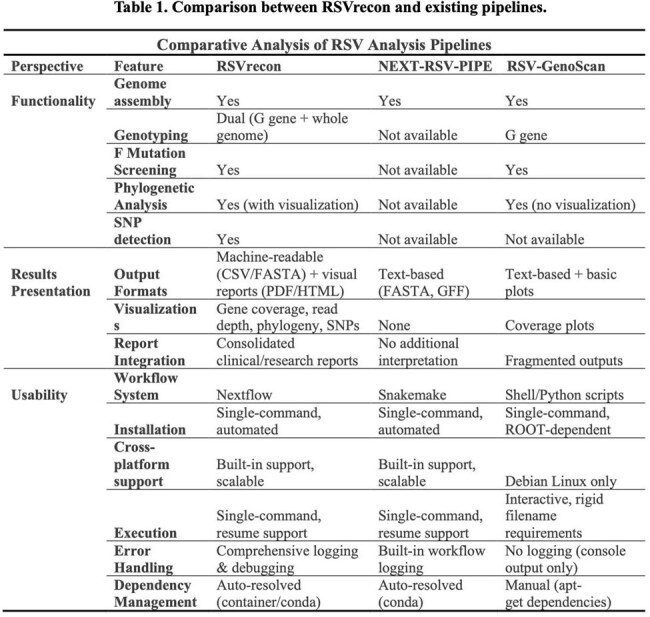 Figure 4
Peer Reviews
No public reviews on file for this paper yet. If you reviewed it on a platform where reviews are public (OpenReview, ICLR, NeurIPS, ICML), you can paste yours below so the community can read it here.
Videos
No videos yet. Explain this paper in a talk, walkthrough, or lecture? Add one.
Taxonomy
TopicsRespiratory viral infections research · vaccines and immunoinformatics approaches · Cystic Fibrosis Research Advances