629. Investigating the Molecular Epidemiology of Extended-Spectrum β-Lactamase Producing Enterobacterales Among Patients Admitted to the Intensive Care Unit
Sima L Sharara, Patricia Simner, Yehudit Bergman, Emily B Jacobs, Suiyini Fiawoo, Eili Klein, Sara E Cosgrove, Pranita Tamma

TL;DR
This study finds that 5% of ICU patients in the U.S. are colonized with antibiotic-resistant bacteria called ESBL-E, mostly E. coli and K. pneumoniae, and highlights the importance of molecular testing to avoid overestimating resistance.
Contribution
The study provides contemporary U.S. data on ESBL-E colonization in ICU patients using whole-genome sequencing to confirm resistance genes.
Findings
5% of ICU admissions were confirmed to be colonized with ESBL-producing Enterobacterales.
Escherichia coli (72%) and Klebsiella pneumoniae (19%) were the most common ESBL-E species.
blaCTX-M-15 was the most prevalent ESBL gene variant (63%).
Abstract
Colonization with extended-spectrum β-lactamase-producing Enterobacterales (ESBL-E) is increasingly recognized in critically ill patients and impacts infection prevention practices and empiric antibiotic selection. However, contemporary United States estimates of ESBL-E prevalence at the time of ICU admission are limited.Table 1.ICU-Specific Prevalence of ESBL Colonization at Admission Confirmed by Whole Genome SequencingFigure 1.Distribution of ESBL Gene Variants Among ESBL-Producing Enterobacterales Isolates by Bacterial Species (n = 173) ICU-Specific Prevalence of ESBL Colonization at Admission Confirmed by Whole Genome Sequencing Distribution of ESBL Gene Variants Among ESBL-Producing Enterobacterales Isolates by Bacterial Species (n = 173) We conducted a prospective molecular epidemiology study of ESBL-E colonization among adult and pediatric patients admitted to nine ICUs at…
Genes, proteins, chemicals, diseases, species, mutations and cell lines named across the full text — each resolved to its canonical identifier and authoritative record.
Click any figure to enlarge with its caption.
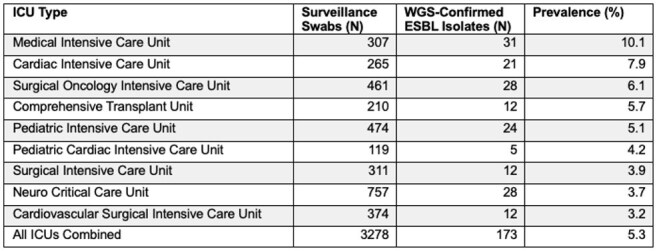 Figure 1
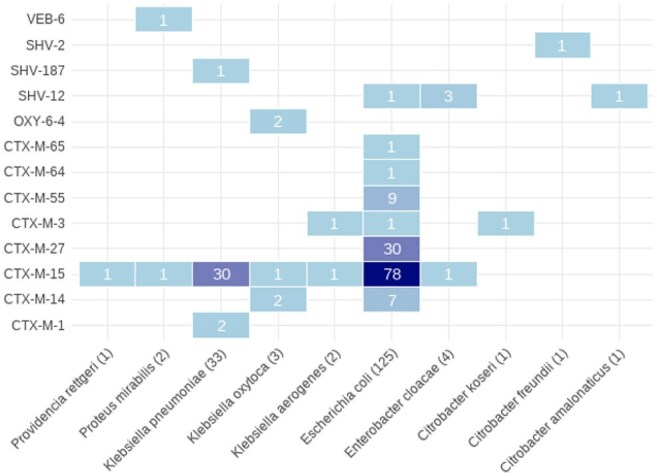 Figure 2
Peer Reviews
No public reviews on file for this paper yet. If you reviewed it on a platform where reviews are public (OpenReview, ICLR, NeurIPS, ICML), you can paste yours below so the community can read it here.
Videos
No videos yet. Explain this paper in a talk, walkthrough, or lecture? Add one.
Taxonomy
TopicsAntibiotic Resistance in Bacteria · Nosocomial Infections in ICU · Infections and bacterial resistance