P-877. Trends and Indications for Dalbavancin Use in a Large U.S. Healthcare Network: A Retrospective Analysis from 2016-2024
Chandan K Dash, Matthew A Moffa, Thomas L Walsh, Sarah Kanell, Nathan Hammerle, Dustin R Carr, Derek N Bremmer, Tamara Trienski, George Bchech, Alexander Tarr, Carley Buchanan, Shenjun Zhu, Nathan R Shively

TL;DR
This study analyzed how dalbavancin, a long-acting antibiotic, was used in a U.S. healthcare system from 2016 to 2024, finding increased use and common off-label applications.
Contribution
The study provides the first detailed retrospective analysis of dalbavancin use trends and off-label indications in a large U.S. healthcare network.
Findings
Dalbavancin use increased significantly from 2 courses in 2016 to 210 courses in 2024.
Osteomyelitis was the most common indication, with many cases involving hardware-related infections.
A significant portion of dalbavancin use was for off-label indications like bacteremia and infective endocarditis.
Abstract
Dalbavancin, a long-acting lipoglycopeptide antibiotic, was approved by the FDA in 2014 for the treatment of adult patients with acute bacterial skin and skin structure infections. There are limited published data evaluating the trends and indications for use of dalbavancin in the United States.Figure 1:Dalbavancin use over timeTable 1:Demographics and Background Information Dalbavancin use over time Demographics and Background Information We identified all orders for dalbavancin in our healthcare system from 01/01/2016 to 12/31/2024, with a treatment course considered one or more planned infusions for the same infection. We collected demographic data, insurance status, and number of dalbavancin infusions received. The indication for dalbavancin was manually collected by a chart review in a subset of 270 patients.FIgure 2:Indications for dalbavancin coursesFigure 3:Non-vertebral…
Genes, proteins, chemicals, diseases, species, mutations and cell lines named across the full text — each resolved to its canonical identifier and authoritative record.
Click any figure to enlarge with its caption.
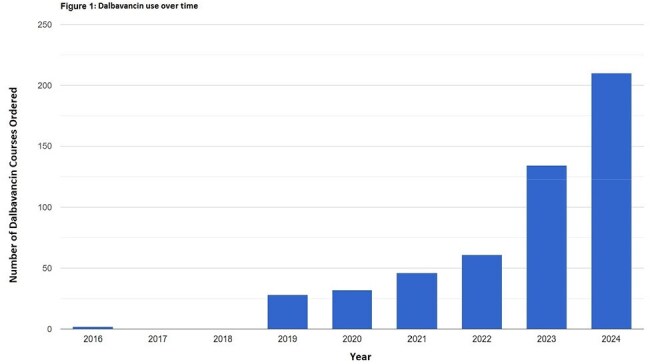 Figure 1
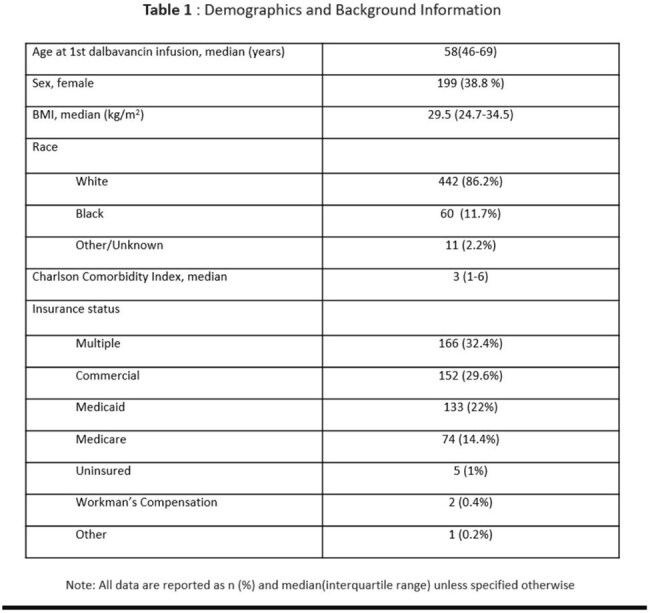 Figure 2
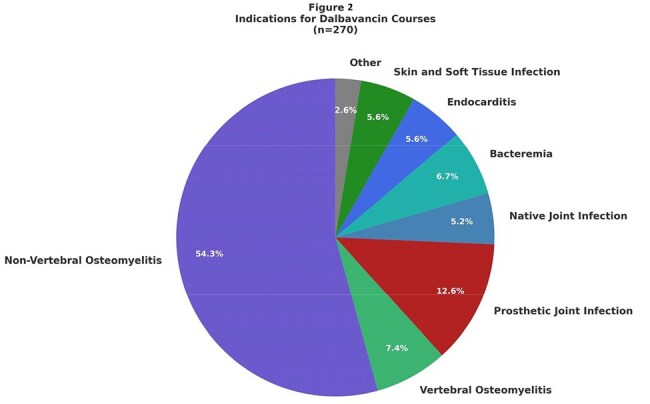 Figure 3
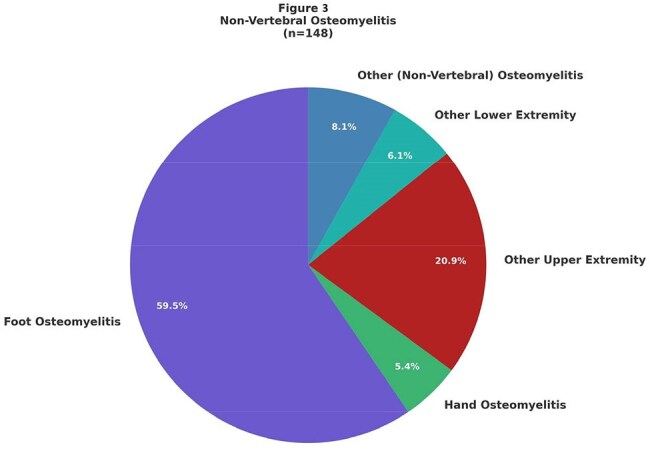 Figure 4
Peer Reviews
No public reviews on file for this paper yet. If you reviewed it on a platform where reviews are public (OpenReview, ICLR, NeurIPS, ICML), you can paste yours below so the community can read it here.
Videos
No videos yet. Explain this paper in a talk, walkthrough, or lecture? Add one.
Taxonomy
TopicsAntimicrobial Resistance in Staphylococcus · Orthopedic Infections and Treatments · Bacterial Infections and Vaccines