P-131. Infective Endocarditis (IE) in Persons Who Inject Drugs (PWID): Expanding Novel Treatment Methods for a Challenging Population
Andrea Molin, Stephanie Spivack

TL;DR
Infectious endocarditis is a serious condition among drug users, and new surgical methods may improve outcomes for this vulnerable group.
Contribution
The study explores novel surgical treatments for infective endocarditis in persons who inject drugs.
Findings
Novel procedures like vacuum thrombectomy and bovine pericardial valve replacement were used in 18% of patients.
Methicillin-resistant Staphylococcus aureus was the most common organism causing infective endocarditis.
Patients who underwent procedures had a 15% 90-day mortality rate, similar to those who did not.
Abstract
Infectious endocarditis (IE) remains a major cause of morbidity and mortality for persons who inject drugs (PWID). In patients who require surgery, traditional valve replacement carries a high risk of prosthetic valve endocarditis if they return to substance use. Novel methods include valve replacement with a bovine pericardial cylinder, valve replacement with native tissue using a pulmonary autograft (Ross procedure), and vacuum-assisted thrombectomy to de-bulk right-sided vegetations. We conducted an IRB-approved retrospective chart review of hospitalized PWID with positive blood cultures between March 2022 and March 2024. A total of 383 patients had 573 unique admissions with positive blood cultures. Of these, 113 patients (30%) with 149 admissions met modified Duke criteria for definite IE. Of patients with definite IE, 44% were female, the median age was 37, 68% experienced…
Click any figure to enlarge with its caption.
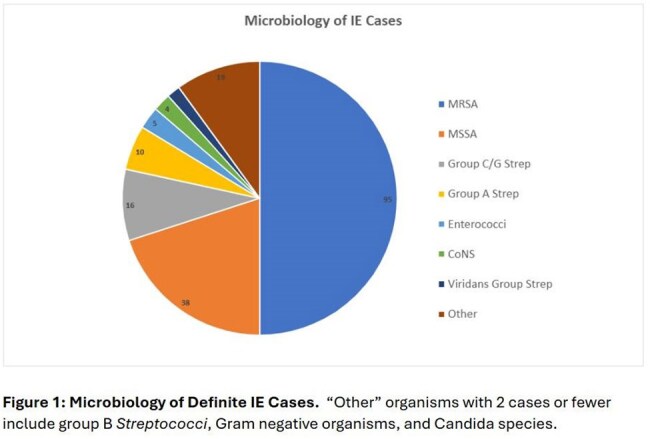 Figure 1
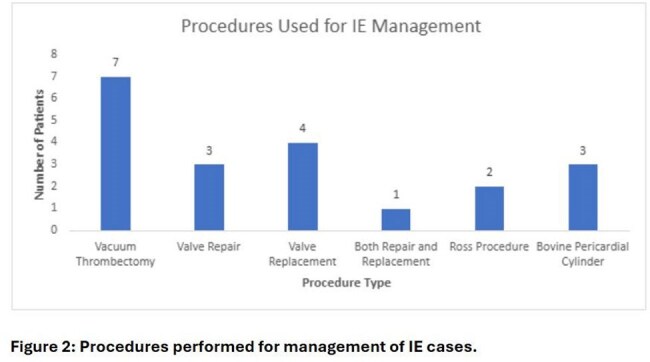 Figure 2
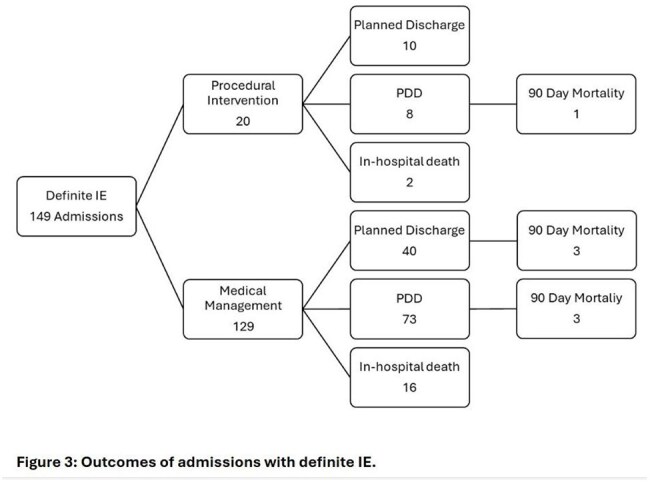 Figure 3
Peer Reviews
No public reviews on file for this paper yet. If you reviewed it on a platform where reviews are public (OpenReview, ICLR, NeurIPS, ICML), you can paste yours below so the community can read it here.
Videos
No videos yet. Explain this paper in a talk, walkthrough, or lecture? Add one.
Taxonomy
TopicsInfective Endocarditis Diagnosis and Management · Intramuscular injections and effects · Clostridium difficile and Clostridium perfringens research