P-169. Acute Organ Failure and Death among Hospitalized Adults with Babesiosis
Audrey E Monson, Peter J Krause, David E Leaf

TL;DR
This study examines acute organ failure and death in hospitalized adults with babesiosis, identifying risk factors and outcomes from a large multicenter cohort.
Contribution
The study provides detailed data on severe illness from babesiosis, identifying independent risk factors for in-hospital death or acute organ failure.
Findings
217 patients (6.7%) died or had acute organ failure, with higher parasitemia and lab markers linked to worse outcomes.
66.9% of patients developed at least one acute organ injury, with acute liver failure having the highest in-hospital mortality (55.6%).
The number of babesiosis hospitalizations increased over time, but the incidence of acute organ injury remained consistent.
Abstract
Babesiosis is an emerging tickborne illness that may result in acute organ injury/failure and death. However, detailed data on severe illness from babesiosis are limited. We performed a multicenter cohort study of 3,233 consecutive adults hospitalized with babesiosis at 84 hospitals from 24 medical centers across 8 states in the northeastern US from 2010 to 2024. Data on demographics, comorbidities, vital signs, physiologic parameters, labs, treatments, and outcomes were collected by detailed chart review. Using multivariable logistic regression, we identified independent risk factors for the primary composite outcome of in-hospital death or acute organ failure. The latter was defined as shock requiring vasopressors, respiratory failure requiring invasive mechanical ventilation, or acute kidney injury requiring kidney replacement therapy. We also characterized the incidence and…
Genes, proteins, chemicals, diseases, species, mutations and cell lines named across the full text — each resolved to its canonical identifier and authoritative record.
Click any figure to enlarge with its caption.
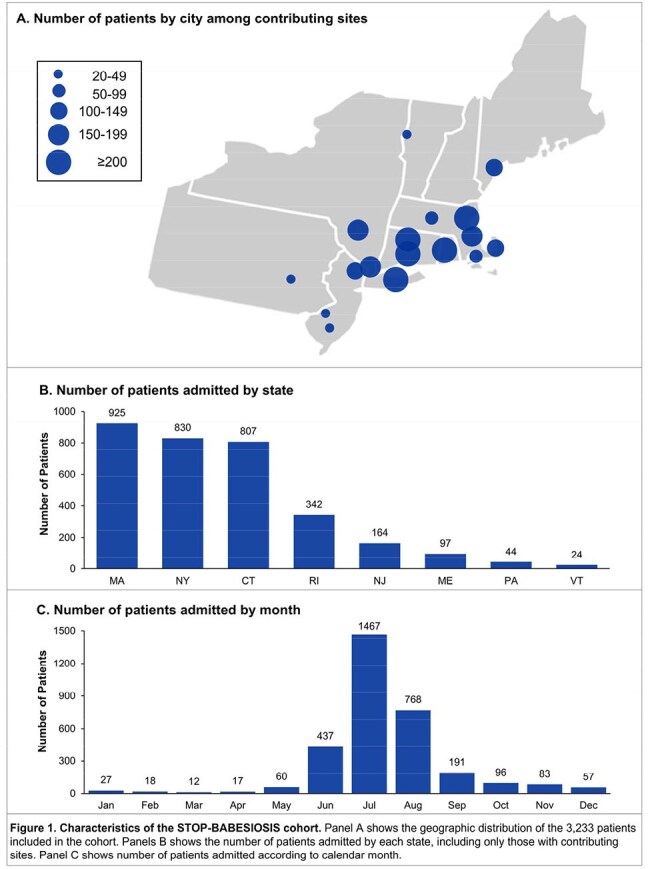 Figure 1
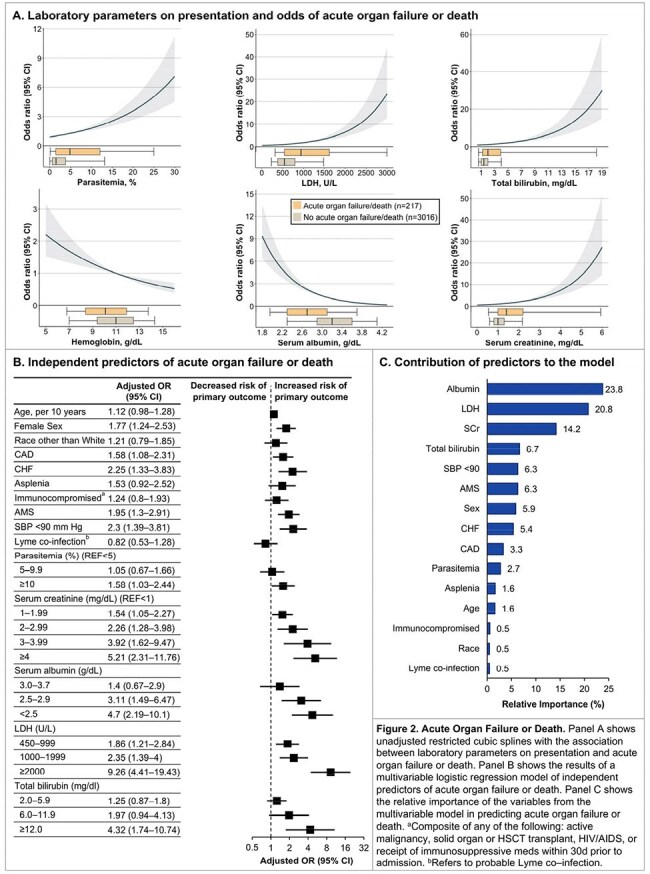 Figure 2
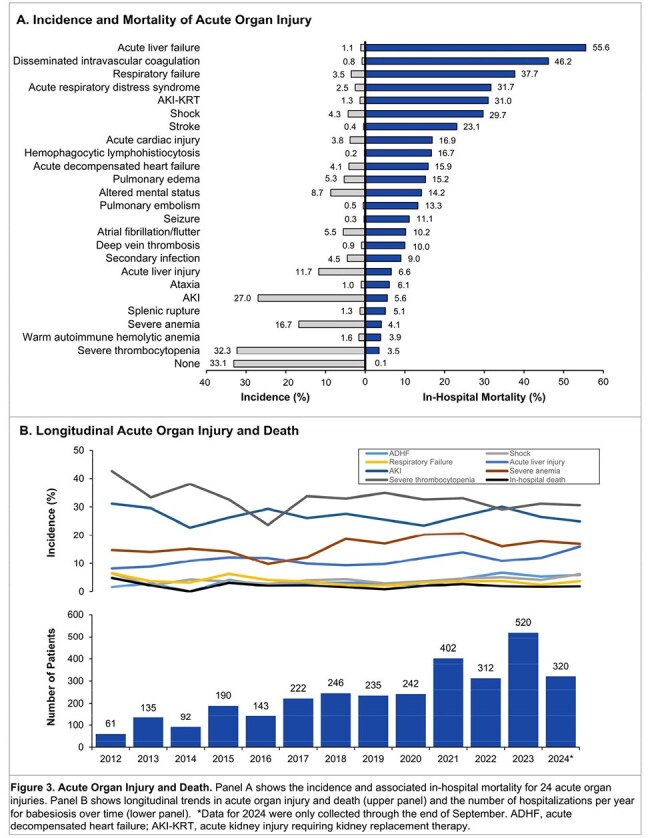 Figure 3
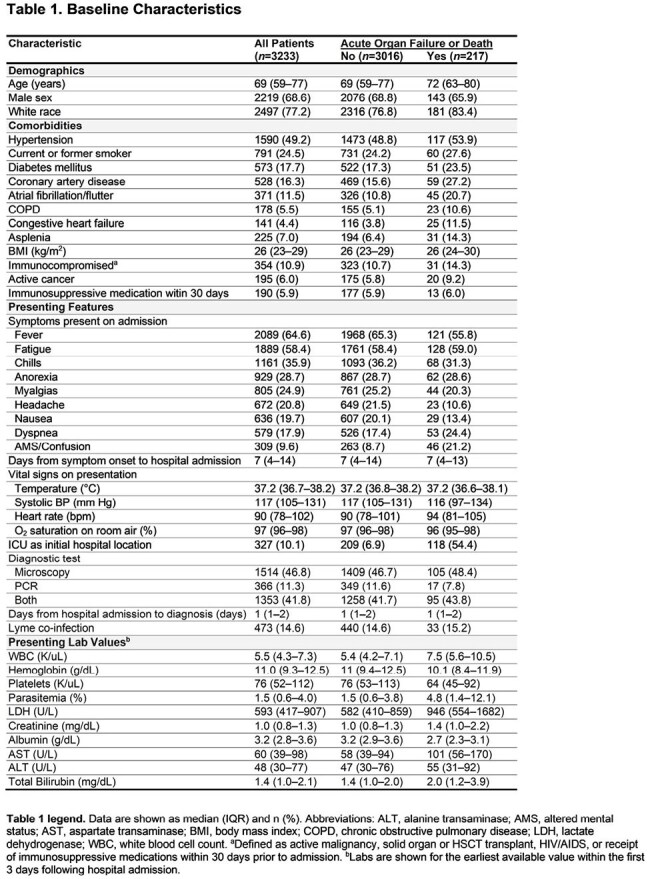 Figure 4
Peer Reviews
No public reviews on file for this paper yet. If you reviewed it on a platform where reviews are public (OpenReview, ICLR, NeurIPS, ICML), you can paste yours below so the community can read it here.
Videos
No videos yet. Explain this paper in a talk, walkthrough, or lecture? Add one.
Taxonomy
TopicsVector-borne infectious diseases · Mosquito-borne diseases and control · Zoonotic diseases and public health