P-1215. In vitro activity of Sulbactam-durlobactam and Standard-of-Care Antibiotics against Acinetobacter baumannii-calcoaceticus complex isolates from wound and urinary tract sources: ACNBio Study 2023-2025
Tomefa E Asempa, Elizabeth Cyr, Jill Argotsinger, Eric T Beck, Robin R Chamberland, Anne R Daniels, Rachel Liesman, Philip Gialanella, Jonathan Hand, Amanda Harrington, Romney Humphries, Holly Huse, Robert Hamilton-Seth, Wesley D Kufel, Scott W Riddell, Lars Westblade

TL;DR
This study shows that sulbactam-durlobactam is highly effective against Acinetobacter baumannii isolates from wounds and urinary tract infections, even those resistant to other antibiotics.
Contribution
The study provides new in vitro evidence of sulbactam-durlobactam's efficacy against A. baumannii from non-respiratory and non-bloodstream sources.
Findings
Sulbactam-durlobactam showed 98.5% susceptibility against A. baumannii isolates, outperforming ampicillin-sulbactam and meropenem.
It retained high activity (97.7% susceptible) against carbapenem-resistant isolates.
The drug demonstrated consistent effectiveness across different infection sources like skin and urine.
Abstract
Acinetobacter baumannii most often causes nosocomial bacteremia and pneumonia. However, A. baumannii is becoming an important cause of a broader range of infections including skin and soft tissue infection (SSTI) and urinary tract infections (UTI). This study aims to evaluate the in vitro activity of sulbactam-durlobactam and other clinically utilized antibiotics against A. baumannii-calcoaceticus complex isolates isolated from non-respiratory and non-bloodstream sources. Samples included 193 A. baumannii-calcoaceticus complex isolates collected from 2023-2025 across 19 states. Susceptibility tests for sulbactam-durlobactam (durlobactam fixed concentration of 4 mg/L), and comparator agents were conducted by manual broth microdilution and interpreted according to CLSI and FDA (cefiderocol) standards. A. baumannii complex isolates were primarily cultured from skin and soft tissue…
Genes, proteins, chemicals, diseases, species, mutations and cell lines named across the full text — each resolved to its canonical identifier and authoritative record.
Click any figure to enlarge with its caption.
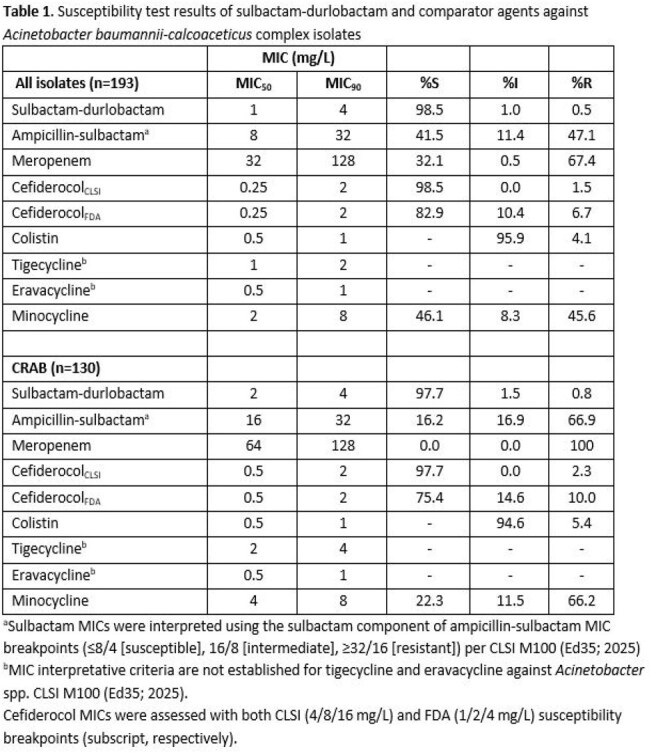 Figure 1
Peer Reviews
No public reviews on file for this paper yet. If you reviewed it on a platform where reviews are public (OpenReview, ICLR, NeurIPS, ICML), you can paste yours below so the community can read it here.
Videos
No videos yet. Explain this paper in a talk, walkthrough, or lecture? Add one.
Taxonomy
TopicsAntibiotic Resistance in Bacteria · Infections and bacterial resistance · Antibiotic Use and Resistance