P-345. Prevalence of Integrase HIV-1 Drug Resistance Mutations in the United States: 2019-2024
Cassidy Henegar, Johnny Lai, Kimberley Brown, Bryn Jones, Annemiek de Ruiter, Gayathri Sridhar, Mark Underwood, Charles M Walworth, Vani Vannappagari

TL;DR
This study examines the prevalence of HIV drug resistance mutations to integrase inhibitors in the US from 2019 to 2024, finding that resistance remains low despite widespread use of these drugs.
Contribution
The study provides updated data on INSTI resistance mutation frequencies and class-level susceptibility in the US population over a five-year period.
Findings
INSTI resistance frequency remained low and stable (4.1-5.5%) across the study period.
Major INSTI resistance mutations were uncommon, with some showing small declines or increases.
The use of second-generation INSTIs is associated with low failure rates and high resistance barriers.
Abstract
The integrase strand transfer inhibitor (INSTI) class of antiretrovirals (ARV), specifically 2nd generation INSTIs (dolutegravir, bictegravir, cabotegravir), has been increasingly used in HIV treatment due to high levels of effectiveness and tolerability, improved adherence, and high barriers to resistance. At the population level, patterns of ARV use can impact prevalence of HIV drug resistance mutations. This analysis used data from a large testing database to assess changes in INSTI resistance mutation frequencies and class-level susceptibility with expanding use in the United States 2019-2024. Samples from adults with HIV-1 in the US and US territories submitted for routine genotypic resistance testing to the 4 major ARV classes (protease inhibitors, nucleoside reverse transcriptase inhibitor, non-nucleoside reverse transcriptase inhibitors and INSTIs) between January 1, 2019, and…
Genes, proteins, chemicals, diseases, species, mutations and cell lines named across the full text — each resolved to its canonical identifier and authoritative record.
Click any figure to enlarge with its caption.
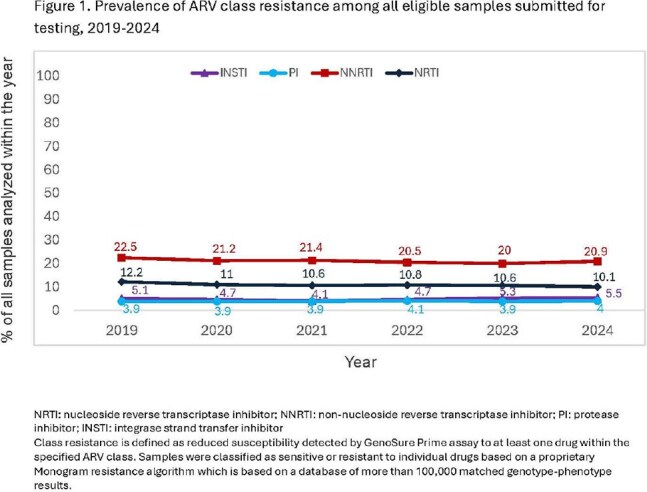 Figure 1
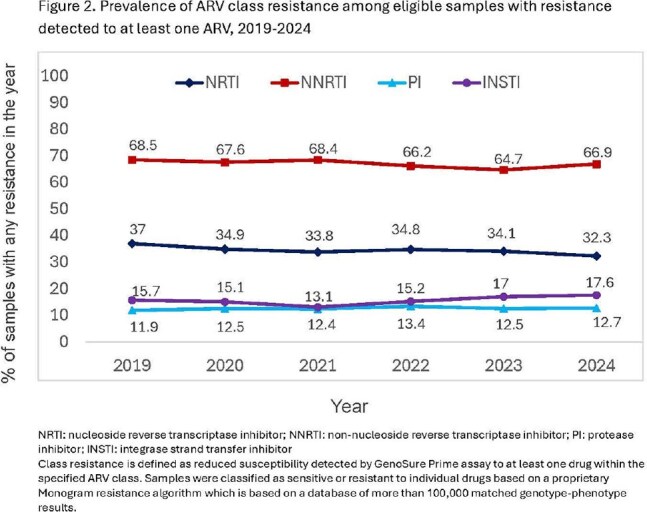 Figure 2
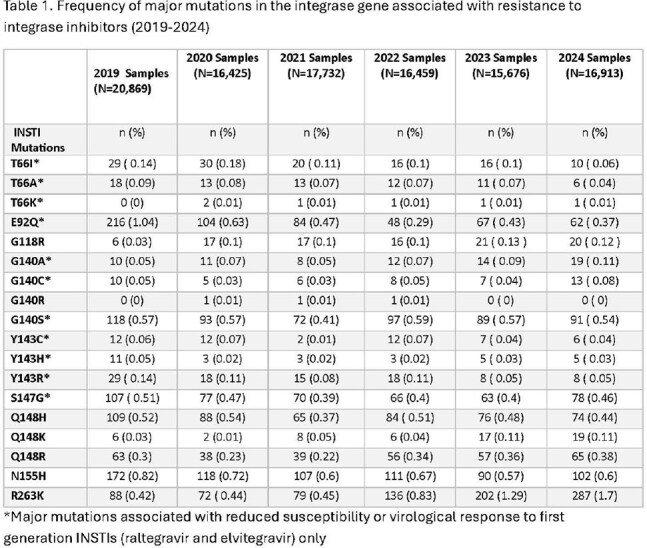 Figure 3
Peer Reviews
No public reviews on file for this paper yet. If you reviewed it on a platform where reviews are public (OpenReview, ICLR, NeurIPS, ICML), you can paste yours below so the community can read it here.
Videos
No videos yet. Explain this paper in a talk, walkthrough, or lecture? Add one.
Taxonomy
TopicsHIV/AIDS drug development and treatment · CRISPR and Genetic Engineering · HIV/AIDS Research and Interventions