659. Epidemiology and Clinical Characteristics of Bacteremia Following Portal Vein Embolization
Choseok Yoon, Mi Hyeon Park, Eui Jin Chang, SeongMan Bae, Jiwon Jung, Min Jae Kim, Sang-Oh Lee, Sang-Ho Choi, Sung-Han Kim, Yang Soo Kim, Yong Pil Chong

TL;DR
This study examines the occurrence and features of bacteremia following portal vein embolization, a procedure used before liver surgery.
Contribution
The paper provides new insights into the epidemiology and clinical characteristics of bacteremia after portal vein embolization.
Findings
Bacteremia occurred in 3.5% of portal vein embolization patients, with Enterococcus spp. being the most common pathogen.
Patients with cholangiocarcinoma and those undergoing biliary drainage had a higher risk of post-PVE bacteremia.
Bacteremia was associated with longer hospital stays and higher complication rates compared to non-bacteremia cases.
Abstract
Portal vein embolization (PVE) is performed to induce liver hypertrophy before major hepatectomy. As an invasive procedure, PVE can lead to complications such as bacteremia, which may result in multi-organ failure. Despite its clinical importance, studies on bacteremia following PVE are limited. This study aimed to examine the epidemiology and clinical characteristics of post-PVE bacteremia.Table 1.Comparison of baseline characteristics and clinical outcomes between ‘bacteremia group’ and ‘ non-bacteremia group’.Note: Data are numbers (%) of patients, unless otherwise indicated.Abbreviations: IQR, interquartile range; IHD, ischemic heart disease; CVA, cerebrovascular accident; COPD, chronic obstructive pulmonary disease; DM, diabetes mellitus; CKD, chronic kidney disease; CCC, cholangiocarcinoma; ENBD, Endoscopic Nasobiliary Drainage; ERBD, Endoscopic Retrograde Biliary Drainage; PTBD,…
Genes, proteins, chemicals, diseases, species, mutations and cell lines named across the full text — each resolved to its canonical identifier and authoritative record.
Click any figure to enlarge with its caption.
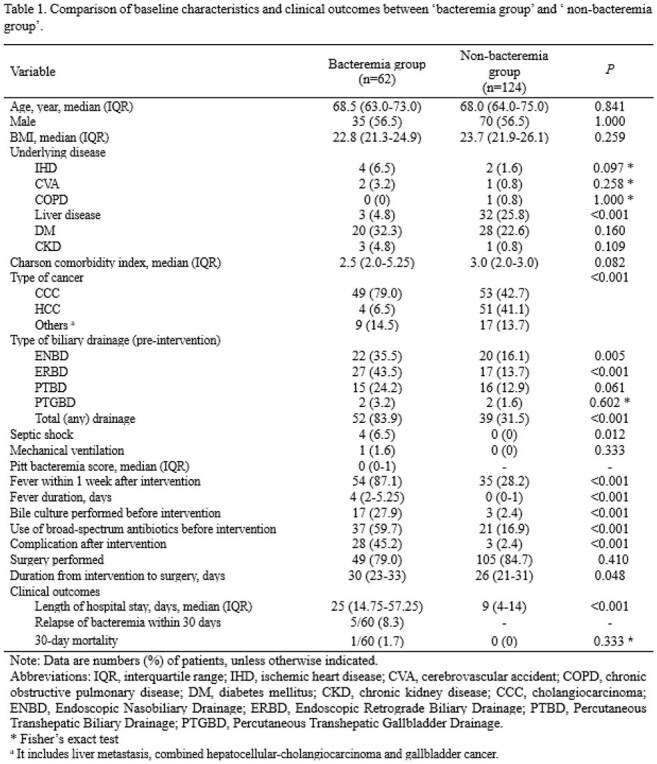 Figure 1
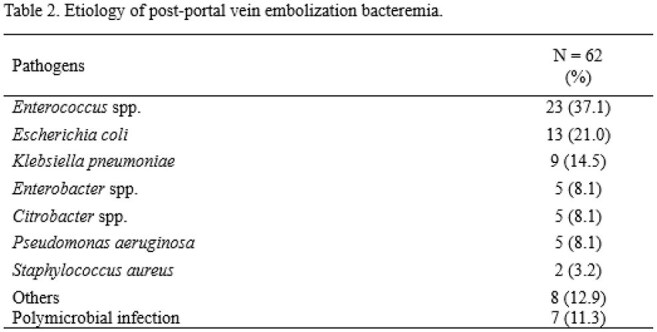 Figure 2
Peer Reviews
No public reviews on file for this paper yet. If you reviewed it on a platform where reviews are public (OpenReview, ICLR, NeurIPS, ICML), you can paste yours below so the community can read it here.
Videos
No videos yet. Explain this paper in a talk, walkthrough, or lecture? Add one.
Taxonomy
TopicsCholangiocarcinoma and Gallbladder Cancer Studies · Hepatocellular Carcinoma Treatment and Prognosis · Gallbladder and Bile Duct Disorders