324. Epidemiological Trends of Streptococcus pneumoniae Pneumonia in Argentine Children: Serotype Distribution, Antibiotic Resistance, and Vaccine Coverage Gaps (2022-2024)
Jonathan C Zintgraff, Paula Gagetti, Nahuel Sanchez Eluchans, Paulina Marchetti, Maria Alicia Moscoloni, Claudia Lara, Alejandra Corso

TL;DR
This study tracks changes in pneumococcal pneumonia in Argentine children, focusing on serotype distribution, antibiotic resistance, and vaccine coverage gaps from 2022 to 2024.
Contribution
The study provides updated insights into serotype prevalence and resistance patterns post-PCV13 vaccine implementation in Argentina.
Findings
Serotypes 3, 19A, 14, 12F, 15A, and 24F were most common, with age-specific variations.
Serotypes 3 and 19A were strongly linked to pleural effusion, while 24B was associated with non-effusion pneumonia.
Non-susceptibility rates were low for penicillin and amoxicillin, supporting their use as first-line treatments.
Abstract
Invasive pneumococcal pneumonia (IPP) remains a leading cause of morbidity and mortality in children. Argentina incorporated PCV13 into its National Immunization Program in 2012, significantly reducing IPP burden. However, ongoing epidemiological surveillance remains critical to monitor circulating serotypes and their evolving resistance pattern. Objectives: To analyze the serotype distribution and antimicrobial resistance profile in cases of IPP in children under 11 years of age in Argentina, during 2022-2024.Figure 1Figure 1-A presents the overall percentage distribution (2022–2024) of serotypes within each age group, arranged in descending order according to their prevalence in this study. Figure 1-B displays the adjusted standardized residuals, highlighting serotypes with statistically significant p-values.Figure 2The analysis of IPP cases by serotype, age group, and year reveals…
Genes, proteins, chemicals, diseases, species, mutations and cell lines named across the full text — each resolved to its canonical identifier and authoritative record.
Click any figure to enlarge with its caption.
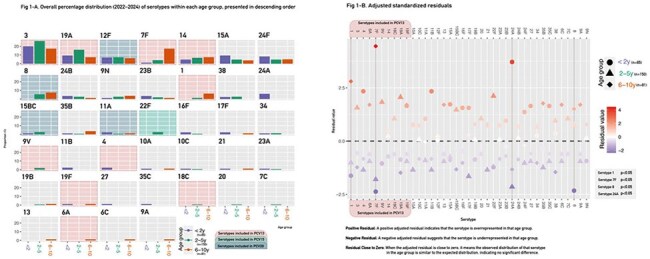 Figure 1
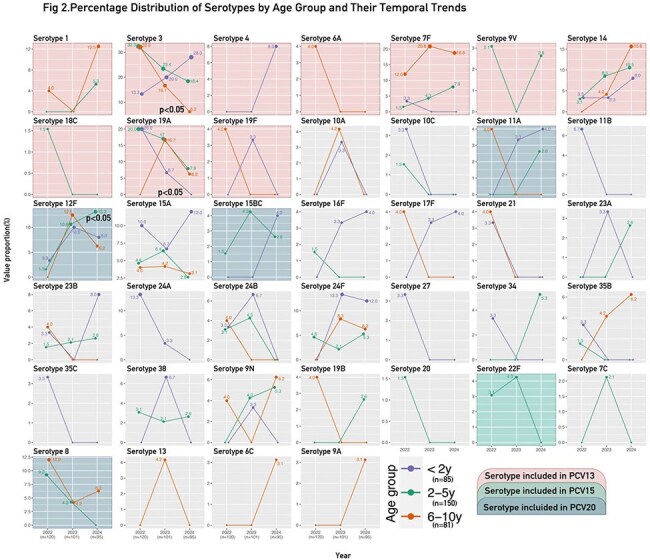 Figure 2
 Figure 3
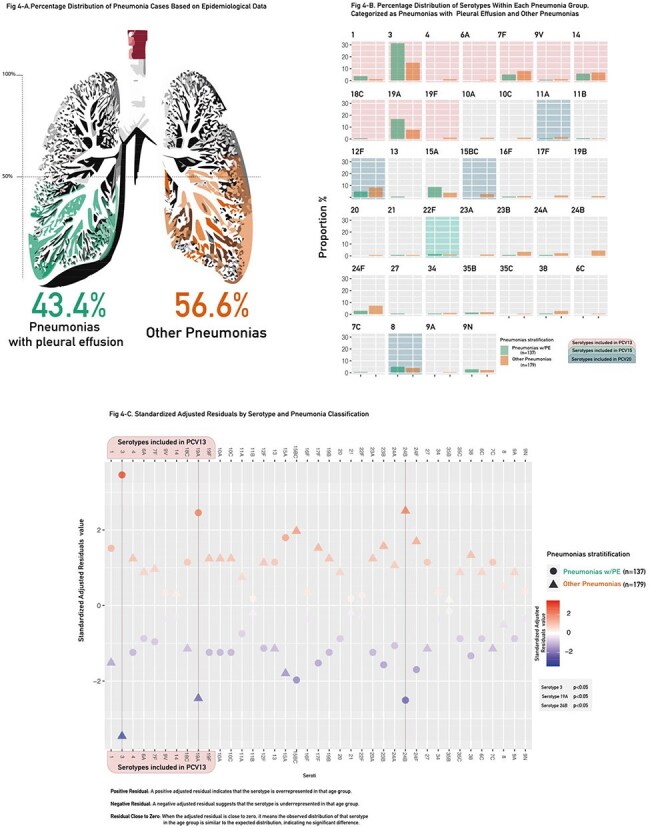 Figure 4
Peer Reviews
No public reviews on file for this paper yet. If you reviewed it on a platform where reviews are public (OpenReview, ICLR, NeurIPS, ICML), you can paste yours below so the community can read it here.
Videos
No videos yet. Explain this paper in a talk, walkthrough, or lecture? Add one.
Taxonomy
TopicsPneumonia and Respiratory Infections · Advanced Causal Inference Techniques · Nosocomial Infections in ICU