P-1715. Fluconazole Minimum Inhibitory Concentration in Cryptococcus Infections and its Association with Survival
Deepali Boothankad Sharath, Kyle D Brizendine, Anisha Misra

TL;DR
This study found that fluconazole resistance in cryptococcosis did not directly affect patient outcomes, though bloodstream infection and underlying diseases like HIV were more predictive of treatment response.
Contribution
The study provides new observational data on fluconazole MIC trends and their lack of association with clinical outcomes in cryptococcosis.
Findings
Fluconazole MIC was not associated with treatment response or survival in patients with Cryptococcus infections.
Cryptococcemia was a strong predictor of no response to therapy.
HIV and solid organ transplant status were associated with better treatment responses.
Abstract
There are concerns about fluconazole resistance in cryptococcosis and the impact on patient outcomes. At present, there is insufficient data to suggest fluconazole minimum inhibitory concentration (MIC) independently affects outcomes. This was a retrospective, single center observational cohort study. We analyzed clinical and microbiological data from patients with culture confirmed Cryptococcus infections over a 5– year period (2020-2024) to determine the association between MIC and outcome, defined according to EORTC/MSG consensus criteria for responses to therapy at 12 weeks. MIC was determined by broth microdilution. The Kaplan-Meier method and multivariable logistic regression were utilized. We identified 82 patients with culture positive Cryptococcus infections, all were neoformans; 65 had MIC data and were assessable for response: 41 (63%; 95% CI 51–74%) had complete or partial…
Genes, proteins, chemicals, diseases, species, mutations and cell lines named across the full text — each resolved to its canonical identifier and authoritative record.
Click any figure to enlarge with its caption.
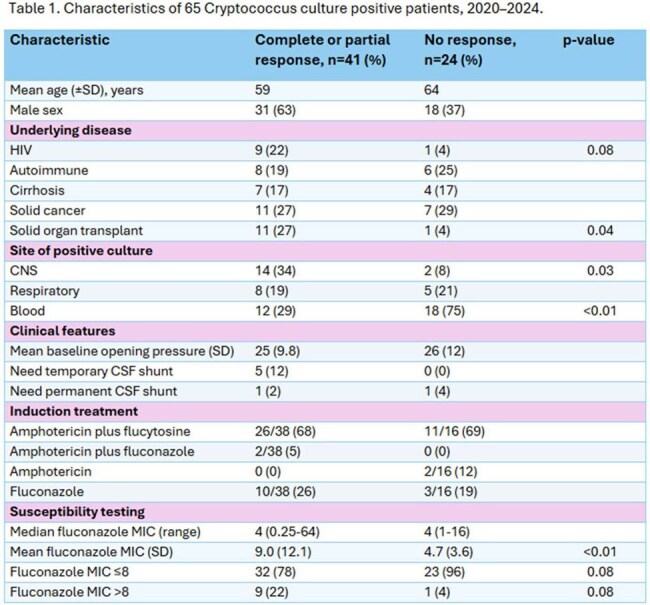 Figure 1
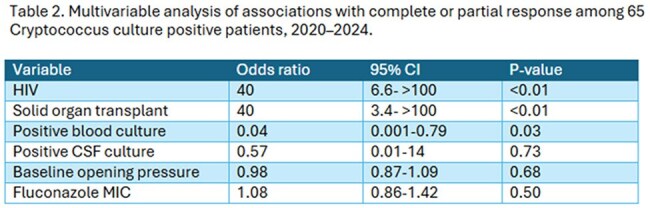 Figure 2
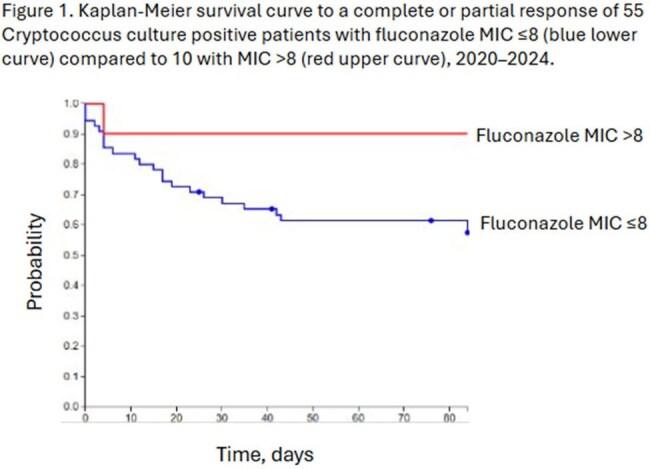 Figure 3
Peer Reviews
No public reviews on file for this paper yet. If you reviewed it on a platform where reviews are public (OpenReview, ICLR, NeurIPS, ICML), you can paste yours below so the community can read it here.
Videos
No videos yet. Explain this paper in a talk, walkthrough, or lecture? Add one.
Taxonomy
TopicsFungal Infections and Studies · Hidradenitis Suppurativa and Treatments · Nail Diseases and Treatments