P-1733. Demographic and Service-Specific Patterns of Candidemia Species Distribution in Costa Rican Hospitals (2007-2023)
Juan Villalobos Vindas, Jose A Castro Cordero, Elvira Segura Retana, Heylin Estrada Murillo, Alvaro A Aviles Montoya, Carlos Ramírez Valverde, Saúl Quirós Cárdenas, Randall G León Solís, Laura Villalobos González

TL;DR
This study examines how different Candida species affect patients in Costa Rican hospitals, revealing patterns by age, gender, and hospital service.
Contribution
The study identifies distinct demographic and service-specific patterns of candidemia species distribution in Costa Rica, which can inform targeted prevention and treatment strategies.
Findings
C. parapsilosis is more common in males and ICU patients, while C. glabrata increases with age and is prevalent in emergency departments.
C. albicans dominates in gynecology/obstetrics, and C. tropicalis is more frequent in younger patients and medical services.
Hospital-specific differences in species distribution suggest the need for localized prevention strategies.
Abstract
Understanding the demographic and service-specific distribution of candidemia is essential for targeted prevention strategies. This study characterizes candidemia patterns across different patient populations and hospital settings in Costa Rica.Gender Distribution by Candida Species (N=2,128)Gender Distribution by Candida Species (N=2,128)Species Distribution by Age GroupSpecies Distribution by Age Group Gender Distribution by Candida Species (N=2,128) Gender Distribution by Candida Species (N=2,128) Species Distribution by Age Group Species Distribution by Age Group We analyzed 2,128 candidemia cases from two tertiary hospitals, examining species distribution by sex, age, hospital service, and clinical outcomes.Candida Species Distribution by Hospital ServiceCandida Species Distribution by Hospital Service Candida Species Distribution by Hospital Service Candida Species…
Genes, proteins, chemicals, diseases, species, mutations and cell lines named across the full text — each resolved to its canonical identifier and authoritative record.
Click any figure to enlarge with its caption.
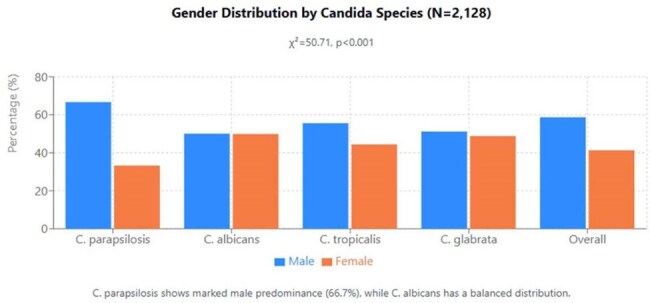 Figure 1
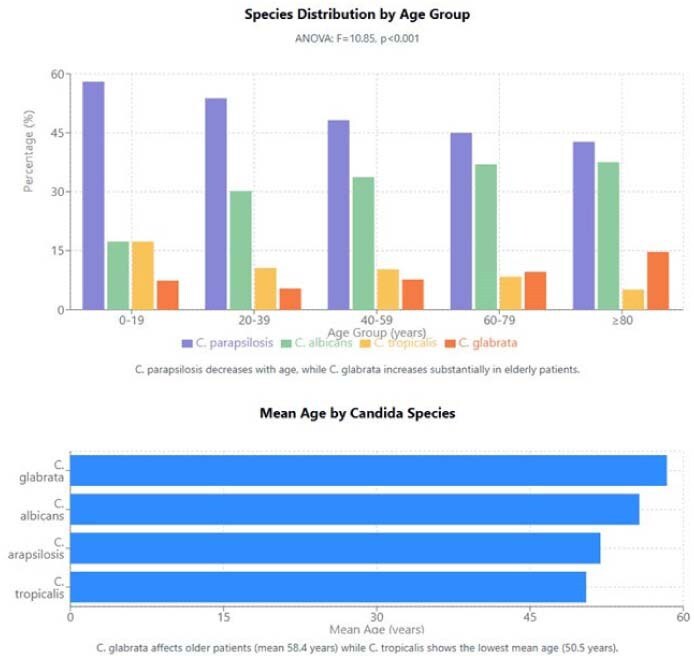 Figure 2
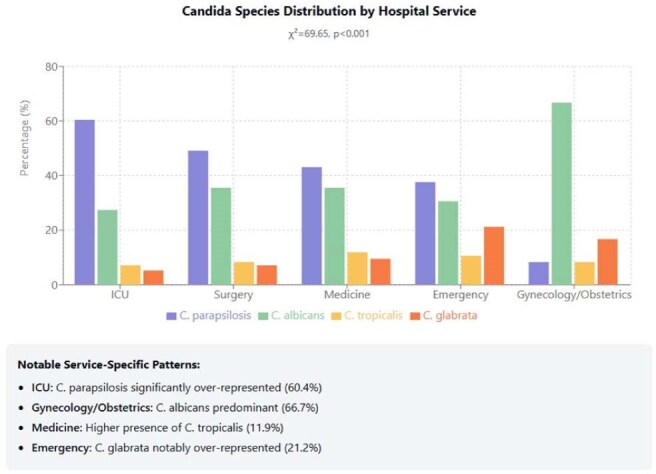 Figure 3
Peer Reviews
No public reviews on file for this paper yet. If you reviewed it on a platform where reviews are public (OpenReview, ICLR, NeurIPS, ICML), you can paste yours below so the community can read it here.
Videos
No videos yet. Explain this paper in a talk, walkthrough, or lecture? Add one.
Taxonomy
TopicsAntifungal resistance and susceptibility · Reproductive tract infections research · Antibiotic Use and Resistance